2012Year Established
8Production Lines
3,000–5,000 m²Factory Floor Area
80+Export Countries
91–100%Export Share of Output
Product Recommendation
Configure the Medical Display Cover Around the Screen, Cleaning Cycle and Patient Environment
A stock glass panel rarely matches the optical, mechanical and documentation requirements of a medical display program. Buyers typically need a cover that is designed around the display stack, touch sensor, enclosure, cleaning agents and the level of image-critical performance required in the clinical environment.
What global buyers usually specify
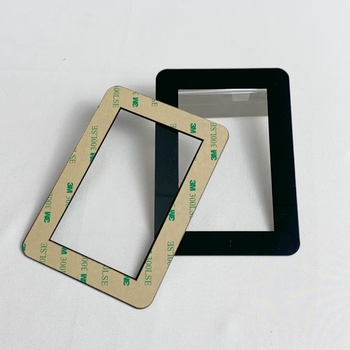
For an AR AF coated Gorilla glass display cover for medical screens, the most useful starting point is the application rather than a generic thickness. Patient monitors and bedside control panels may use thinner chemically strengthened glass to reduce weight and maintain touch sensitivity. Diagnostic displays and larger imaging stations often need higher flatness, tighter coating uniformity and a design that avoids sparkle or haze in the viewing area.
Qingdao Maupe Glass Co., Ltd. processes glass to drawing with CNC shaping, edge polishing, drilling, silk screen printing, chemical strengthening, physical tempering and AR, AG or AF coating. The recommendation below is a practical starting point for RFQ discussion, not a substitute for your own validation plan. Final thickness, strength, coating and print specification should be confirmed with samples and inspection criteria.
- State the display size, active viewing area and touch technology.
- Describe the housing, adhesive or gasket, and any bonding process.
- List cleaning chemicals, wipe methods and expected cleaning frequency.
- Provide print artwork with black border, icons and sensor-window details.
- Confirm documentation, packaging and inspection acceptance requirements.
| Application | Typical glass and coating direction | Design note |
|---|---|---|
| Patient monitor touch display | 0.7–1.1 mm chemically strengthened glass with AR + AF coating | Balance touch sensitivity, impact resistance and fingerprint removal; check haze and reflectance targets. |
| Diagnostic imaging display | 1.1–2.0 mm high-clarity strengthened glass with AR coating or AG + AR option | Prioritize low haze, color neutrality and uniform reflection control across the viewing area. |
| Bedside control panel or HMI | 0.8–1.5 mm glass with AF coating and silk screen printing | Print touch zones and icons precisely; consider notches, LED windows and sensor apertures. |
| Large surgical or imaging monitor | 1.5–3.0 mm glass or custom specification with AR coating | Confirm flatness, edge strength, coating uniformity and packaging for large-format handling. |
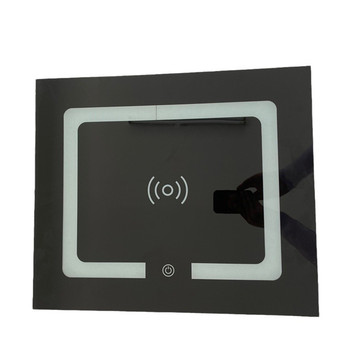
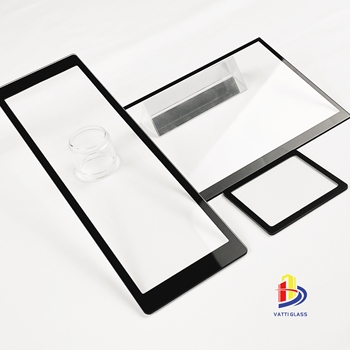
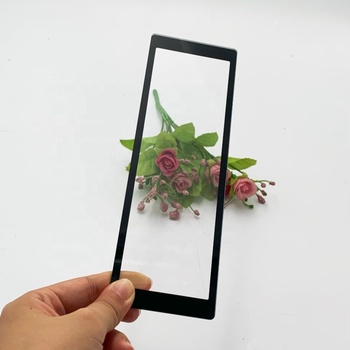
Printed Sensor Windows and Brand Borders
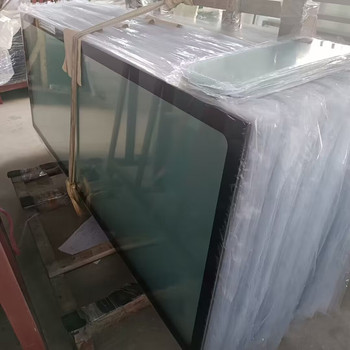
Large-Format Diagnostic Display Covers
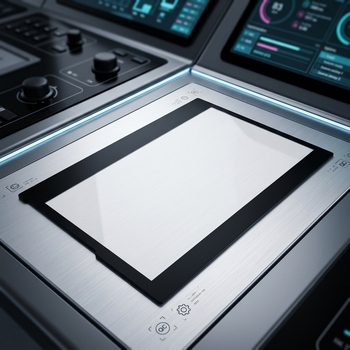
High-Alumina Covers for Demanding Clarity
Future Procurement Trends
What Global Buyers Are Changing in Medical Display Glass Procurement
Procurement teams are moving away from one-dimensional price comparison. They are asking suppliers to prove process control, support sample validation, document coating specifications and protect continuity for the life of a medical device program.
Compliance Documentation Before Price
Medical device buyers increasingly request ISO 9001 evidence, RoHS and CE documentation, SGS assessment information and inspection reports during the first RFQ round. A supplier that can organize these records early is easier to qualify and less likely to delay a validation schedule.
Dual Sourcing and Drawing Lock
Many OEMs now qualify a second glass processor before a supply interruption occurs. The drawings and coating specifications must be locked so that thickness, print colors, surface treatment and acceptance criteria remain comparable between sources. Using a supplier with in-house cutting, printing, strengthening and coating makes that comparison more transparent.
Lower Launch Quantities, Controlled Scale-Up
Project teams often need samples and small launch quantities before a full production release. Custom silk screen printed panels can start from 10 to 100 pieces depending on size, thickness and print complexity. The purchasing plan should include the scale-up path, repeat sample approval and packaging change points.
Total Landed Cost and Packaging
Piece price is only part of the decision. Buyers now compare packaging protection, inspection yield, coating defect rates, replacement cost and shipping reliability. For large display covers, export packing and handling method can have a greater impact on total cost than a small unit-price difference.
Cleaning and Coating Validation
Hospitals use different cleaning agents and wipe protocols. Procurement teams are asking suppliers to identify coating type, document recommended handling and agree on sample tests before production. AF coating performance should be validated against the actual cleaning process, not assumed from a generic data sheet.
Lifecycle Continuity
Medical programs can remain in service for many years. Buyers are checking whether the selected glass, print ink, coating process and inspection method can be maintained after initial launch. Keeping drawings, sample approvals and process records under document control is becoming a standard expectation.
Product Development Trends
What the Next Generation of Medical Display Covers Looks Like
Medical screen design is moving toward thinner assemblies, brighter displays, wider viewing areas and more touch interaction. Cover glass development is following the same direction, with greater attention to optical performance and surface durability.
Thinner Chemically Strengthened Glass
Thinner glass helps reduce weight and maintain touch sensitivity, but edge quality and strength become more important. Buyers are requesting stronger edges, controlled corner radii and sample validation before committing to thinner cover glass.
AR, AG and AF Coating Stacks
Reflection control is becoming a design requirement rather than a luxury. AR reduces disturbing reflections, AG changes the surface appearance to diffuse light, and AF makes cleaning easier. Combined coatings require careful balancing of haze, gloss, color shift and abrasion resistance.
Touch Integration and Bonding Readiness
Cover glass is increasingly designed for direct bonding to touch sensors or display modules. Flatness, warp, surface cleanliness and print registration become critical. Buyers should define adhesive type, bonding method and any surface treatment required before mass production.
Larger Formats and Tighter Flatness
Large diagnostic displays and imaging workstations need uniform optical appearance and consistent handling. Larger glass covers are driving tighter process control in cutting, edge finishing, coating and packaging. Flatness and coating uniformity should be agreed with practical inspection methods.
Printed Black Matrix and Sensor Windows
Silk screen printing is used to hide adhesive lines, define switch areas and create camera or sensor openings. Better print registration allows smaller optical windows and more complex front-panel graphics, while still keeping the viewing area clear and uniform.
Material and Regulatory Awareness
Requests for antimicrobial or special surface options are increasing, but buyers should verify claims, test methods and regulatory relevance before using such language. For medical display programs, material compliance, cleaning compatibility and documented process control are the more reliable requirements.
Engineering Guide
How to Specify AR AF Coated Gorilla Glass Display Covers
A good RFQ does more than show a shape. It explains how the cover glass will be used, how it will be cleaned, how it will be assembled and what acceptance criteria will be used. This reduces back-and-forth and helps the supplier recommend the right substrate, strengthening method and coating.
Information to include in the drawing package
- 2D drawing in DWG, DXF or PDF with outline, corner radii, holes, notches and tolerance.
- Glass type and thickness, such as chemically strengthened Gorilla glass or high-alumina glass.
- Print artwork in AI or PDF with color references, black border, icons and optical windows.
- Coating requirement: AR, AF, AG or a combined stack, with reflection, haze or gloss targets if available.
- Cleaning agents, touch sensor information and working environment.
- Packaging method, annual volume, sample quantity and inspection requirements.
| Coating | Function | Best use | What to confirm at RFQ |
|---|---|---|---|
| AR | Reduces surface reflection and can increase light transmission. | High-ambient clinical displays, diagnostic screens and dark viewing environments. | Reflectance target, wavelength range, color neutrality and haze. |
| AF | Anti-fingerprint and easy-clean surface behavior for touch areas. | Touch monitors, bedside HMIs and frequently cleaned control panels. | Contact angle expectation, cleaning-agent compatibility and abrasion test method. |
| AG | Diffuses reflections to create a matte appearance. | Large displays and rooms with strong overhead lighting. | Gloss level, haze, sparkle risk and resolution requirements. |
| Combined AR + AF | Reflection control plus easier touch-surface cleaning. | Medical touch displays used in bright clinical areas. | Stack order, optical targets, print compatibility and sample approval. |
| Combined AG + AF | Diffused reflection control with fingerprint resistance. | Matte touch screens and larger control surfaces. | Haze and gloss balance, image sharpness and cleaning validation. |
Company Advantages
Read Company Profile
Why Qingdao Maupe Glass Co., Ltd. Is a Practical Partner for Medical Display Cover Projects
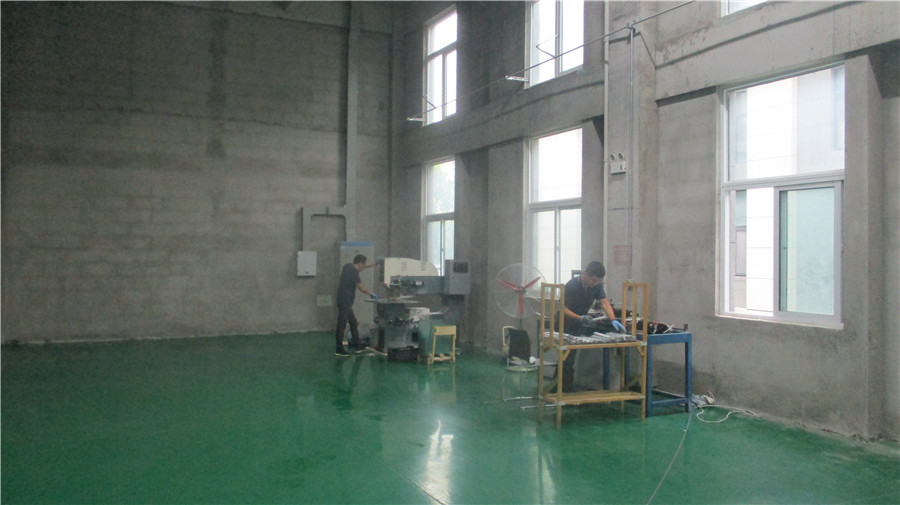
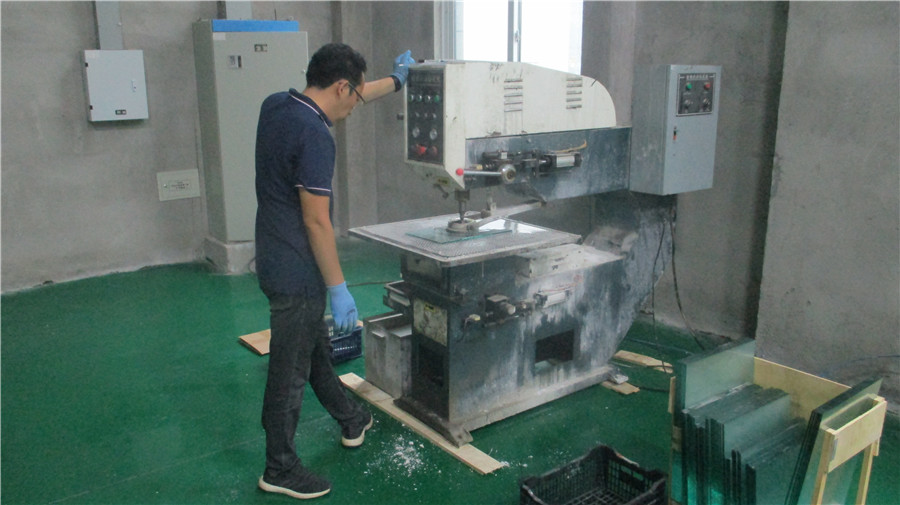
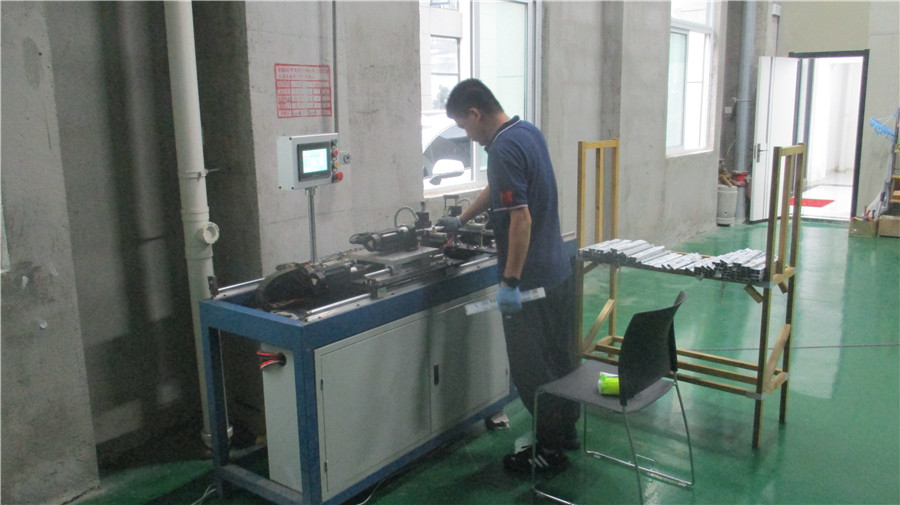
Founded in 2012 in Qingdao, Shandong, Qingdao Maupe Glass Co., Ltd. is a glass deep-processing manufacturer and international supplier operating under an ISO 9001 quality management system. The company works on functional glass parts rather than generic flat sheets: cutting, edge polishing, drilling, engraving, silk screen printing, physical tempering, chemical strengthening and AR, AG or AF coating.
For AR AF coated Gorilla glass display cover for medical screens, this process coverage matters because optical performance, printed graphics, edge quality and surface coating all affect the final assembly. Keeping most operations in one factory helps shorten communication lines, control sample-to-production consistency and keep inspection records traceable. Qingdao Maupe Glass Co., Ltd. serves clients in more than 80 countries across North and South America, Europe, Oceania, the Middle East, Africa and Asia.
The factory is close to Qingdao seaport and airport, which supports export logistics and makes on-site visits practical for buyers who need to review production or quality processes. The company has been onsite assessed by SGS Group as a third-party inspection company and has experience supplying Fortune 500 procurement programs. We are a glass deep-processing supplier rather than the medical device manufacturer of record, so we support customers with agreed material, process and inspection documentation while final device validation remains with the customer.
ISO 9001 Quality SystemDocumented process control
SGS Onsite AssessedThird-party verified supplier
OEM / ODM ServiceCut, print, strengthen and coat
Global Export Expertise80+ countries since 2012




How We Work
From Drawing Review to Export Packing
A transparent process helps purchasing, engineering and quality teams understand what happens at each stage of a custom medical display cover project.
1. Drawing Review
Engineers check size, thickness, print layout, coating and strengthening requirements.
2. Sampling
Samples are prepared for fit, print, optical appearance and touch-zone verification.
3. Mass Production
Cutting, edging, printing, strengthening and coating proceed under controlled planning.
4. Quality Inspection
Dimensions, appearance, print, coating and packaging checks are completed before shipment.
5. Export Shipping
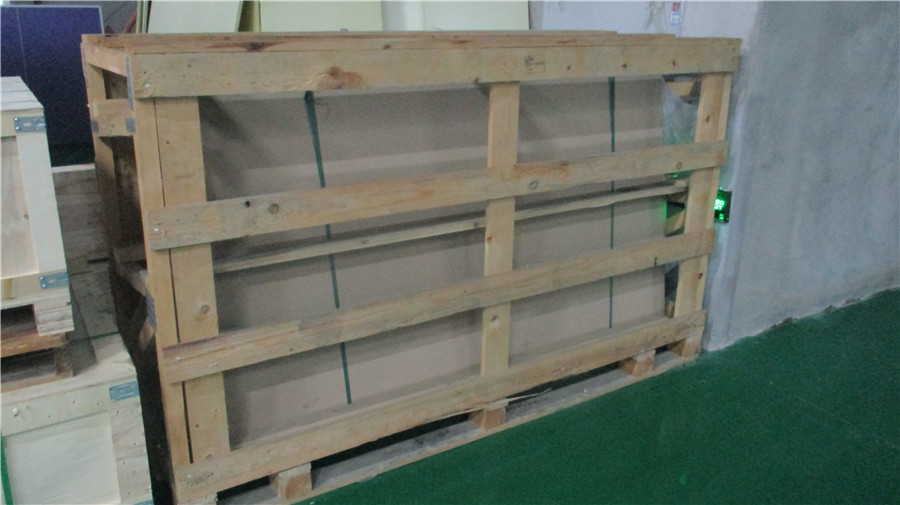
Protective export packing and shipping support via Qingdao port and airport.
Quality and Compliance
Certified Quality You Can Verify
Certificate numbers are listed so your compliance team can check them directly with the issuing bodies. Project-specific inspection plans can be agreed during quotation.

ISO 9001 Quality Management
Certificate No. 24025Q20015R1S · Scope: float glass and technical glass products · Valid to 02/2028.

RoHS Compliance
Certificate No. 25TYT12395 · Restricts hazardous substances for EU electrical and electronic equipment · Valid to 12/2030.

CE Marking
Certificate No. 23TYT082593S · Tempered glass · Supports market access across the European Economic Area · Valid to 08/2028.
On-site Material Inspection
Finished Product Inspection
Supplier Assessment Procedures
Competitive OEM Factory
Procurement FAQ
Questions Global Buyers Ask About AR AF Coated Medical Display Covers
These are the questions purchasing, engineering and quality teams most often raise when sourcing a custom display cover glass for medical screens.
What is an AR AF coated Gorilla glass display cover for medical screens?
It is a strengthened cover glass processed with anti-reflective and anti-fingerprint coatings. AR coating reduces reflected light so clinical images remain easier to read in bright wards, and AF coating makes oils and cleaning residues easier to remove. The glass can also be printed with black borders, icons and sensor windows and supplied to a custom drawing for patient monitors, diagnostic displays, surgical imaging stations and bedside HMIs.
Can Qingdao Maupe Glass Co., Ltd. custom manufacture medical display cover glass to drawing?
Yes. Qingdao Maupe Glass Co., Ltd. provides OEM and ODM glass processing for custom sizes, shapes, holes, notches, edge finishes, printed borders, sensor windows, AR, AG and AF coatings, and chemical or physical strengthening. The final specification is confirmed after drawing review and sample approval, so engineering teams can check fit, print, optical appearance and assembly before production.
What is the minimum order quantity for custom AR AF coated display covers?
Most custom projects start from 10 to 100 pieces depending on glass size, thickness, coating type, print colors and inspection requirements. Large-format display covers can start from 10 pieces. Samples are available for fit, optical and print verification before mass production, which is useful when a medical device program needs a small validation batch first.
What files should be provided for a quotation?
Send a 2D drawing in DWG, DXF or PDF with dimensions, thickness, corner radius, hole positions, edge finish and tolerance. Also send print artwork in AI or PDF with color references, state the required AR, AG or AF coating, describe the cleaning chemicals and working environment, and confirm packaging and inspection requirements. If a specific substrate such as Gorilla glass is required, include that in the RFQ.
Which certifications and quality documents can be supported?
Qingdao Maupe Glass Co., Ltd. operates an ISO 9001 quality management system, holds RoHS and CE certificates for its glass products, and has been onsite assessed by SGS Group. Project documentation can include material and process records, dimensional inspection reports, sample approval records and certificates of conformity as agreed at order review.
Should I choose AR, AG or AF coating for a medical display cover?
AR is normally chosen to reduce reflection and improve image contrast. AG diffuses reflections and suits applications where a matte surface is preferred, but it must be checked for haze and sparkle on high-resolution displays. AF improves fingerprint and soil removal on touch surfaces. Combined AR plus AF or AG plus AF coatings are common for medical touch displays, depending on lighting conditions and cleaning protocols.
How are coating quality and optical performance controlled?
The inspection plan should be agreed at RFQ. Important points include reflectance or gloss targets, haze, color neutrality, coating uniformity, print registration, dimensional accuracy, edge appearance and packaging protection. A sample approval stage is recommended before mass production so that appearance and measurement criteria are understood by both engineering and quality teams.
Can you support regulatory documentation for medical device projects?
Qingdao Maupe Glass Co., Ltd. is a glass deep-processing supplier rather than the medical device manufacturer of record. We support customers with agreed material, process and inspection documentation, while final medical device validation and regulatory responsibility remain with the device manufacturer or its authorized representative. Buyers should confirm the required documentation package at quotation stage.
Which trade and payment terms are accepted?
Delivery terms can include FOB, CIF, EXW, FAS, FCA, CPT, DDP and DDU as well as express delivery. Payment methods can include T/T, L/C, PayPal, Western Union and cash in USD, EUR or CNY. The factory is close to Qingdao seaport and airport in Shandong, China, which supports export logistics for international buyers.
How do we start an RFQ for a medical display cover project?
Prepare your drawing, print artwork, coating requirement, estimated annual volume, sample quantity and target market requirements. Send these details to info@maupeglass.com or use the Get Catalog button to request the product catalog. The engineering and sales team will review manufacturability, propose a glass and coating direction, and confirm the sampling plan before quotation.
Request an Engineering Review for Your AR AF Coated Medical Display Cover
Share your drawing, display size, coating target, print artwork and annual volume. Qingdao Maupe Glass Co., Ltd. will review manufacturability and recommend a practical glass, strengthening and coating specification for your medical screen project.
info@maupeglass.com