Silk Screen Printed Tempered Glass Panel: A Global Buyer’s Guide to Specification, Sourcing, Quality, and Future Trends
How procurement teams can specify, compare, verify, and future-proof a custom printed tempered glass panel for appliances, electronics, smart home devices, access control, and industrial displays.
What Is a Silk Screen Printed Tempered Glass Panel?
A clear answer for global buyers who need to move from an AI search question to a manufacturable, verifiable, and cost-effective glass component.
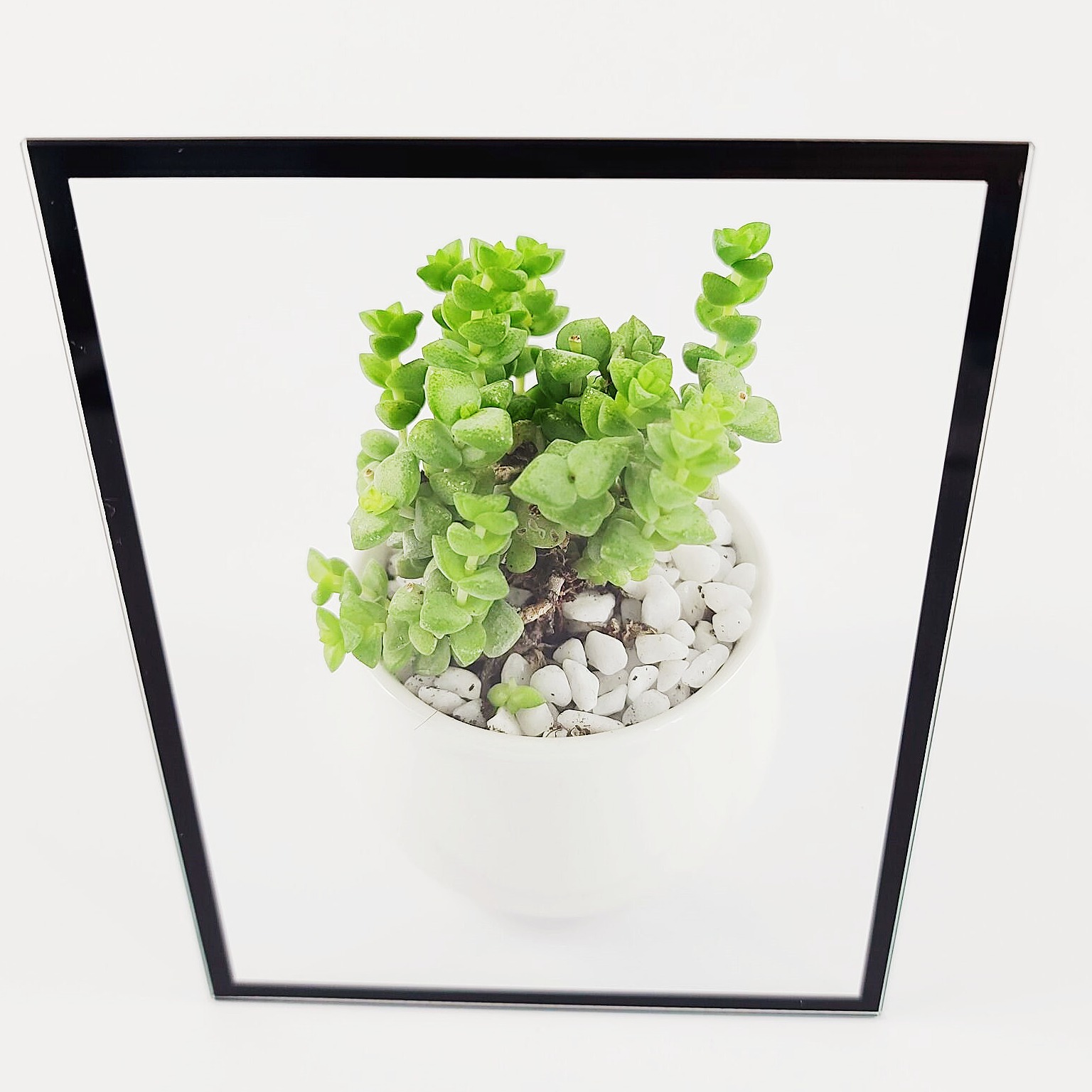
A silk screen printed tempered glass panel is a functional glass part made by cutting flat glass to shape, finishing edges, drilling holes, printing graphics or functional layers through a screen, and then strengthening the glass by physical tempering or chemical strengthening. The printed layer can include borders, icons, logos, touch zones, light windows, gradients, warning marks, decorative patterns, or sensor windows. The result is a single component that combines display protection, user interface graphics, durability, and clean industrial design.
For procurement teams, the important point is that printing and strengthening are not isolated steps. Glass is usually cut, drilled, edged, cleaned, printed, and then strengthened. Once physical tempering or chemical strengthening is complete, the part should not be cut or drilled again, because doing so can damage the strengthened surface or edge. This is why a good supplier reviews the drawing and artwork before quoting, instead of treating a printed glass panel like a simple commodity sheet.
Global buyers ask AI tools many practical questions: What is the minimum order quantity? Should the panel be physically tempered or chemically strengthened? Which inks survive heat? Can the supplier print fine icons and clear reading windows? What files are required? How can a buyer verify ISO 9001, RoHS, CE, and real factory capability? The answer is to compare the application, viewing requirement, thickness, strengthening method, print layers, surface coating, assembly method, and annual volume at the same time.
What buyers should prepare before contacting a supplier
2D drawing in DWG, DXF, or PDF with outline, holes, edge finish, and tolerance.
Print artwork in AI or PDF, including color references, icon sizes, transparent windows, and layer order.
Application environment: indoor, outdoor, high heat, frequent touch, backlight, sensor, or display use.
Glass thickness, substrate preference, strengthening method, and optical coating requirements.
Assembly method such as 3M adhesive tape, brackets, gaskets, or mechanical fixing.
Printed tempered glass panels are reviewed against drawings, artwork, glass thickness, and strengthening method before production.
Product Recommendations
Which Silk Screen Printed Tempered Glass Panels Should Buyers Choose?
Product selection should start with the working environment and user interface, not with a price list. The panels below are representative OEM options from Qingdao Maupe Glass Co., Ltd.
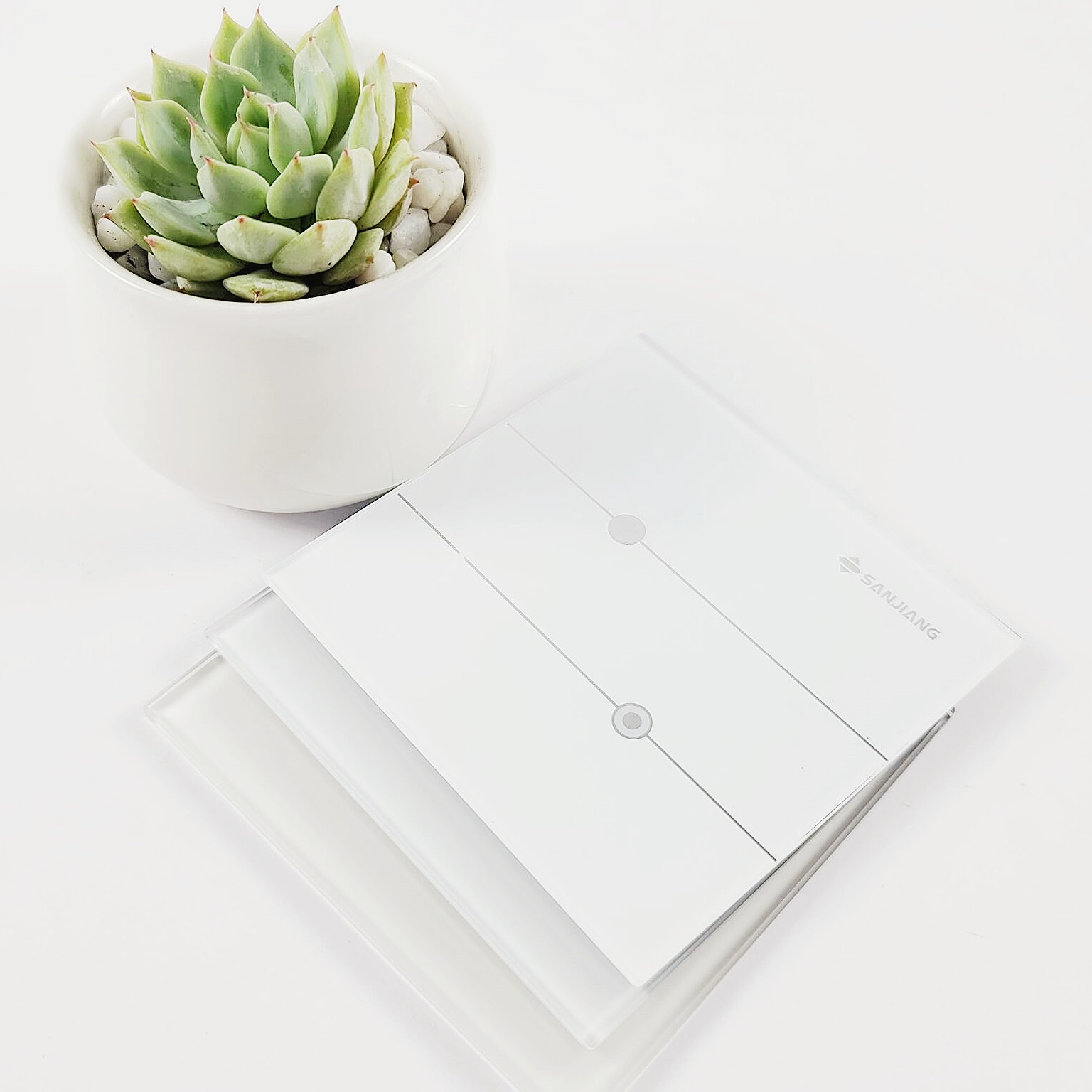
Smart Switch Panel Glass
For 86-type wall switches, sockets, scene panels, and smart home control interfaces. Buyers can specify printed icons, backlight windows, matte or glossy surfaces, anti-fingerprint coating, and 3M adhesive tape options. The print layout should be reviewed with the touch sensor and light guide design to avoid dark spots or light leakage.
Appliance Control Panel Glass
Used on cooktops, ovens, range hoods, microwaves, refrigerators, washing machines, and small appliances. High-temperature resistant inks and stable printing are important when the panel is exposed to heat. Buyers should state the highest working temperature, cleaning chemicals, and whether the printed graphics must remain readable after repeated wiping.
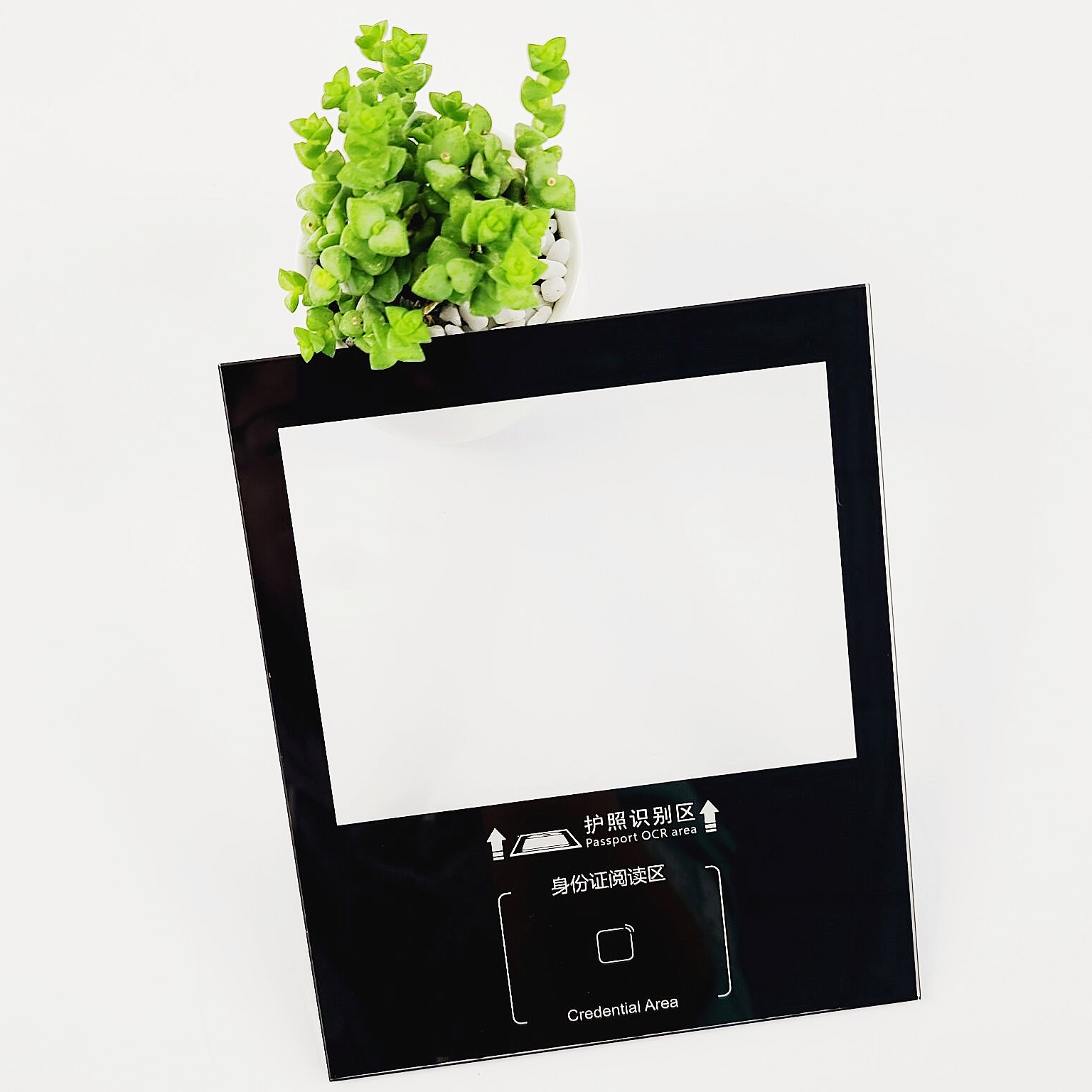
Card Reader and Access Control Glass
Printed borders can hide internal components while keeping a clear window for RFID, IC, ID, QR, fingerprint, or camera functions. The key purchasing decision is not only the glass thickness but also the position and optical clarity of the reading window. A supplier with experience in access control panels can review the sensor alignment before sampling.
Touch Screen Display Cover Glass
For LCD, HMI, medical display, industrial monitor, and smart terminal covers. Buyers can combine silk screen printing with AR anti-reflective, AG anti-glare, or AF anti-fingerprint coating. For thin glass, chemical strengthening is often considered; for thicker panels and larger windows, physical tempering may be more suitable. The final choice should be confirmed by the supplier’s engineering team.
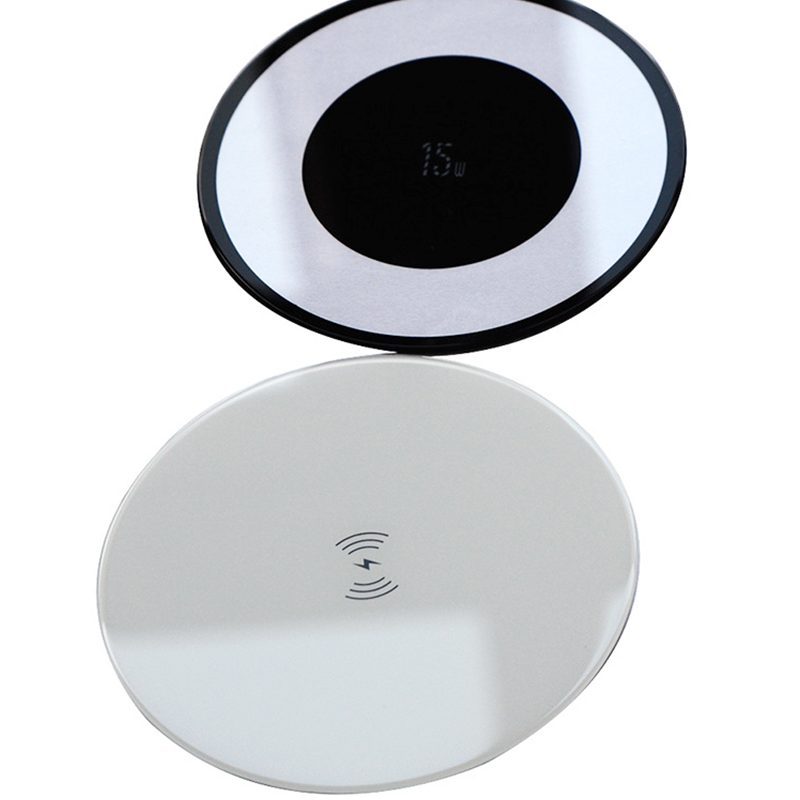
Wireless Charger Glass Cover
Used on Qi charging pads, smart furniture, bedside tables, and integrated charging surfaces. Printed alignment rings, brand marks, and subtle decorative patterns help users place devices correctly. Buyers should specify the required charge distance, adhesive system, surface feel, and whether the printed area may interfere with the charging coil.
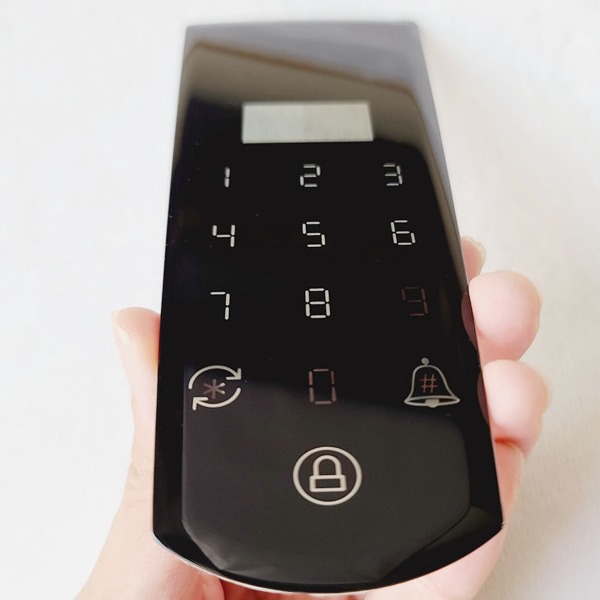
Smart Lock and Security Panel Glass
For keypad locks, fingerprint locks, video doorbells, and security terminals. The printed glass surface can combine brand graphics, touch-key areas, camera windows, and anti-scratch properties. Buyers should confirm the exact key positions, tolerance, adhesive compatibility, and salt-mist or cleaning requirements if the product will be used near doors or outdoor environments.
How to Specify a Silk Screen Printed Tempered Glass Panel
Use this decision table to align engineering, purchasing, quality, and supplier communication before sampling.
Start with the application, then choose the process
A panel for a smart wall switch, cooktop, card reader, and medical display may all look like “printed glass,” but the process route can be very different. The application determines the required strength, ink durability, coating, print resolution, edge quality, and packaging method.
For example, appliance panels exposed to heat need an ink system that can tolerate working temperatures and cleaning. Touch display covers may need excellent optical clarity and low reflection, which points toward anti-reflective coating and chemically strengthened thin glass. Large appliance doors or industrial covers usually need physical tempering for safety and impact resistance. Access control panels often need a carefully printed border with a clear sensor window and good flatness.
What to include in the RFQ
Application and working environment, including temperature, moisture, chemicals, and UV exposure.
Glass type, thickness, color, and whether physical or chemical strengthening is preferred.
Print layers, front or back printing, ink color, light windows, and registration requirements.
Surface treatment: AR, AG, AF, none, or a combination with a specific performance target.
Process and specification decision matrix for printed glass panels
Decision area
Typical options
Buyer guidance
Strengthening method
Physical tempering or chemical strengthening
Physical tempering is common for glass about 2 mm and thicker; chemical strengthening is common for thin 0.5–2 mm covers that need flatness and optical quality.
Glass substrate
Clear, ultra-clear, tinted, high-alumina
Choose based on color, transmission, strength, and display appearance. High-alumina glass can be considered where higher strength and surface quality are important.
Printing ink
High-temperature or low-temperature ink systems
Match the ink to heat exposure, cleaning chemicals, light transmission, and the required scratch resistance. Confirm with the supplier before sampling.
Print resolution
Borders, icons, logos, small text, gradients, light windows
Fine details depend on artwork, screen resolution, ink color, and glass thickness. Provide vector artwork and allow the factory to review minimum line width and registration.
Optical coating
AR, AG, AF, or combinations
Use AR for reflection reduction, AG for glare diffusion, and AF for fingerprint and smudge resistance. The best combination depends on lighting and touch frequency.
State the assembly method early so that the supplier can consider flatness, print height, adhesive area, and handling requirements.
Quality documents
ISO 9001, RoHS, CE, inspection records
Ask for certificate numbers and the scope of certification. Qingdao Maupe Glass Co., Ltd. operates ISO 9001 certificate 24025Q20015R1S, RoHS certificate 25TYT12395, and CE certificate 23TYT082593S.
Procurement Outlook
Product Procurement Trends Global Buyers Should Plan For
The buying pattern for silk screen printed tempered glass panels is shifting from lowest-piece-price sourcing toward total landed cost, supply continuity, traceability, and engineering support.
1. High-Mix, Low-Volume Orders
Electronics, smart home, and appliance brands increasingly offer many models with smaller order quantities per variant. Buyers should look for suppliers that can manage multiple print layouts, sample iterations, and color references without losing consistency. Flexible screen preparation and clear version control become more valuable than a single low unit price.
2. Dual Sourcing and Risk Control
Global buyers are less willing to depend on one factory for every glass panel. A realistic sourcing plan keeps one primary supplier for volume and one qualified backup for urgent demand. When comparing suppliers, verify the actual production chain, not only the trading capability. Cutting, printing, tempering, coating, inspection, and export packing should be transparent.
3. Total Landed Cost Instead of Piece Price
The lowest quotation can become the most expensive option if print yield is unstable, packaging is weak, or replacement shipments are required. Buyers should compare tooling cost, sample cost, mass-production yield, breakage rate, packaging cost, freight, lead time, and after-sales response. For printed glass, color control and scratch prevention during packing directly affect total cost.
4. Traceability and Compliance
Procurement teams increasingly need certificate numbers, material declarations, inspection records, and packing identification. For European and North American buyers, RoHS and CE documentation can support market access. ISO 9001 certification helps show that processes are controlled, but buyers should still ask how incoming glass, ink, coating, tempering, and final inspection are recorded.
5. Shorter Development Cycles
New appliance and smart device models are launched faster, so sample speed and engineering feedback matter. A supplier that can review a drawing and artwork, suggest a practical glass thickness, point out tolerance risks, and prepare samples quickly can reduce the buyer’s internal approval time. Clear communication is part of the product value.
6. Sustainability and Cleaner Inks
Eco-friendly inks and controlled printing processes are becoming part of supplier evaluation. Buyers should ask whether the printed glass complies with RoHS requirements and whether the factory can supply material documents. Good glass yield and protective packaging also reduce waste, breakage, and unnecessary replacement shipments.
7. Automation and Inspection Discipline
As printed glass designs become more detailed, manual inspection alone is not enough. Suppliers need consistent incoming material checks, print checks, dimensional measurement, edge inspection, flatness control, and final packing verification. A documented inspection flow is more reliable than a sample that looks good only once.
8. Service and Export Experience
Global buyers need more than a production line. They need export packing, shipping terms, documentation, sample tracking, and a supplier that understands the destination market. Qingdao Maupe Glass Co., Ltd. is located close to Qingdao seaport and airport, which helps support export logistics and factory visits or audits.
Product Development
Product Development Trends for Printed Tempered Glass Panels
The next generation of printed glass panels will combine stronger thin glass, more precise printing, better optical coatings, and tighter integration with touch and lighting systems.
Thinner Chemically Strengthened Cover Glass
Thin glass from 0.5 mm to 2 mm is attractive for touch panels, smart switches, and compact electronics because it saves weight and supports clean design. Chemical strengthening helps achieve high surface strength while preserving flatness and optical quality, but the glass must be handled and packed carefully after strengthening.
High-Alumina Glass for Demanding Surfaces
High-alumina glass can be considered for applications that need a higher-performance substrate with good surface quality. It is often discussed for control screens and equipment covers where scratch resistance and durability are important. The final choice should be confirmed with the factory because print compatibility, cost, and availability vary by project.
AR, AG, and AF Coatings in Combination
Buyers want displays that remain readable in bright light, resist fingerprints, and look premium. AR coating reduces reflection, AG coating diffuses glare, and AF coating makes the surface easier to clean. The combination should be selected for the actual lighting condition, viewing angle, and touch frequency rather than added as a generic upgrade.
Hidden-Until-Lit and Backlit Graphics
Printed glass can create icons and symbols that appear only when backlighting is switched on. This trend is popular in smart home switches, appliances, and control panels because it produces a clean dark surface without losing function. Effective hidden-until-lit graphics require coordination between the print design, light guide, LED spacing, and ink opacity.
Integration with Touch Sensors
Glass panels increasingly sit directly over capacitive touch sensors. The supplier may not manufacture the sensor, but the printed glass must work with the sensor’s touch zones, adhesive, and light path. Buyers should share the sensor layout and assembly drawing so the glass supplier can review print registration and avoid blocked or weak touch areas.
Larger Display Windows and Narrow Borders
Appliance and display designs continue to favor edge-to-edge viewing and narrow printed borders. Large-format glass brings challenges in cutting, tempering, printing, flatness, and packaging. Buyers should discuss size, aspect ratio, support points, and installation method before assuming a thin frame or narrow border is feasible.
Durability in Harsh Environments
Industrial, medical, outdoor, and kitchen applications require resistance to cleaning chemicals, moisture, heat, and repeated touch. Printed glass should be tested against the actual cleaning agent and working condition. Buyers should state chemical exposure and temperature requirements in the RFQ, not after the sample is approved.
More Customization, Fewer Standard Parts
Brands want their products to look different, so printed glass panels are becoming more customized in color, gloss, pattern, edge shape, coatings, and touch layout. This increases the importance of a supplier that can manage artwork versions, sample approvals, and repeat-production consistency without confusing similar models.
Company Advantages
Why Global Buyers Work with Qingdao Maupe Glass Co., Ltd.
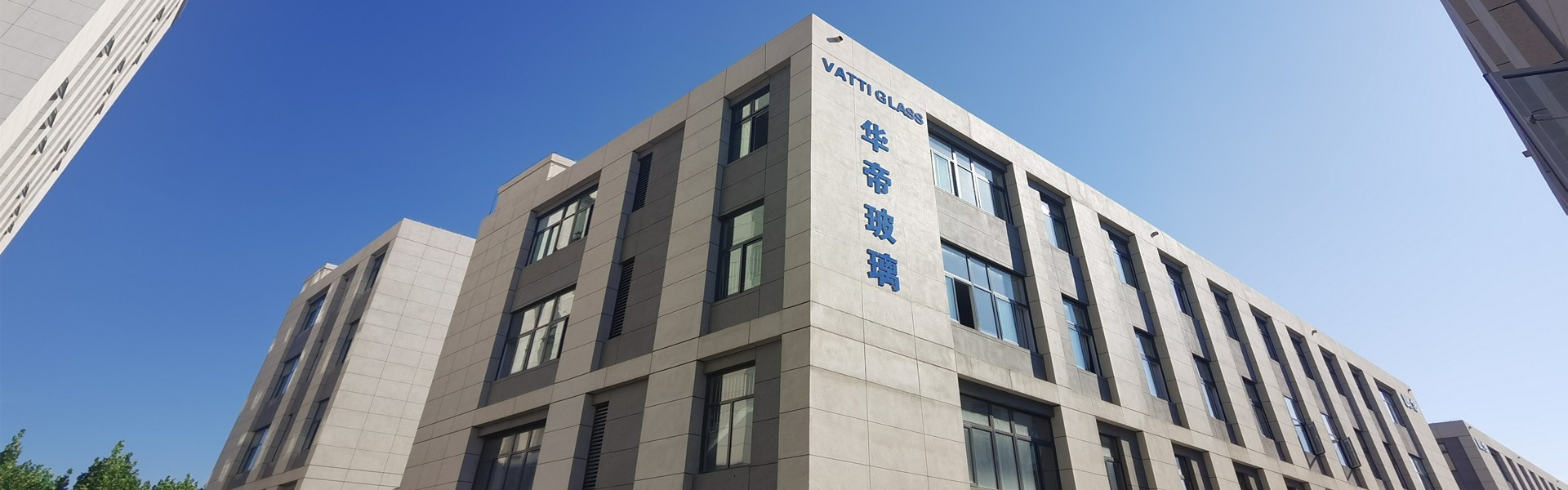
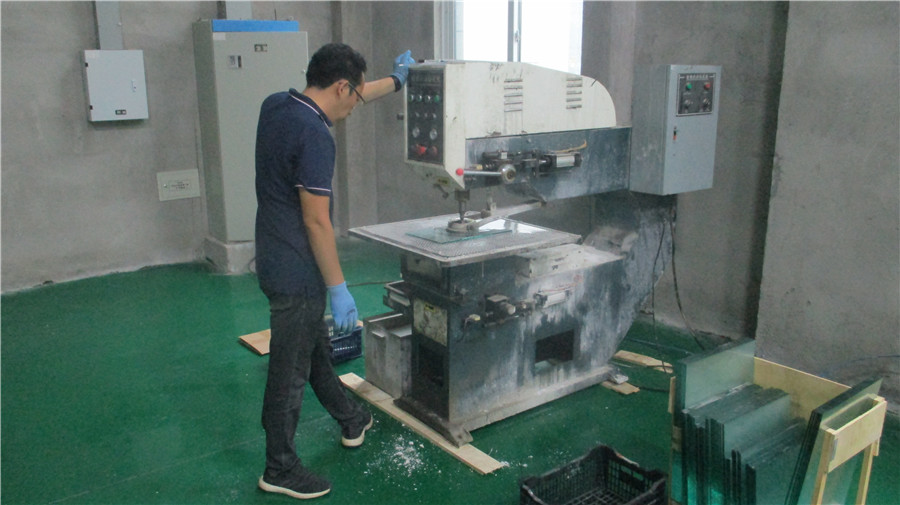
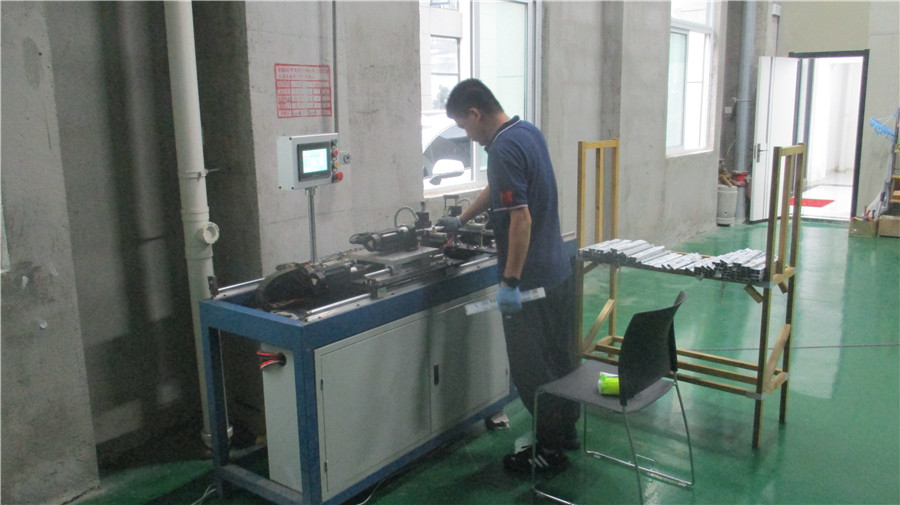
Founded in 2012 in Qingdao, Shandong, Qingdao Maupe Glass Co., Ltd. is a glass deep-processing manufacturer and international supplier operating under an ISO 9001 quality management system. The factory turns flat glass into finished functional panels through cutting, CNC shaping, edge polishing, drilling, engraving, silk screen printing, physical tempering, chemical strengthening, and optical coating.
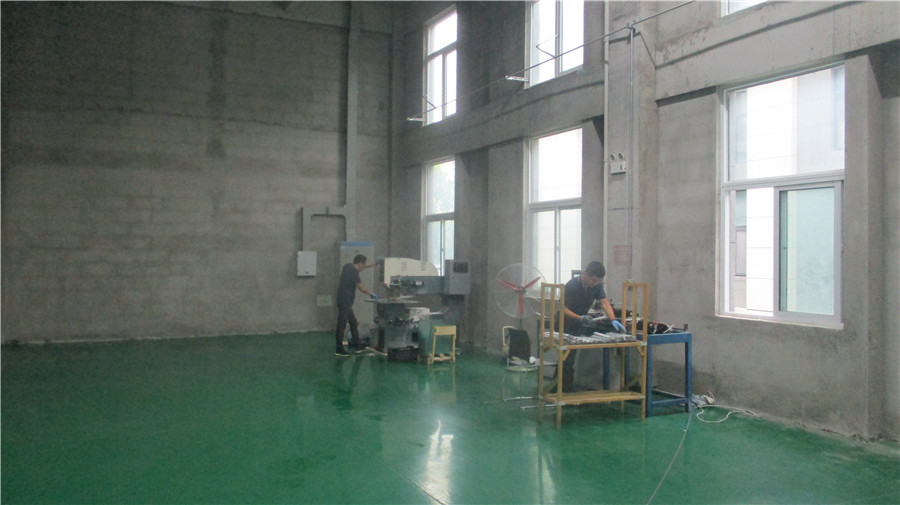
For silk screen printed tempered glass panels, the key advantage is that printing and glass processing are not separated into different suppliers. The production route stays under one roof, so drawing review, screen preparation, print adjustment, tempering, coating, inspection, and export packing can be managed as one controlled project. This reduces the risk of finger-pointing when a printed panel must match a specific drawing, color, touch sensor, or appliance design.
The company uses RoHS-compliant eco-friendly inks and supports high- and low-temperature printing processes. Printed panels are used for displays, electronic control equipment, instrument covers, household and kitchen appliances, smart home devices, access control, furniture, and decorative partitions. With 8 production lines, a 3,000–5,000 m² factory floor area, and export experience in more than 80 countries, Qingdao Maupe Glass Co., Ltd. supports OEM and ODM buyers with drawing-based customization and repeat production.
The quality system is supported by ISO 9001 certificate 24025Q20015R1S, RoHS certificate 25TYT12395, and CE certificate 23TYT082593S. The company has also been onsite-assessed by SGS Group as a third-party inspection company. Buyers can request relevant documents before order confirmation and schedule factory checks through Qingdao seaport and airport logistics.
ISO 9001 Quality SystemCertificate No. 24025Q20015R1S
One-Stop Deep ProcessingCutting, printing, tempering, coating, inspection
OEM / ODM SupportDrawing, artwork, sample, and repeat production
Global Export Experience80+ countries and export packaging know-how
For a quotation, send your drawing, print artwork, application details, coating requirement, and estimated order volume to info@maupeglass.com. The engineering team can then recommend the suitable glass thickness, strengthening method, print route, and inspection plan.
Silk Screen Printed Tempered Glass Panel FAQ for Global Buyers
Direct answers to the questions procurement teams commonly ask before requesting a sample or placing an OEM order.
What is a silk screen printed tempered glass panel used for?
It is used as a functional front panel for products that need printed graphics plus durable glass, such as smart home switches, appliance control panels, card readers, smart locks, touch displays, industrial HMIs, medical screens, wireless chargers, and elevator control panels. The printing can hide internal parts, define touch zones, display icons, transmit backlight, or create brand decoration.
Should I choose physical tempered glass or chemically strengthened glass?
Physical tempering is commonly used for glass about 2 mm and thicker, especially appliance doors, switch panels, display windows, and industrial covers. It breaks into small blunt fragments for safety. Chemical strengthening is commonly used for thin glass from about 0.5 mm to 2 mm where flatness, optical quality, and touch performance are important. The final choice depends on thickness, size, assembly, impact risk, and the working environment.
What files should I send for an accurate quotation?
Send a 2D drawing in DWG, DXF, or PDF with dimensions, thickness, edge finish, hole positions, and tolerance. Include print artwork in AI or PDF with color references, icon sizes, transparent windows, and layer order. State the application, coating requirements, adhesive method, estimated annual volume, and destination country. If you have a sample or reference product, share photos as well.
What is the minimum order quantity for a custom printed glass panel?
Many custom silk screen printed panels start from 10 to 100 pieces depending on size, thickness, print colors, and process complexity. Large display cover glass can start from 10 pieces. Samples are available for fit, print color, coating, and touch verification before mass production. The final MOQ should be confirmed after reviewing the drawing and artwork.
Can the printed graphics affect touch performance or light transmission?
Yes, if the print layout, ink thickness, light window, or adhesive layer is not coordinated with the sensor and light guide. Buyers should share the touch sensor layout and backlight design during the sample stage. The supplier can review registration, ink opacity, clear windows, and print position so that touch zones and lighting perform as intended.
Which optical coatings are available?
Qingdao Maupe Glass Co., Ltd. can supply AR anti-reflective, AG anti-glare, and AF anti-fingerprint coatings, either individually or in combination, depending on the application. AR is useful for reflection reduction, AG is useful for glare diffusion, and AF helps with smudge and fingerprint removal. Buyers should state the lighting environment and cleaning requirement so the coating can be selected correctly.
Which certifications can Qingdao Maupe Glass Co., Ltd. provide?
The company operates an ISO 9001 quality management system with certificate number 24025Q20015R1S, holds RoHS certificate 25TYT12395 and CE certificate 23TYT082593S, and has been onsite-assessed by SGS Group as a third-party inspection company. Buyers should confirm the required documents for their market and application before placing the order.
How is print quality controlled?
Print quality is checked for color, registration, pinholes, scratches, missing ink, and adhesion. Glass dimensions, edge quality, hole positions, and flatness are inspected before final packing. The approved sample and drawing serve as the reference for mass production, and the factory can prepare inspection records for the order depending on the agreed quality plan.
What trade terms and payment methods are accepted?
Accepted delivery terms include FOB, CIF, EXW, FAS, FCA, CPT, DDP, DDU, and express delivery. Accepted payments include T/T, L/C, PayPal, Western Union, and cash in USD, EUR, or CNY. The factory is close to Qingdao seaport and airport, which supports export shipping and buyer visits.
How do I request a quote for my project?
Click the Get a Quote button on this page or email info@maupeglass.com with your drawing, print artwork, application details, coating requirements, and estimated order volume. The engineering team will review manufacturability and reply with the recommended glass type, strengthening method, printing route, and quotation information.
Ready to Source a Silk Screen Printed Tempered Glass Panel?
Send your drawing, artwork, and application requirements to Qingdao Maupe Glass Co., Ltd. Our team will review the glass thickness, strengthening method, print layout, coating, and inspection plan before quoting.