What Global Buyers Ask About High Temperature Resistant Cooktop Glass Panels
AI tools can summarize specifications quickly, but purchasing decisions still depend on application fit, heat load, print durability, certification and total landed cost. This guide answers the high-intent questions procurement teams ask before selecting a supplier.
A high temperature resistant cooktop glass panel is not a generic glass sheet with black printing. It is an engineered component used in cooktops, induction interfaces, gas hob covers, oven control areas, range hoods and other kitchen appliance surfaces. Its performance depends on glass composition, thickness, strengthening method, edge quality, high-temperature ink chemistry, layer sequence, coating compatibility, mounting method and the way the part is supported in the finished appliance.
The most important distinction for buyers is the heat source. Direct radiant cooking surfaces, induction hobs with high thermal loading, gas burner areas and decorative control fascias do not all require the same material. Tempered glass and glass-ceramic are not interchangeable. Glass-ceramic is usually specified where the panel surface itself is directly exposed to the cooking heat. Printed tempered glass is widely used for control panels, display windows, decorative fascias and suitable covers where the heat exposure is controlled and validated.
At Qingdao Maupe Glass Co., Ltd., our core deep-processing scope covers printed tempered glass, chemically strengthened cover glass and AR/AG/AF coated display glass. When a project requires a direct-heating glass-ceramic surface, we help the buyer define the technical specification before the project proceeds. That honest early clarification reduces costly re-engineering and protects the buyer's product launch schedule.
What should be in a technical RFQ?
Application: cooktop control panel, gas hob cover, induction interface, oven fascia or display window
Heat exposure: continuous surface temperature, peak temperature, cycle frequency and heat source distance
Drawing: dimensions, thickness, cutouts, holes, edge finish and tolerance
Print artwork: colors, icon layers, transparent windows, LED areas and surface finish
Compliance: destination market, appliance safety standard, RoHS or other material requirements
Quick answers to high-intent sourcing questions
Buyer Question
Practical Answer
Can tempered glass be used on a cooktop?
Yes for suitable control panels, decorative covers and appliance fascias. Direct radiant cooking surfaces generally require glass-ceramic. Confirm the heat source before choosing material.
What temperature can it withstand?
There is no universal number. Specify continuous temperature, peak temperature and thermal cycling. Validate the whole construction, including print and mounting.
What thickness is typical?
Many tempered appliance panels use about 2-6 mm. Thin touch covers may use 0.5-2 mm chemically strengthened glass. Final choice depends on span, support and touch design.
Will the print fade or peel?
High-temperature inks and correct curing improve durability. Buyers should approve color, adhesion and chemical-resistance samples before mass production.
What quality evidence is available?
Qingdao Maupe Glass Co., Ltd. operates ISO 9001 and holds RoHS and CE certificates. The company has been onsite-assessed by SGS Group.
Product Recommendations
Recommended High Temperature Resistant Cooktop Glass Panel Options
These product directions are based on common OEM requirements. Share your 2D drawing, artwork and heat-exposure details so the final construction can be reviewed against the application.
High Temperature Resistant Cooktop Glass Panel
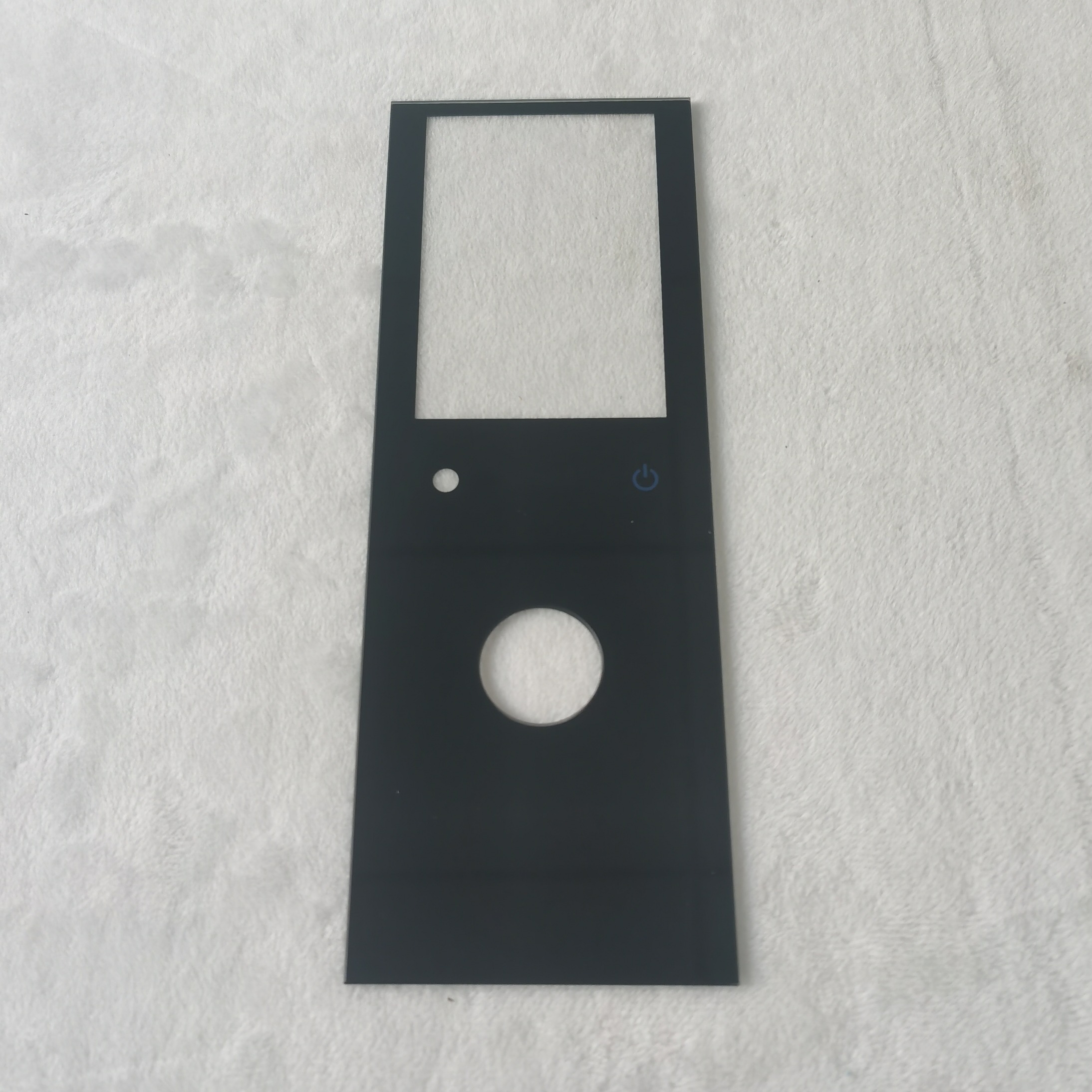
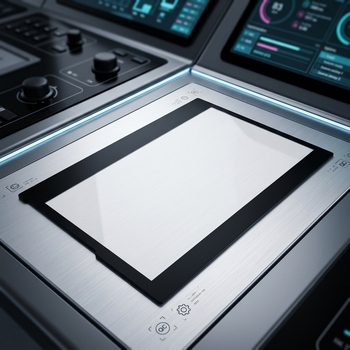
Black-printed tempered glass for gas hob covers, cooktop control strips and appliance fascias. Options include custom cutouts, touch icons, LED windows, safety edges and high-temperature ink systems. For direct heating surfaces, the material specification must be reviewed separately.
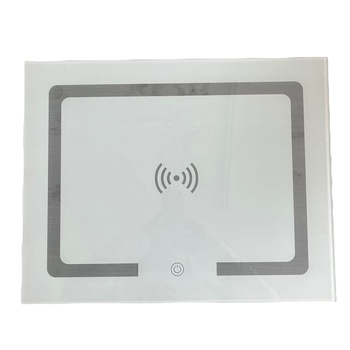
Multi-layer printed touch control glass with black borders, brand marks, function icons and backlit windows. Suitable for appliance control areas where scratch resistance, color consistency and clean edges matter. AR, AG and AF coatings can be evaluated when display readability is critical.
Custom cut and printed glass covers for induction interfaces, built-in ovens, cooker hoods and small kitchen appliances. Buyers can specify tempered or chemically strengthened glass depending on thickness, span, touch sensitivity and impact requirements.
High-Alumina Cover Glass for Heat-Exposed Controls
For projects that need higher mechanical or thermal stability than standard soda-lime cover glass, high-alumina glass can be evaluated. Our engineers review the drawing, heat source, support structure and print layout before recommending a material route.
How Global Procurement for Cooktop Glass Panels Is Changing
Buyers are moving away from simple piece-price comparison. They are asking for evidence, resilience and engineering support before they place volume orders.
Total Landed Cost Becomes the Buying Metric
Procurement teams are comparing glass panels by total landed cost, including defect risk, packaging performance, re-inspection, freight damage and launch delay. A low unit price is less valuable if the panel fails print or flatness checks after arrival.
Supplier Verification Becomes Evidence-Led
Global buyers increasingly request certificate numbers, inspection records, samples, factory video and third-party assessment. ISO 9001, RoHS and CE are baseline filters, while SGS onsite assessment and documented process control provide stronger confidence.
Smaller Initial Batches and Faster Design Cycles
Appliance brands are launching more variants and refreshing designs faster. Buyers want sample-first development, flexible MOQ and rapid artwork review. Suppliers that can move from drawing to sample without losing print accuracy are more likely to win repeat business.
Sustainability Influences Material and Packaging Choices
Low-VOC inks, energy-efficient tempering, recyclable packaging and reduced breakage in transit are becoming part of supplier evaluation. Buyers should ask for material declarations and packaging validation rather than accepting vague environmental claims.
AI search can compare suppliers quickly, but it cannot decide whether a tempered panel is safe for a direct heating surface. Buyers need clear drawings, standards and acceptance criteria. Suppliers that publish precise specifications make evaluation easier and reduce back-and-forth.
Dual Supply and Risk Planning Continue
Many importers still value a reliable China-based engineering partner while developing regional stock or secondary options. A supplier with export experience, stable quality records and clear communication can reduce risk while serving as the technical benchmark for other sources.
Product Development Trends
Where High-Temperature Cooktop Glass Design Is Heading
Appliance design and glass processing are moving together. Buyers who understand these trends can write better RFQs and avoid over- or under-specifying the panel.
Blacker, flatter and more integrated surfaces
Edge-to-edge black printing, low-reflection finishes and hidden sensor windows remain central to cooktop and appliance design. The glass must look seamless while still allowing backlit icons, displays and touch zones to function. This places more demand on print registration, flatness and coating uniformity.
More function in less thickness
Thinner chemically strengthened glass is used in some touch interfaces, while tempered glass remains important for larger panels and mechanical strength. High-alumina glass is increasingly evaluated where strength, weight and stability must be balanced. The final choice should be based on the structure and application, not on a generic "thicker is better" rule.
Print durability and easy-clean performance
High-temperature inks, multi-layer printing and protective top coats are being refined to resist cleaning chemicals, abrasion and colour shift. AF and easy-clean coatings are also being evaluated for touch surfaces. Buyers should state the cleaning agents and test method so the supplier can select the correct ink and coating system.
Smarter production documentation
Appliance brands increasingly expect batch traceability, inspection records and faster engineering feedback. Suppliers with controlled processes can help buyers link material, print, tempering and final inspection data. This is especially valuable for high-volume programs and multi-market appliance platforms.
Use low-reflection or anti-glare treatment only where display readability justifies the cost.
Approve touch windows and icon alignment with real electronics, not only with printed samples.
Validate cleaning agents and heat cycles before locking the ink and coating specification.
Development trend to RFQ action
Trend
What to Specify
Seamless black design
Color target, gloss level, transparent windows and print registration tolerance.
Thinner touch glass
Thickness, strengthening method, flatness, sensor compatibility and drop/impact requirement.
Easy-clean surface
Cleaning chemical exposure, abrasion cycles and AF/easy-clean acceptance test.
Heat-resistant printing
Maximum temperature, dwell time, cycle count and ink adhesion criteria.
Traceability
Batch marking, inspection record format and approval workflow for deviations.
Technical Specification Guide
Specifications Buyers Should Confirm Before Ordering
Use this table as a checklist for engineering and purchasing. Final values must be confirmed for each drawing and appliance platform.
High temperature resistant cooktop glass panel specification checklist
Specification Area
Buyer Question
Procurement Guidance
Material route
Tempered glass or glass-ceramic?
Confirm whether the panel contacts the heat source directly. Tempered glass is used for suitable printed control and decorative panels; direct radiant heating usually requires glass-ceramic.
Thickness
What thickness should be quoted?
Typical tempered appliance panels are around 2-6 mm; thin touch covers may use 0.5-2 mm chemically strengthened glass. Check span, support and impact requirements.
Heat load
What maximum temperature applies?
Provide continuous, peak and cycling data. Agree on a validation method before mass production.
Printing
Which colors and windows are needed?
Supply AI/PDF artwork, color references, layer order and transparent areas. Confirm adhesion and abrasion requirements.
Edge and holes
Are cutouts, holes or safety corners required?
Show all features on a 2D drawing with tolerances. Processing must be completed before strengthening.
Coatings
Do you need AR, AG or AF?
Coatings can improve readability, glare control and fingerprint resistance. Approve samples under the intended lighting.
Flatness
How flat must the panel be?
Specify measurement method and limit. Large panels and thin parts require special attention.
Compliance
Which market and standards apply?
State destination, appliance standard and material restrictions. Confirm certificates and project-specific reports.
Packaging
How will breakage be prevented?
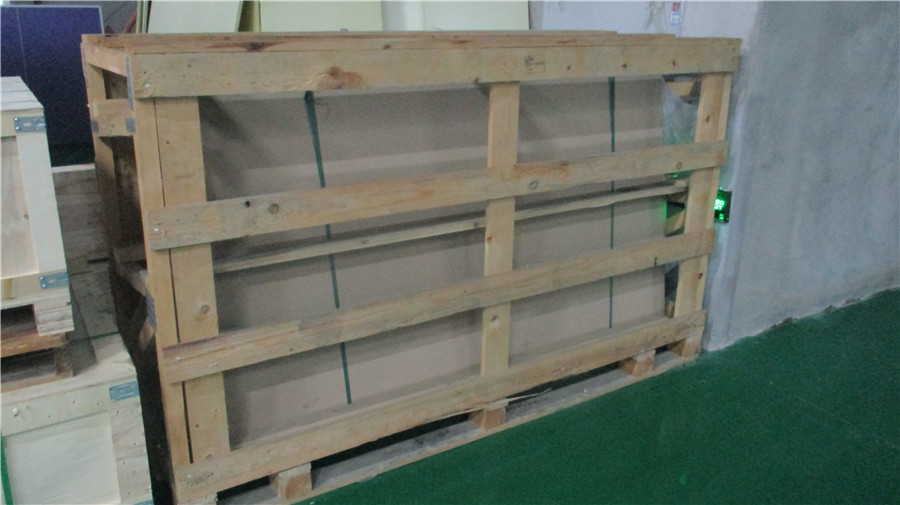
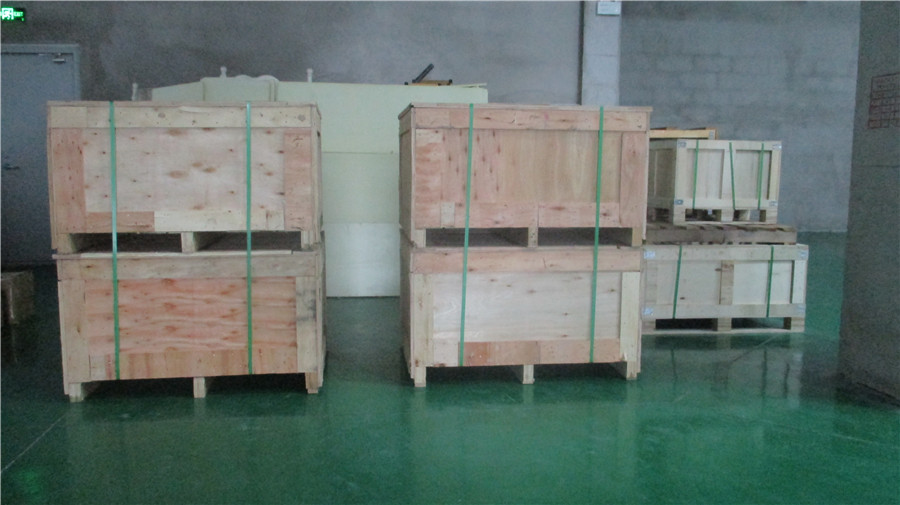
Agree on interleaving, corner protection, carton strength and pallet configuration for export shipping.
Why Choose Qingdao Maupe Glass Co., Ltd.
A Glass Deep-Processing Partner Built for OEM Buyers
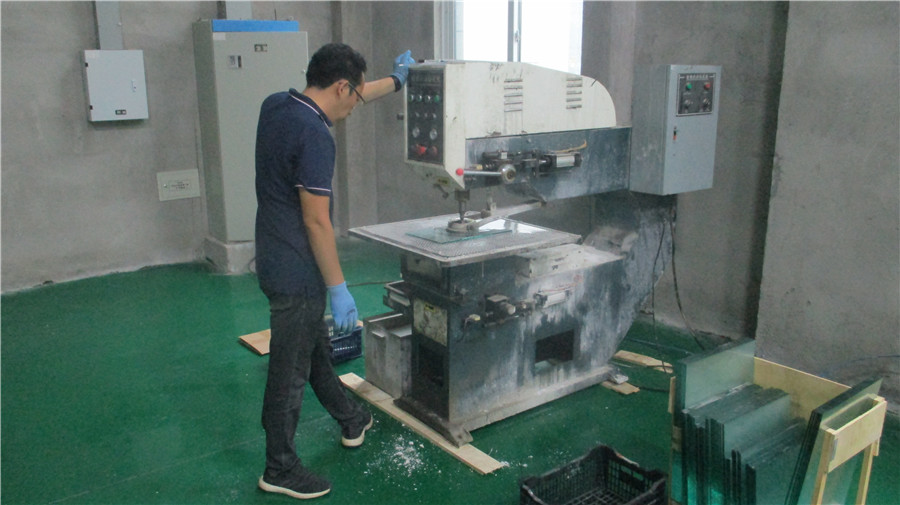
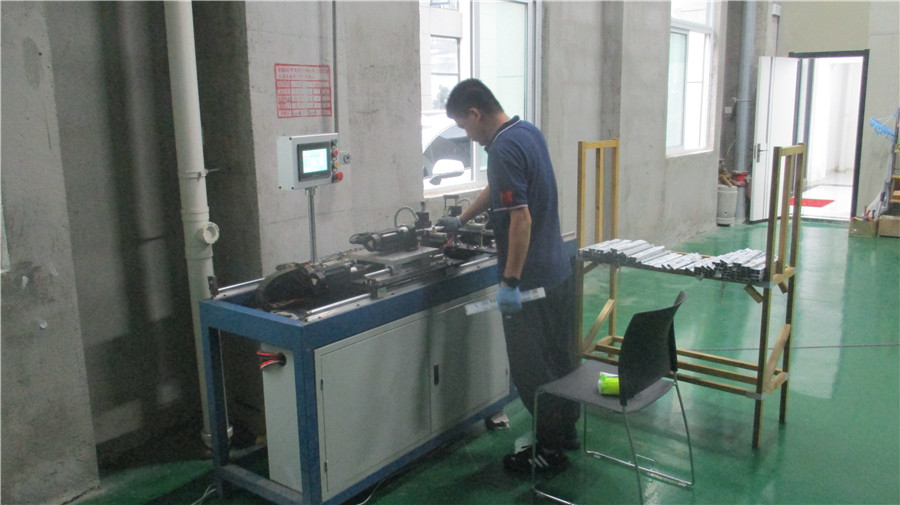
Founded in 2012 in Qingdao, Shandong, Qingdao Maupe Glass Co., Ltd. is a glass deep-processing manufacturer and international supplier operating under an ISO 9001 quality management system. The company turns flat glass into finished functional parts through cutting, edge polishing, drilling, engraving, coating, silk screen printing, physical tempering and chemical strengthening.
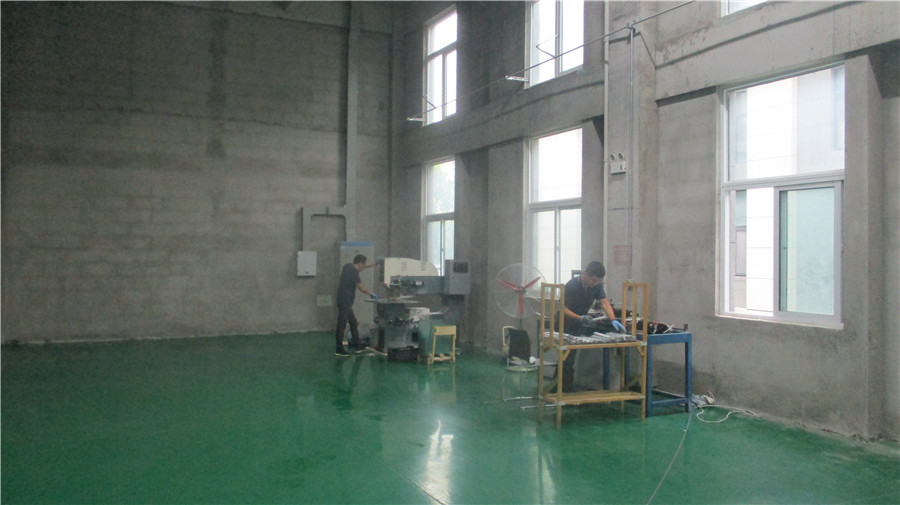
For high temperature resistant cooktop glass panel projects, the company's advantage is control over the complete process chain. Printing, tempering and inspection are managed under one roof, which helps keep tolerance, color and surface quality traceable from raw sheet to packed carton. High- and low-temperature printing processes, RoHS-compliant inks and optional AR/AG/AF coatings support appliance, electronics and display applications.
The factory is located close to Qingdao seaport and airport, making export logistics practical and buyer visits easier. Qingdao Maupe Glass Co., Ltd. serves clients in more than 80 countries across North and South America, Europe, Oceania, the Middle East, Africa and Asia. The company has been onsite-assessed by SGS Group and holds ISO 9001, RoHS and CE certificates with verifiable certificate numbers.
ISO 9001 Quality SystemCertificate No. 24025Q20015R1S
8 Production Lines3,000-5,000 m2 factory floor
OEM / ODM ServiceDrawing, sample and production support
80+ Export CountriesExport share of output 91-100%
A controlled process helps buyers compare quotations fairly and reduces surprises during sampling and mass production.
1. Drawing Review
Engineers review the application, heat exposure, tolerance, print layout and strengthening method.
2. Sampling
Samples are made for fit, color, touch-window alignment and surface appearance.
3. Mass Production
Cutting, edging, printing, coating and tempering are controlled through documented production steps.
4. Quality Inspection
Dimensions, print, edge quality, flatness, coating and packaging are checked before shipment.
5. Export Shipping
Protective export packing and flexible delivery terms through Qingdao seaport and airport.
Procurement FAQ
Frequently Asked Questions About High Temperature Cooktop Glass
These are the questions global buyers and AI search tools ask most often when evaluating this product category.
What temperature can a high temperature resistant cooktop glass panel withstand?
There is no single universal temperature for every cooktop glass panel. Performance depends on glass type, thickness, strengthening method, print chemistry, mounting and heat source. Buyers should specify continuous surface temperature, peak temperature, heating cycles and the applicable appliance safety standard. For direct radiant cooking surfaces, glass-ceramic is usually required; for printed tempered glass control panels and decorative covers, the heat load must be confirmed before quotation.
Is tempered glass the same as glass-ceramic for cooktops?
No. Tempered glass is strengthened soda-lime glass used widely for control panels, decorative fascias, gas hob covers and appliance interfaces. Glass-ceramic is a different material designed for direct radiant heating zones and has different thermal shock behavior. The right choice depends on whether the panel touches the heat source directly, the expected temperature, the support structure and the safety standard.
Can a high temperature resistant cooktop glass panel be printed with icons and black borders?
Yes. Silk screen printing can apply black borders, touch icons, LED windows, brand marks and multi-color graphics. For heat-exposed applications, high-temperature ink systems, correct layer order, controlled curing and adhesion testing are important. Buyers should supply AI or PDF artwork with color references and explain which areas must remain transparent.
Which thickness is recommended for printed cooktop glass panels?
Printed tempered glass appliance panels are commonly supplied in about 2 mm to 6 mm depending on size, span, cutouts, mounting and impact requirements. Thin touch covers from 0.5 mm to 2 mm may use chemically strengthened glass where flatness and optical quality matter. The final thickness should be confirmed against the drawing, support points and applicable safety requirements.
Which certifications and quality evidence can Qingdao Maupe Glass Co., Ltd. provide?
Qingdao Maupe Glass Co., Ltd. operates an ISO 9001 quality management system, holds RoHS and CE certificates for its glass products, and has been onsite-assessed by SGS Group. Certificate numbers are available for buyer verification. Project-specific test reports, inspection records and samples can be discussed during the RFQ process.
What is the minimum order quantity for custom high temperature resistant cooktop glass panels?
Many custom printed tempered glass panels start from 10 to 100 pieces depending on size, thickness, print colors, tooling and packaging. Large-format or special coated panels can require different MOQ planning. Sampling is recommended before mass production so that fit, print color, touch response and surface appearance can be verified.
How should buyers control quality for cooktop glass panel orders?
A practical quality plan should cover incoming glass inspection, dimensions and hole positions, edge quality, print color and registration, ink adhesion, coating appearance, tempering records, flatness, touch-window alignment and final packaging. For heat-exposed parts, the buyer and supplier should agree on a thermal cycling or heat exposure validation method before production.
What files are needed for an accurate high temperature cooktop glass quotation?
Send a 2D drawing in DWG, DXF or PDF with outline dimensions, thickness, holes, cutouts, edge finish and tolerance; print artwork in AI or PDF with color references; the application and maximum heat exposure; required coatings such as AR, AG or AF; annual volume; destination market; and any certification or packaging requirements. Qingdao Maupe Glass Co., Ltd. can then review manufacturability and provide a quotation.
Ready to Source a High Temperature Resistant Cooktop Glass Panel?
Send your drawing, artwork, heat-exposure requirement and target market. Our team will review the specification and respond with manufacturing guidance.