Choosing Toughened Glass in 2026 is not simply a matter of picking the strongest-looking panel. The right specification depends on where the glass will sit, how it will be supported, and what it must withstand. A shower screen, balcony door, shopfront, and glass canopy face different demands. Details matter.
Glass scientist James E. Shelby’s materials-focused work suggests a useful principle. In paraphrase, not as a verbatim quotation: “Choose glass by its properties and intended use, not by its name alone.” That distinction helps clarify the choices ahead. Fully toughened glass offers increased resistance to impact and thermal stress compared with ordinary annealed glass. If it breaks, it generally fractures into smaller pieces, but it is not unbreakable. Laminated glass, heat-soaked options, coatings, thickness, and edge quality may also affect a project’s performance. Local building requirements and the manufacturer’s tested specifications still need checking.
A real site can change the answer. A sunlit door beside a dark floor may face different heat conditions from an interior partition. A narrow fixing hole can matter more than a broad panel’s appearance. And once glass is toughened, it generally cannot be cut or drilled; measurements must be right beforehand. Easy to overlook.
This guide compares common Toughened Glass options by application, safety needs, finish, and practical constraints. It also leaves room for a less tidy truth: the “best” glass on paper may not suit a project’s frame, budget, or installation conditions. Check the details twice.
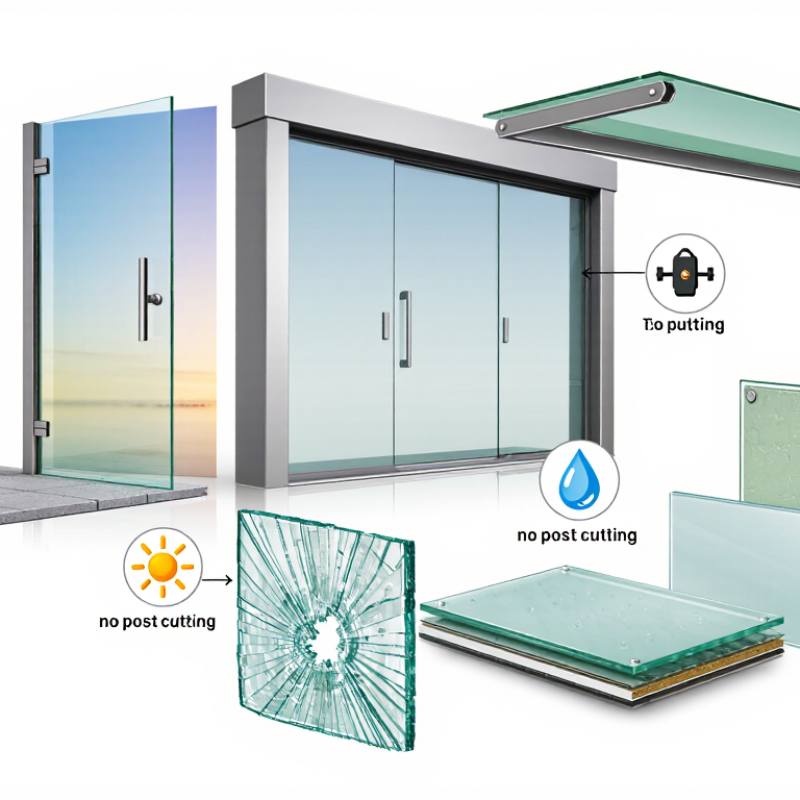
What Toughened Glass Is and How It Is Made
Toughened glass, also called fully tempered glass, begins as ordinary flat glass. It is cut, drilled, and edge-finished before heating, because later alterations can cause breakage. A furnace raises the glass to about 620°C, near its softening range. Powerful air jets then cool both surfaces quickly while the core cools more slowly. This creates surface compression and internal tension. The process is precise, but not magic: poor edge quality can still weaken a finished pane.
The National Glass Association’s technical guidance says fully tempered glass is about four times as strong as comparable annealed glass. When it breaks, it usually fragments into small pieces rather than large, sharp shards. ASTM C1048 defines requirements for heat-treated flat glass, including fully tempered products. These figures help with specification, not every design decision. I would not treat “four times stronger” as permission to use thinner glass without checking loads, support, holes, and edge conditions.
Tips: Confirm dimensions and cut-outs before tempering. Ask the fabricator how the edges will be finished, and match glass thickness to the project’s wind, impact, and support requirements. A real sample can reveal color and reflections that a drawing misses. That detail is easy to overlook.
Which Toughened Glass Is Best for Your Project in 2026? — What Toughened Glass Is and How It Is Made
Toughened glass, also called tempered glass, is annealed glass that has been heated and rapidly cooled to create surface compression and internal tension. This heat-treatment process increases its resistance to impact and temperature changes compared with ordinary annealed glass. When it breaks, it generally fractures into many small pieces rather than large sharp shards.
| Glass option | How it is made | Key characteristics | Common project uses | Important considerations |
|---|---|---|---|---|
| Clear fully toughened glass | Cut and edge-finished glass is heated uniformly in a tempering furnace, then rapidly cooled with air. | Higher mechanical and thermal-shock resistance than comparable annealed glass; breaks into small fragments. | Shower screens, doors, partitions, furniture, and glazing where safety-glazing rules require tempered glass. | Must be cut, drilled, and have edges finished before tempering. It cannot be resized or drilled afterward. |
| Tinted toughened glass | Body-tinted glass is heat-treated using the same tempering process as clear glass. | Reduces visible light transmission and can change solar heat gain; performance depends on the specific tint and glass thickness. | Façades, windows, canopies, and other projects needing a particular appearance or daylight level. | Check visible light transmission, solar performance, colour consistency, and thermal-stress requirements for the project. |
| Heat-treated low-emissivity (low-E) glass | A compatible low-E coating is applied to glass that is subsequently heat-treated, or the coating is applied through a process designed for heat treatment. | Can reduce heat transfer through glazing while retaining the safety benefits of toughening when correctly specified and processed. | Energy-conscious windows, façades, and insulated glass units. | Not every low-E coating can be toughened. Confirm coating compatibility, orientation, and full unit performance with the fabricator. |
| Ceramic-frit toughened glass | Ceramic frit is printed onto the glass and fused during heat treatment. | Provides durable patterns or partial opacity; the printed areas can affect solar absorption and thermal behaviour. | Architectural façades, balustrades, partitions, and decorative glazing. | Pattern, coverage, and edge details should be finalized before processing. Assess thermal-stress risk for the proposed design. |
| Toughened laminated glass | Two or more glass plies are toughened individually, then bonded with an interlayer such as PVB or ionoplast. | After breakage, the interlayer helps hold fragments together. The assembly may also provide added security or acoustic performance, depending on its design. | Overhead glazing, façades, balustrades, and locations where post-breakage fragment retention is important. | Performance depends on the complete make-up, interlayer, support, and applicable code. The interlayer does not make every assembly suitable for every overhead or guard application. |
| Curved toughened glass | Glass is heated and shaped on or in a mould, then rapidly cooled while retaining the specified curved form. | Combines a curved profile with the characteristics of toughened glass. | Curved façades, display glazing, and architectural features. | Radius, dimensions, thickness, and tolerances are limited by manufacturing capability. Confirm feasibility before finalizing the design. |
Selection and safety note: Choose glass based on the application, local building codes, required impact classification, dimensions, support conditions, and post-breakage behaviour. Toughened glass cannot be cut or drilled after tempering. Heat-soak testing may reduce the risk of breakage associated with certain nickel-sulfide inclusions, but it does not eliminate the risk of spontaneous breakage. Confirm the final specification and test requirements with a qualified glass fabricator or project professional.
FAQS
Clear glass suits doors and partitions where daylight matters. Tinted glass can soften glare, while patterned glass adds privacy. Curved, laminated, and insulated options serve more specific needs. Small details matter.
Not by itself. Tinted glass or solar-control features may help, depending on color, thickness, shading, and orientation. Large windows facing strong afternoon sun need careful planning.
Toughened glass usually breaks into small pieces. Laminated glass has an interlayer that helps hold fragments together after breakage. Some projects combine both treatments, but added layers increase weight and cost.
No. Heat-strengthened glass is not fully tempered and generally breaks differently. Check the product specification, rather than relying on a broad label. Not quite interchangeable.
No. Curved glass needs careful planning because it cannot be cut or drilled after tempering. Confirm the final shape, holes, dimensions, and hardware before ordering.
Confirm the required safety-glazing classification, permanent markings, and product documents. Also check the frame, supported edges, clearances, setting blocks, and compatible sealants with a qualified professional. A tight fit can create pressure at the edges.
No. Testing can reduce the risk linked to certain inclusions, but it cannot remove every risk. Request traceable test records and verify that they match the installed panels.
Consider impact exposure, climate, orientation, shading, frame support, and thermal performance together. Windows can account for a notable share of home heating and cooling energy use. I might still miss a source of glare when looking only at drawings.
Conclusion
Toughened Glass is heat-treated to improve its strength and alter how it breaks, making it a practical option for projects where durability and safety matter. In 2026, available choices include clear, tinted, patterned, and laminated toughened glass, each offering different combinations of appearance, light transmission, privacy, and impact performance. The best option depends not only on its glass type, but also on the conditions it must withstand.
Before choosing, consider the location, expected loads, exposure to heat or weather, desired appearance, and whether additional safety or sound-control features are needed. Compare the performance of suitable options and check that the glass meets relevant standards for its intended use. Accurate measurements, compatible frames and fittings, and professional installation are also essential: even well-selected glass may not perform as expected if it is improperly supported or installed.