8 Product Families for 2025–2030 Procurement
These eight glass product families cover the requests most often received from industrial buyers: printed display covers, solar and instrument glass, anti-glare monitor protection, decorative beveled glass, switchable privacy glass, LCD protection and clear tempered cover plates. Each product link is preserved; final thickness, printing, coating, edge finish, holes and tolerances are confirmed against the buyer’s drawing rather than assumed from a catalogue image.
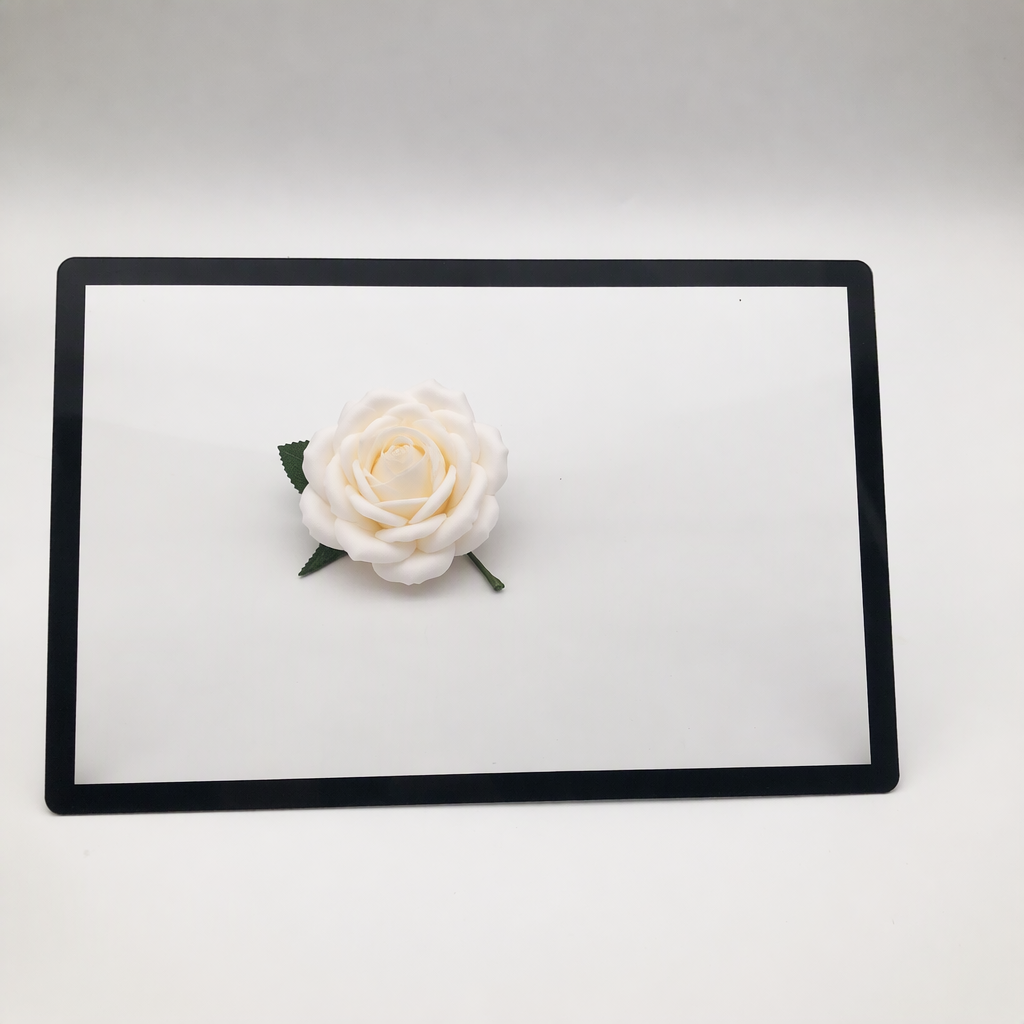
Ultra-Thin Silk Screen Printed Tempered Glass for Display Panels
A thin strengthened cover glass for compact displays, touch HMIs and appliance interfaces. The printed border and icon layer can hide adhesives and sensor edges while keeping the optical window crisp. Recommended where low weight, flatness and a custom graphic layer matter.
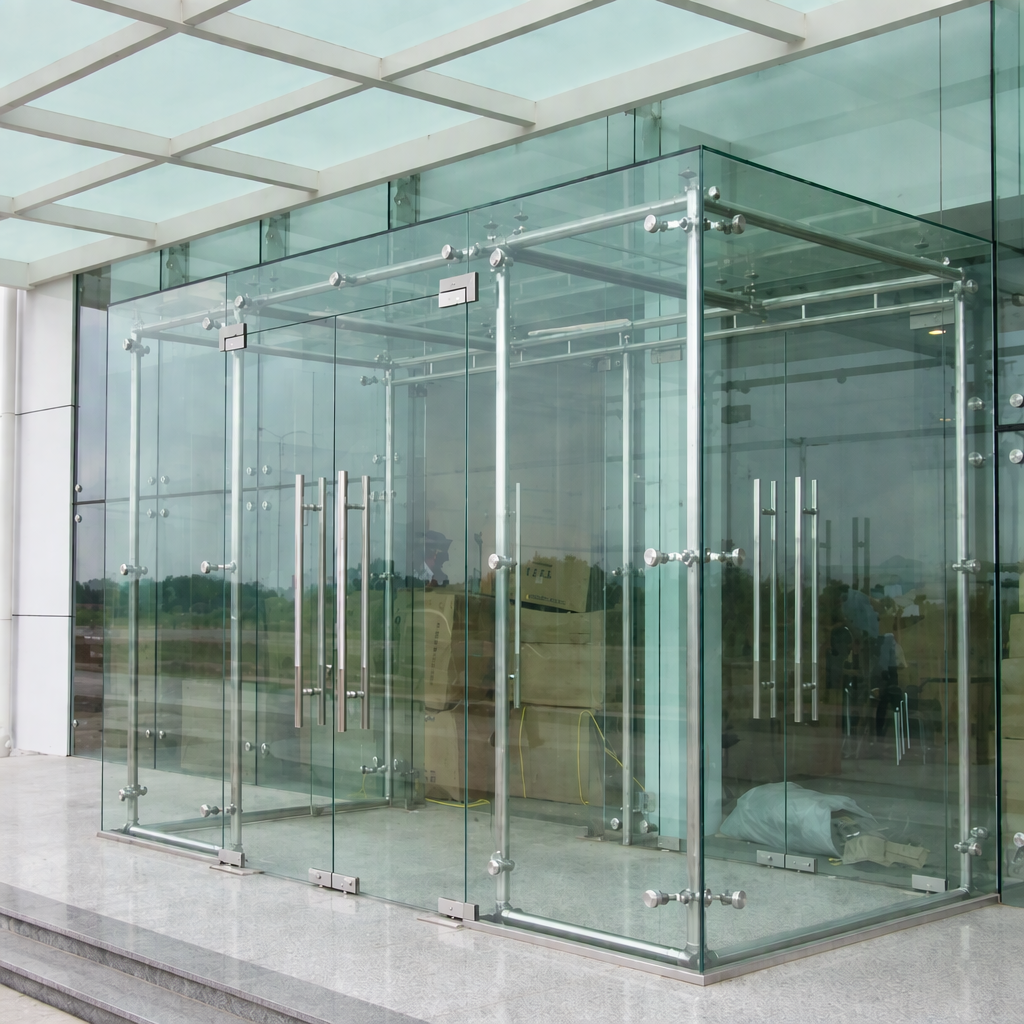
Tempered Glass Solar Window Glass High Transmittance Clear Flat Tempered Glass
Clear flat tempered glass for solar windows, photovoltaic covers and instrument glazing where light transmission and mechanical safety are both critical. Buyers should confirm transmittance target, thickness, edge treatment and installation exposure before tooling.
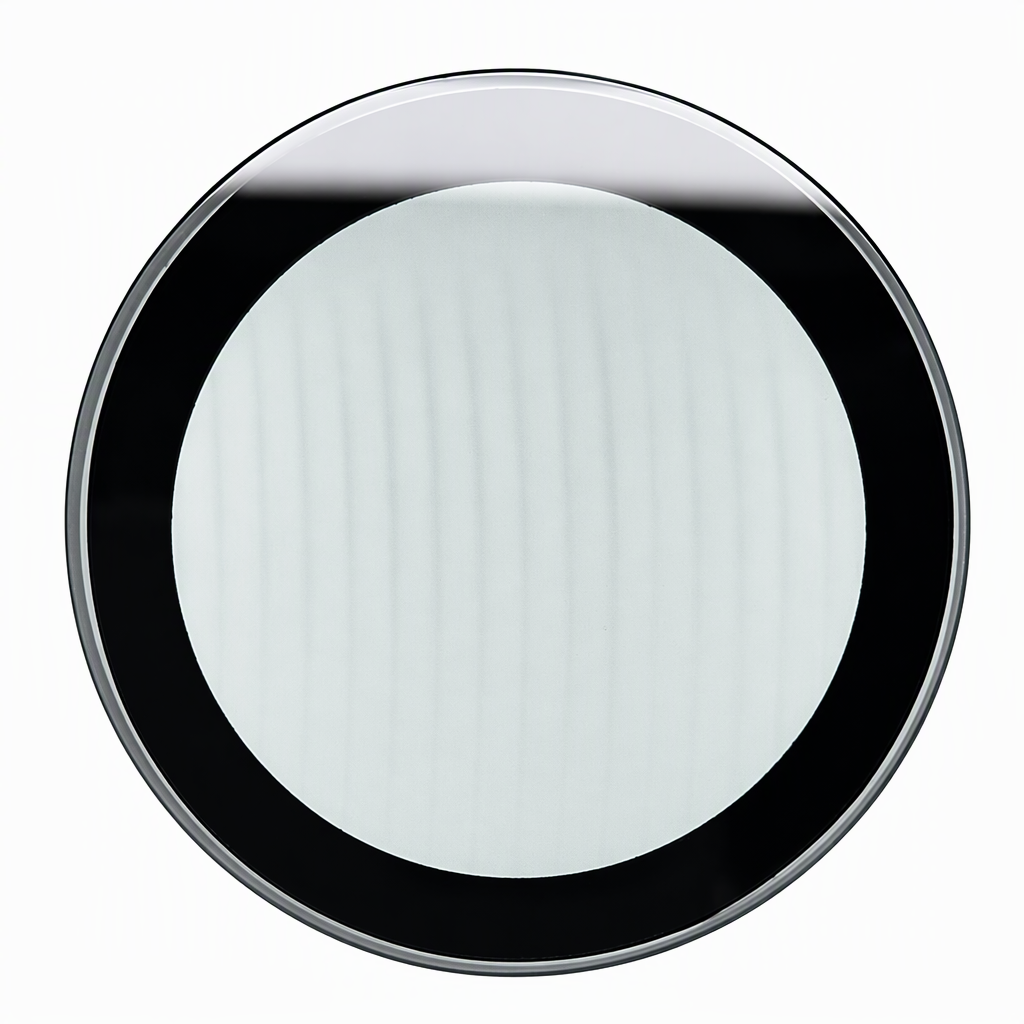
Custom 3–19 mm Flat Tempered Glass Panel for Instrument Use — Round Printed Tempered Glass
A flexible custom panel for instruments, control equipment, industrial windows and round printed covers. The 3–19 mm range helps engineers match impact resistance and stiffness; drilled holes, print windows and edge geometry are produced to drawing before tempering.
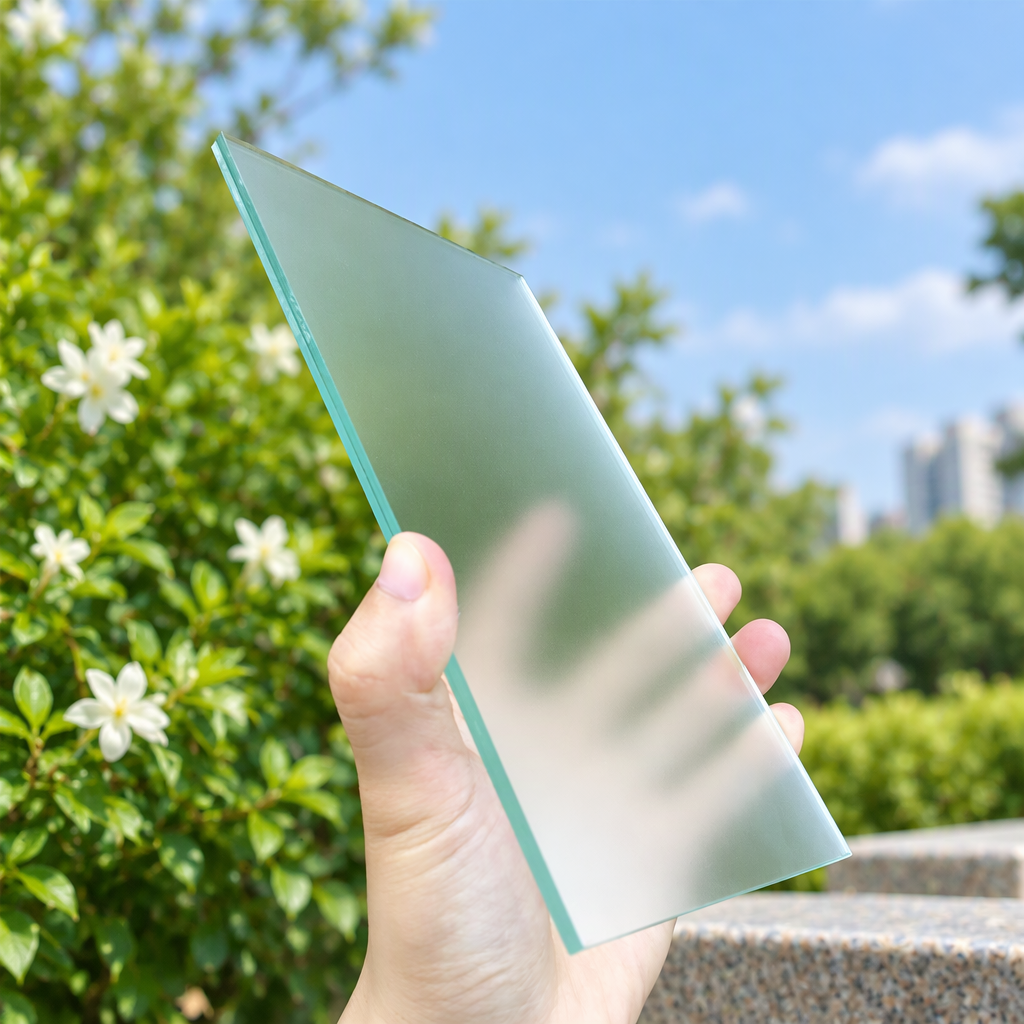
High Quality Industrial Solid Anti-Glare Glass Screen Protector — Matte Monitor Cover Glass
An AG matte surface reduces glare and fingerprint visibility on industrial monitors, medical displays and outdoor HMI. It is useful in bright environments, but the haze level must be agreed in writing so display contrast remains within specification.
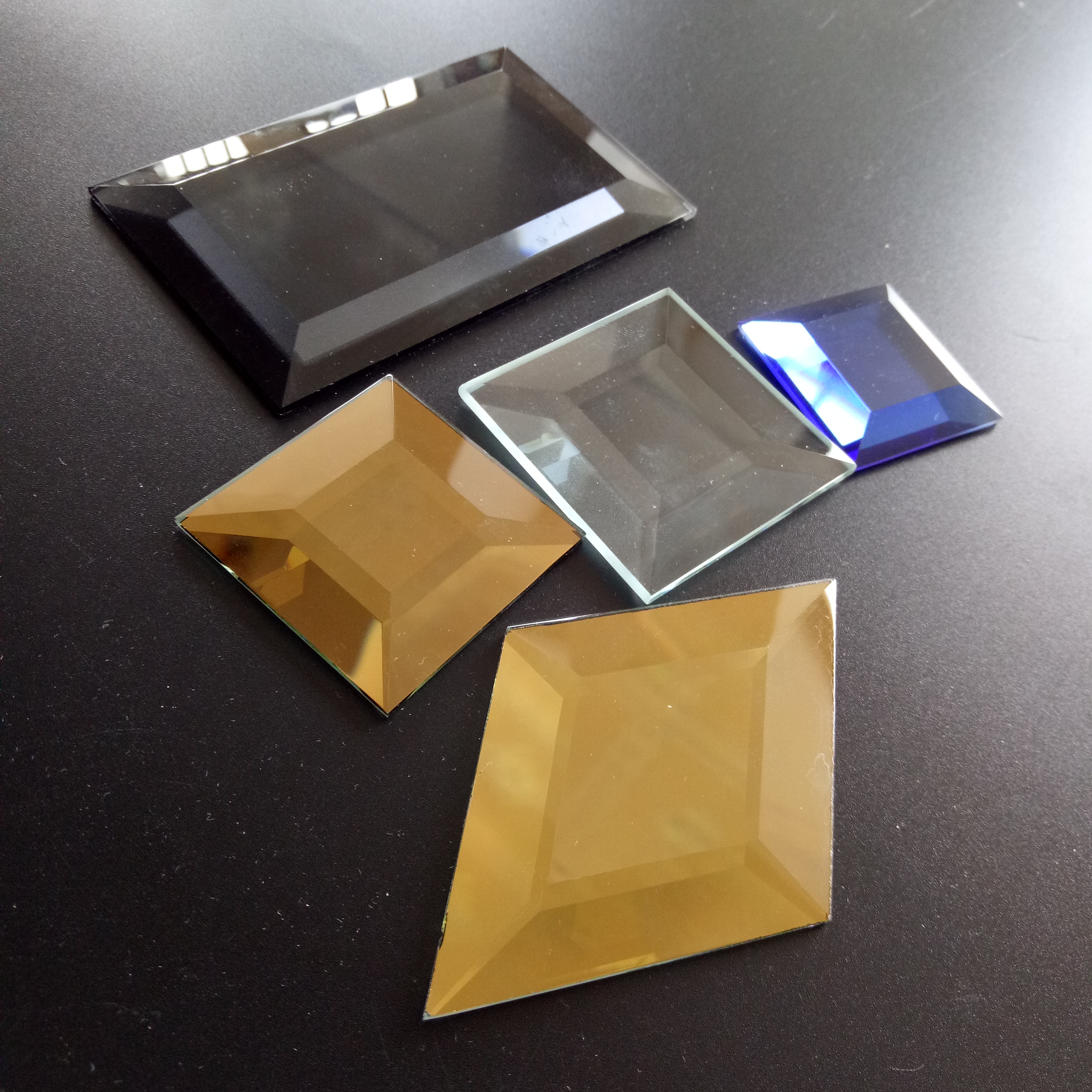
Blue-Gold Faceted Beveled Glass for Wall Decoration — Clear Beveled Glass Pieces
Decorative faceted and beveled glass for feature walls, partitions and commercial interiors. For project supply, confirm color range, edge-chipping limits, facing direction and export packing for fragile beveled pieces before approving the sample.
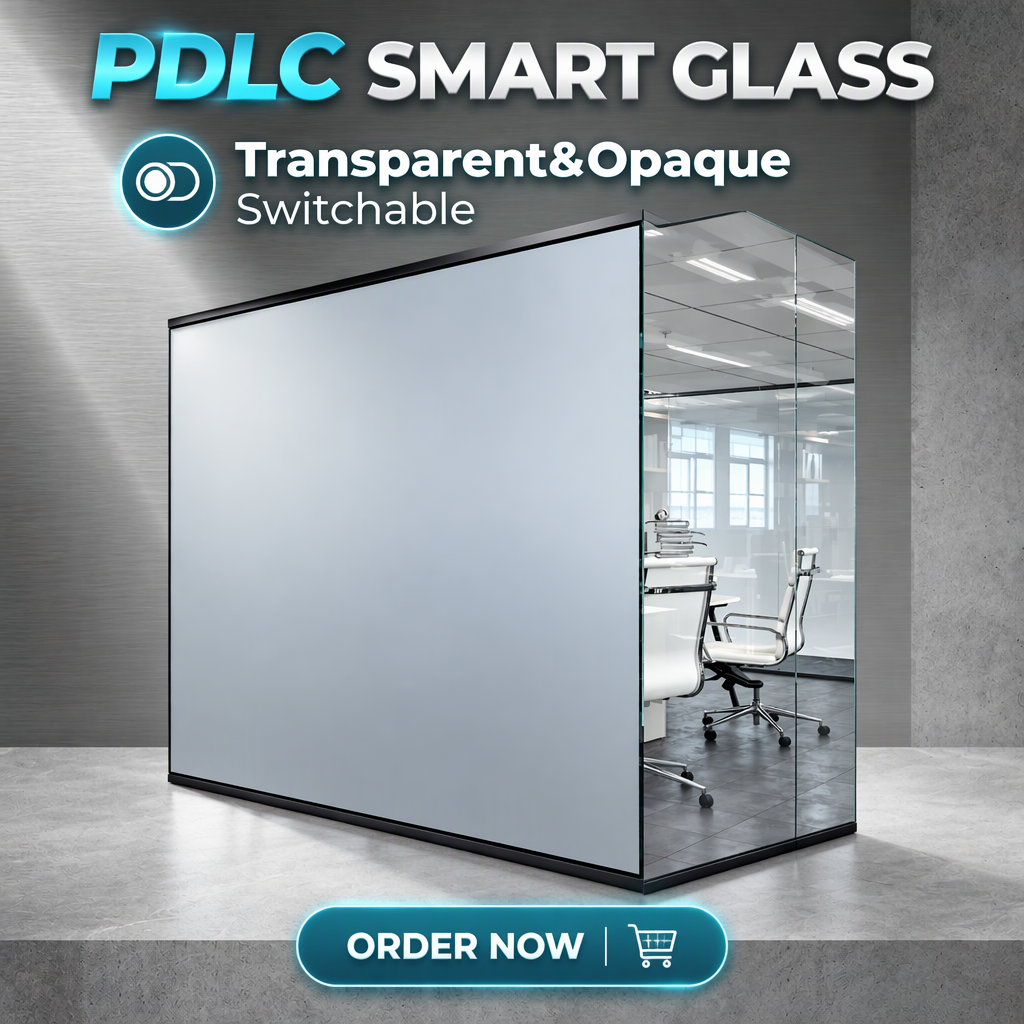
PDLC Smart Film Smart Glass Privacy Film — Electrically Transparent Dimmable Glass
Switchable privacy glass for office partitions, clinic screens and conference rooms. The procurement brief should cover power supply, transparency in the on state, haze in the off state, busbar placement, control method and warranty terms.
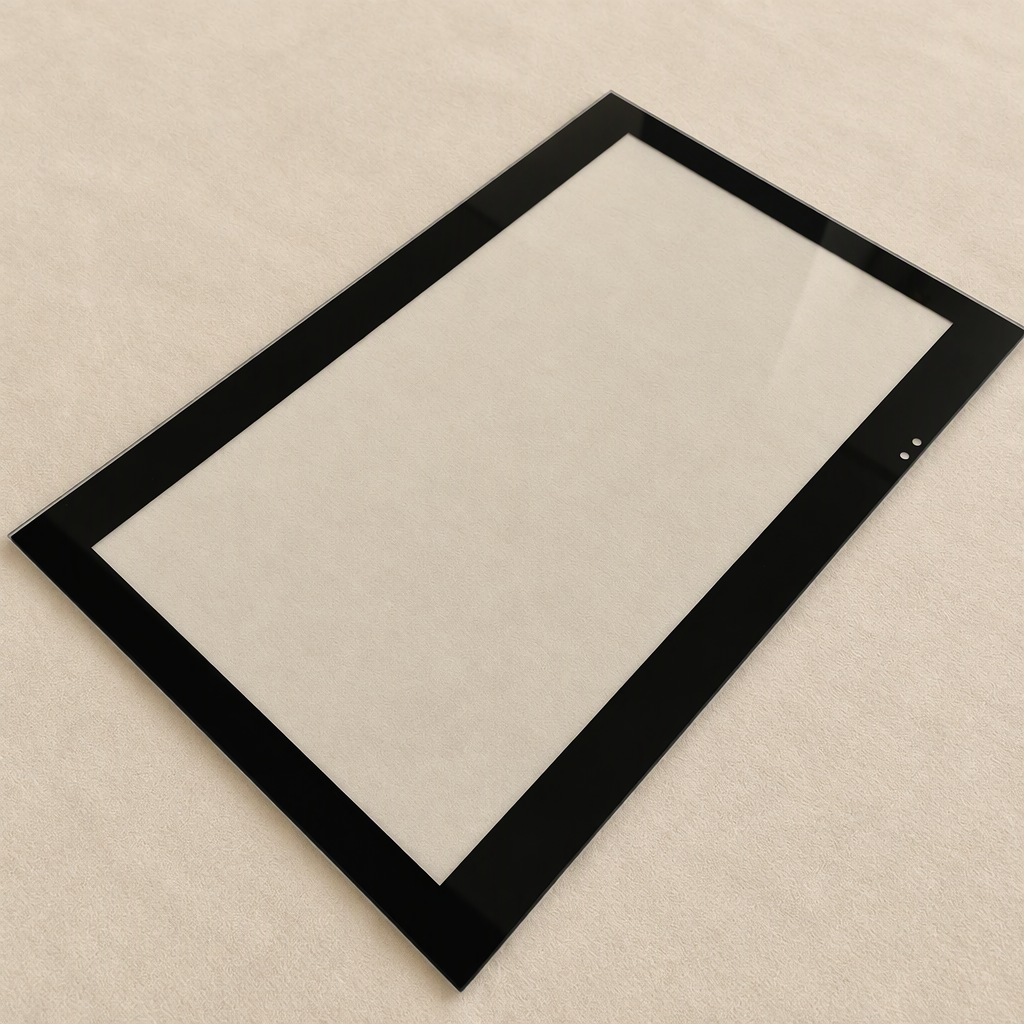
Tempered Glass Panel Silk Screen Printed Flat Display Screen Protector for LCD TV & Industrial Decoration
Printed flat glass covers for LCD TVs, industrial signage and equipment windows. Multiple print colors, black border masking and logo windows can be combined with physical tempering for safety and a clean front-of-screen appearance.

Clear Tempered Glass Transparent Tempered Glass Panel Cover Plate
Clear tempered cover plates for machinery guards, appliance panels, display windows and transparent covers. The most important specifications are thickness, edge finish, hole tolerance and whether every machining step is completed before heat treatment.
Have a drawing, artwork file or target price? Send it for a manufacturability review before you commit to tooling. Our team checks thickness, edge finish, print order, coating compatibility and packing risk against the intended application.
Why “China Best” Is a Procurement Decision, Not a Price Label
Buyers searching for China best industrial glass manufacturers and factories are usually not shopping for a single sheet of glass. They are trying to reduce risk in a programme that may involve touch interfaces, display readability, appliance safety, access control, solar exposure or architectural interiors. The useful question is not “Who is cheapest?” but “Who can turn a drawing and artwork into a repeatable part with documented quality, stable lead time and clear engineering feedback?”
China’s advantage in industrial glass is not limited to labour cost. The country has a mature ecosystem of float glass, ultra-clear glass, high-alumina sheet, printing inks, tempering furnaces, coating lines, CNC equipment and export packaging. However, a trading company, a cut-to-size shop and a deep-processing OEM can look similar on a B2B directory. The difference becomes visible when a project requires printed windows, tight hole positions, mixed thicknesses, special coatings, first article inspection and packaging that survives ocean freight.
For a 2025–2030 supply plan, treat “best” as a risk-adjusted score: process depth, application engineering, audit evidence, communication speed, sample discipline and logistics. A factory with ISO 9001, RoHS and CE documentation, SGS onsite assessment and export experience in 80+ countries is not automatically the right fit for every part, but it gives procurement a stronger starting point than a quotation without process detail.
What the Best China Industrial Glass Manufacturers & Factories Have in Common
The strongest suppliers share six operational traits. They are visible in the quotation, the drawing review, the sample report and the packing specification — not only on the company profile page.
In-House Process Chain
Cutting, CNC, edging, drilling, printing, tempering or chemical strengthening, coating and inspection are controlled under one roof. This reduces hidden subcontracting and makes tolerance and color responsibility easier to trace.
Application Engineering
A qualified factory asks about the touch sensor, heat exposure, outdoor light, cleaning chemicals, drop risk and assembly tape before recommending thickness, strengthening method or coating.
Audit-Ready Quality System
ISO 9001 procedures, incoming material inspection, finished product inspection, certificate numbers, print color records and tempering batch records are available for review. Documentation should support the buyer’s compliance file.
Print & Optical Control
Dead-front graphics, logos, touch icons and black borders require controlled ink, curing and layering. For AR, AG or AF surfaces, agree on reflectance, haze, adhesion and cleaning durability before mass production.
Export Packing & Communication
Industrial glass fails commercially when it arrives damaged. Edge protection, corner protection, moisture control, carton strength and clear FOB, CIF or DDP documentation are part of the product, not an afterthought.
Traceability & Change Control
Material batch, ink lot, coating lot and process parameters should be traceable. A serious supplier tells buyers when a glass source, print color, coating stack or packing method changes — before the change reaches the line.
Procurement Trends Reshaping Industrial Glass Sourcing from China
From 2025 onward, the buying pattern is moving away from annual lowest-price auctions toward risk-based sourcing. The following six trends are already visible in RFQs from electronics, appliance, medical, access-control and architectural buyers.
Dual Sourcing and “China + 1”
Buyers keep China deep-processing for complex printed or coated parts while adding regional assembly or a second source for simple clear glass. The practical approach is to split categories by risk rather than abandon the deep-processing ecosystem.
From Part Supplier to Process Partner
RFQs increasingly include assembly tape, protective film, printed windows and custom packaging. Suppliers are expected to review design for manufacturability and flag tolerance conflicts before tooling — not after the first shipment.
High-Mix, Low-Volume Orders
Smart-home and medical device SKUs demand 10–100 piece runs with many variants and frequent artwork changes. Quick screen and sample cycles, digital job records and flexible printing separate adaptable factories from mass-only lines.
Compliance as Baseline
RoHS, CE, ISO 9001, material declarations and certificate validity are now baseline qualification items. Procurement teams are checking certificate numbers, scope and expiry dates instead of accepting a logo on a homepage.
Sustainability and Packaging Waste
Ocean-freight damage is both a cost and a carbon waste. Optimized cartons, recyclable dividers and right-sized packaging are becoming tender criteria, especially for large-format display glass and fragile beveled decorative pieces.
Data Transparency and Audit Readiness
Video audits, photo reports, dimensional records and fast technical replies now form part of supplier qualification. The factory that can provide accurate documentation quickly often wins the order even when its unit price is not the lowest.
Product Development Trends in Industrial Glass
Industrial glass is becoming a functional component rather than a passive cover. The trends below affect material choice, printing, coating, testing and the way a drawing is prepared.
Thin, Chemically Strengthened Cover Glass
Compact electronics continue to reduce weight and thickness, pushing demand for 0.5–2 mm chemically strengthened glass with excellent flatness and optical clarity for touch covers, sensors and hand-held terminals.
AR, AG and AF Surface Engineering
Bright environments, medical screens and outdoor HMI are increasing demand for anti-reflective, anti-glare and anti-fingerprint surfaces. Buyers should specify the measurement method for reflectance, haze and durability, because “AR” or “AG” alone is not a specification.
PDLC Switchable Privacy Glass
Switchable privacy glass is moving from showroom demonstrations into office partitions, clinic screens and conference rooms. The procurement brief must cover power supply, transparency, haze, busbar position and control interface.
Large-Format Display Covers
LCD TV, digital signage and industrial monitors are pushing toward larger glass covers. Large-format parts place higher demands on flatness, tempering control, edge quality and export packing — especially for 43–55 inch and larger panels.
Printed Glass as an Integrated UI Layer
Dead-front graphics, backlit icons, touch zones, camera windows and sensor windows can be combined on one printed glass layer. This reduces assembly parts and allows appliance and smart-home designers to create cleaner interfaces.
Decorative High-Value Glass
Faceted, beveled and colored glass is increasingly specified for commercial interiors and feature walls. This category demands tight control of edge chipping, color range, reflection and fragile-item packing rather than standard cover-glass tolerances.
Tempered, Chemically Strengthened, Printed or Coated?
Choosing the wrong strengthening method or coating stack is one of the most common causes of re-tooling in cover glass projects. Use this guide during design, then confirm compatibility with a factory engineer against the actual drawing.
Physical Tempered Glass
Typically suited to 2 mm and thicker glass. It is used for appliance doors, switch panels, display windows and industrial covers, and breaks into small blunt fragments. All cutting, drilling and edging must be completed before tempering.
Chemically Strengthened Glass
Better for thin glass from 0.5 mm to 2 mm where flatness, optical clarity and strength are all required. Ion exchange produces a different break pattern from physical tempering, so the end-use safety requirement must be discussed.
High- and Low-Temperature Printing
Eco-friendly RoHS-compliant inks can be selected for graphics, black borders, icons and touch zones. Kitchen appliance glass and heat-exposed panels need inks and curing conditions matched to the service temperature.
AR Coating
Anti-reflective coating improves contrast by reducing surface reflection. Specify the target reflectance range, viewing side, durability test and cleaning method. AR is especially useful for medical displays, instruments and bright retail screens.
AG Coating
Anti-glare treatment creates a matte surface that scatters light and reduces mirror-like glare. The haze level must be balanced against display contrast. Industrial monitors, outdoor HMI and medical screens are common applications.
AF Coating
Anti-fingerprint coating makes cleaning easier and improves the feel of touch surfaces. Because durability depends on the coating stack and the cleaning chemicals used by the end user, the test method should be agreed before approval.
What Qingdao Maupe Glass Co., Ltd. Can Verify
For international buyers, an enterprise advantage is only useful when it can be checked. The points below are the practical advantages to review during supplier qualification.
Audited Quality Foundation
ISO 9001 certificate No. 24025Q20015R1S is valid to 02/2028. RoHS certificate No. 25TYT12395 is valid to 12/2030. CE certificate No. 23TYT082593S is valid to 08/2028. The company has also been onsite-assessed by SGS Group.
Deep Process Chain
Cutting, CNC shaping, edge polishing, drilling, engraving, silk screen printing, physical tempering, chemical strengthening and AR/AG/AF coating are handled as a connected process chain. This supports faster sampling and clearer responsibility for tolerance and color.
Production Scale and Export Focus
Founded in 2012, the factory operates 8 production lines across 3,000–5,000 m². Export share of output is 91–100%, with customers in 80+ countries. This export focus is relevant when documentation, packing and shipment timing are part of the order.
OEM / ODM Experience
The company provides OEM and ODM support with sample, design and full customization. It has 10 years of OEM experience and has been verified as a Fortune 500 supplier with a procurement contract record for qualified projects.
Inspection and Supplier Assessment
The quality routine includes on-site material inspection, finished product inspection and supplier assessment procedures. Buyers can request dimensional, visual and packing records for the agreed inspection plan instead of relying on a generic statement.
Export Logistics Near Qingdao
The factory is close to Qingdao seaport and airport, simplifying export logistics and onsite visits. Accepted delivery terms include FOB, CIF, EXW, FAS, FCA, CPT, DDP, DDU and express delivery. Payment terms include T/T, L/C, PayPal, Western Union and cash in USD, EUR or CNY.
Questions Buyers Ask Before Ordering Industrial Glass from China
These answers reflect the questions that most often appear during sample, quotation and mass-production discussions. For a real project, the drawing and application environment always take priority over a generic answer.
What is the minimum order quantity for custom printed tempered glass?
Most custom silk screen printed panels start from 10 to 100 pieces depending on size, thickness and number of print colors. Large-size display cover glass can start from 10 pieces. Samples are available for fit and print verification before mass production.
Should I choose physical tempered glass or chemically strengthened glass?
Physical tempering typically suits glass 2 mm and thicker, such as appliance doors, switch panels and display windows, and breaks into small blunt fragments. Chemical strengthening suits thin glass from 0.5 mm to 2 mm, touch covers and parts that need excellent flatness and optical quality.
Which certifications does Qingdao Maupe Glass Co., Ltd. hold?
The company operates an ISO 9001 quality management system, holds RoHS and CE certificates for its glass products and has been onsite-assessed by SGS Group. Certificate numbers are available for buyer verification and compliance filing.
What files are needed to start a custom glass project?
Send a 2D drawing in DWG, DXF or PDF with dimensions, thickness, edge finish, hole positions and tolerance, plus print artwork in AI or PDF with color references. State coating requirements such as AR, AG or AF, the intended application and annual volume.
Which trade and payment terms are accepted?
Accepted delivery terms include FOB, CIF, EXW, FAS, FCA, CPT, DDP, DDU and express delivery. Accepted payments include T/T, L/C, PayPal, Western Union and cash in USD, EUR or CNY. The factory is close to Qingdao seaport and airport.
How can a buyer reduce risk before mass production?
Ask for a drawing review, sealed sample, first article inspection, agreed AQL, print color approval and packaging validation. For coated or large-format glass, add measured reflectance, haze or dimensional records to the approval package. Clear change control prevents a “same as sample” part from becoming a different product in mass production.
Have a Drawing, Artwork or Performance Target?
Share your dimensions, thickness, edge finish, print colors, coating requirement, application environment and target volume. Our team can review manufacturability and recommend the most practical glass construction before you commit to tooling.
Qingdao Maupe Glass Co., Ltd. · info@maupeglass.com · ISO 9001 · RoHS · CE · SGS onsite assessed