China is no longer only a high-volume source for glass panels. It is now a capability centre for heat-resistant tempered glass, chemically strengthened thin glass, silk-screen printed control panels and functional display cover glass. For buyers, the real challenge is not finding a supplier list; it is identifying a manufacturer that can prove process control, match print colours, control flatness and deliver repeatable quality across production batches. Qingdao Maupe Glass Co., Ltd. has operated as a glass deep-processing manufacturer since 2012, working under an ISO 9001 quality management system and serving OEM buyers in more than 80 countries. This guide reflects the practical sourcing questions our engineering and export teams handle every week: how to define heat resistance, which glass strengthening method fits the application, what to include in an RFQ, and how procurement priorities are changing for custom glass panels.
8 Custom Glass Products Buyers Request Most Often
The product families below cover appliance panels, industrial touch covers, smart-home glass, access-control windows and decorative strengthened glass. Each item links to the original product page so engineering teams can review dimensions, finishes and customization options.
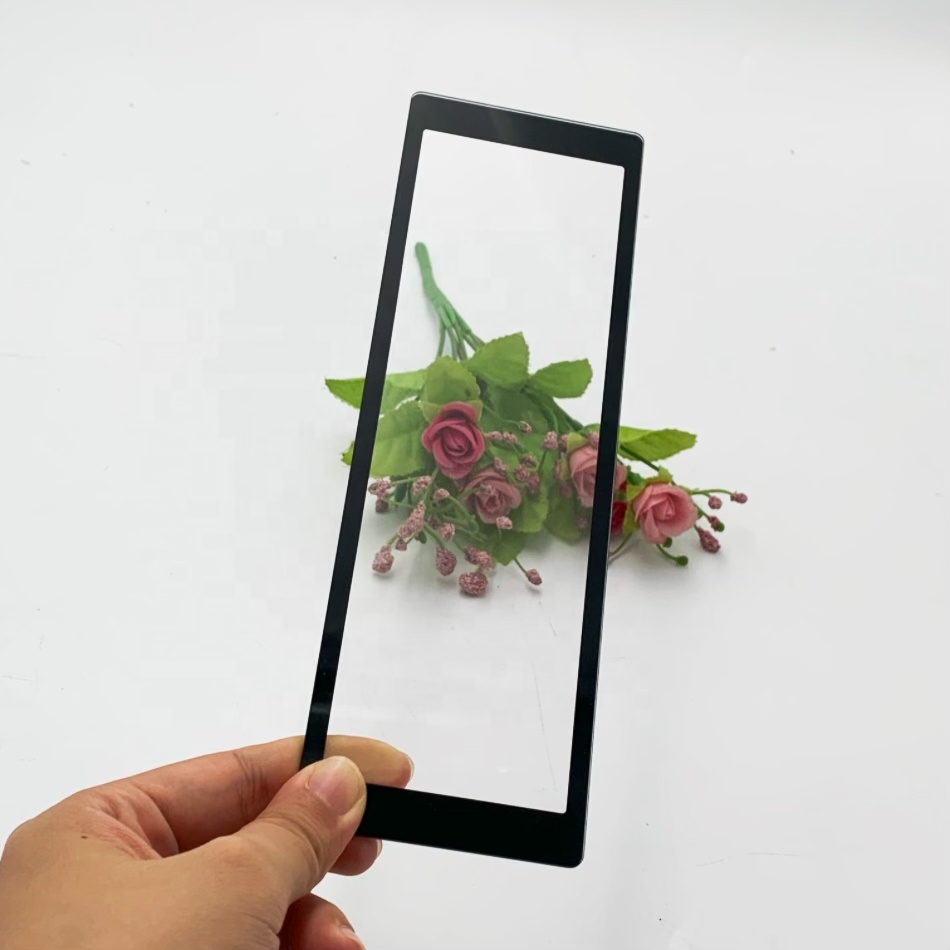
Custom Silk Screen Printed Tempered Glass Panel Touch Screen Display Cover Glass
A customized printed tempered glass panel for touch displays, control panels and cover-glass assemblies. Printed borders can hide conductive traces and adhesive while the clear window protects an LCD or touch sensor. Suitable for industrial HMI, kiosks, smart appliances and embedded electronics.
View product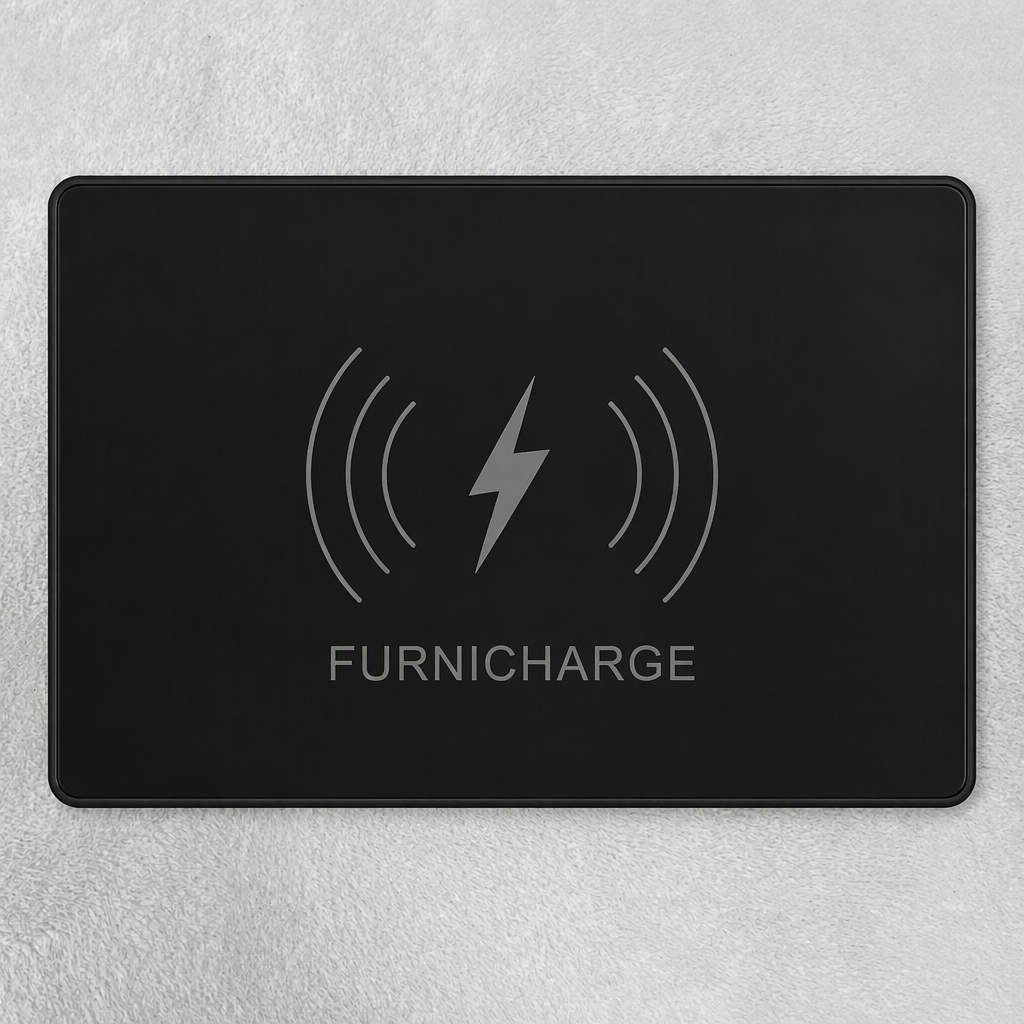
Smart Tempered Glass Bedside Table Panel for Tea Table Wireless Charging Front Cover Glass Touch Light Switch Glass
A strengthened glass front panel that combines wireless-charging graphics with touch-light switch zones. The part can be edge-polished, printed with icons, charging marks and decorative textures, then packed for furniture factories, hotel projects and home-automation brands that need a premium glass surface.
View product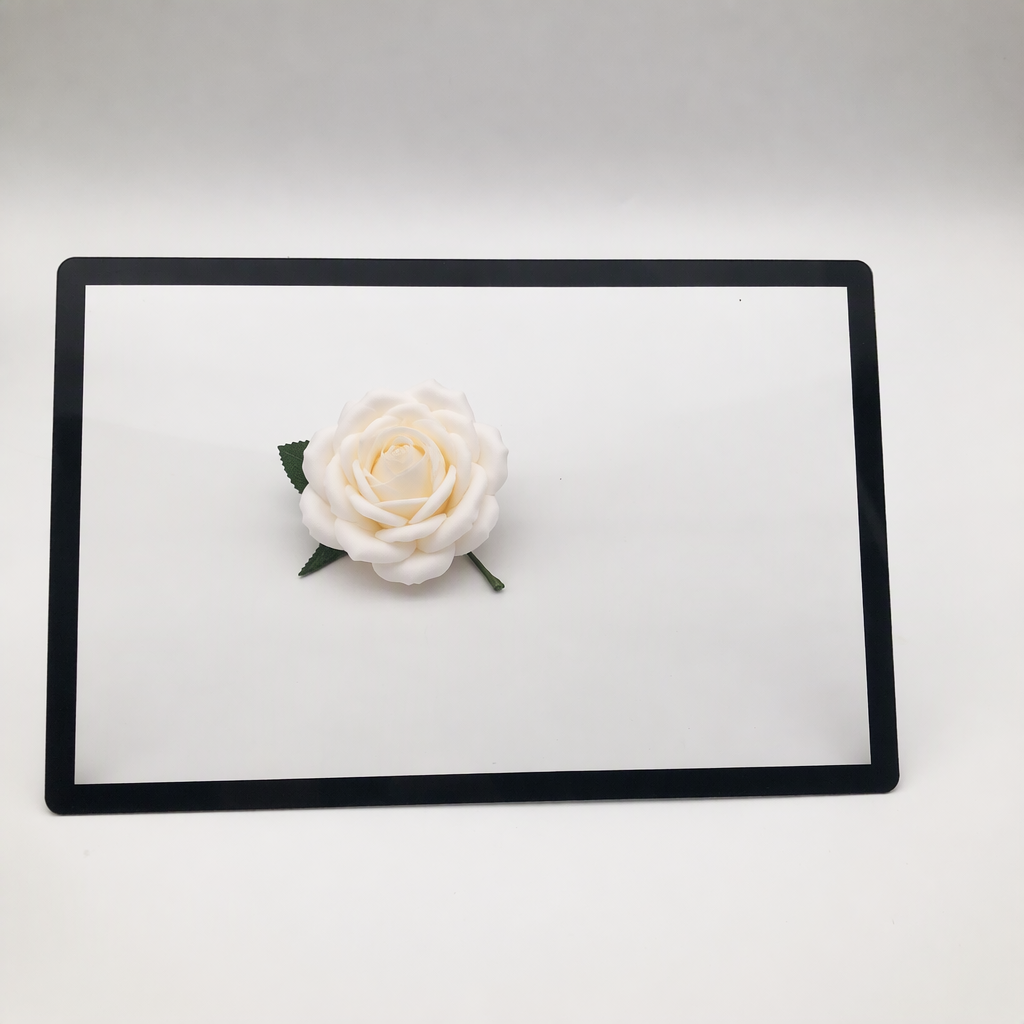
Ultra-Thin Silk Screen Printed Tempered Glass for Display Panels
Thin printed glass for compact display panels and touch interfaces. It supports dead-front windows, icons, logos and light-diffusion zones while helping designers reduce weight and enclosure depth. Chemical strengthening is often selected for thin formats where flatness, optical clarity and touch response are critical.
View product
Glass Factory Customized High Quality Transparent Display Touch Screen Glass Silk Screen 9H Hardness Industrial Screen Protector
A transparent display cover with 9H-rated surface hardness for industrial touch screens. The part can be cut, drilled, edge-polished and printed to fit an existing enclosure. AR, AG or AF coatings may be added when reflection, glare, fingerprints or repeated cleaning affect readability in the field.
View product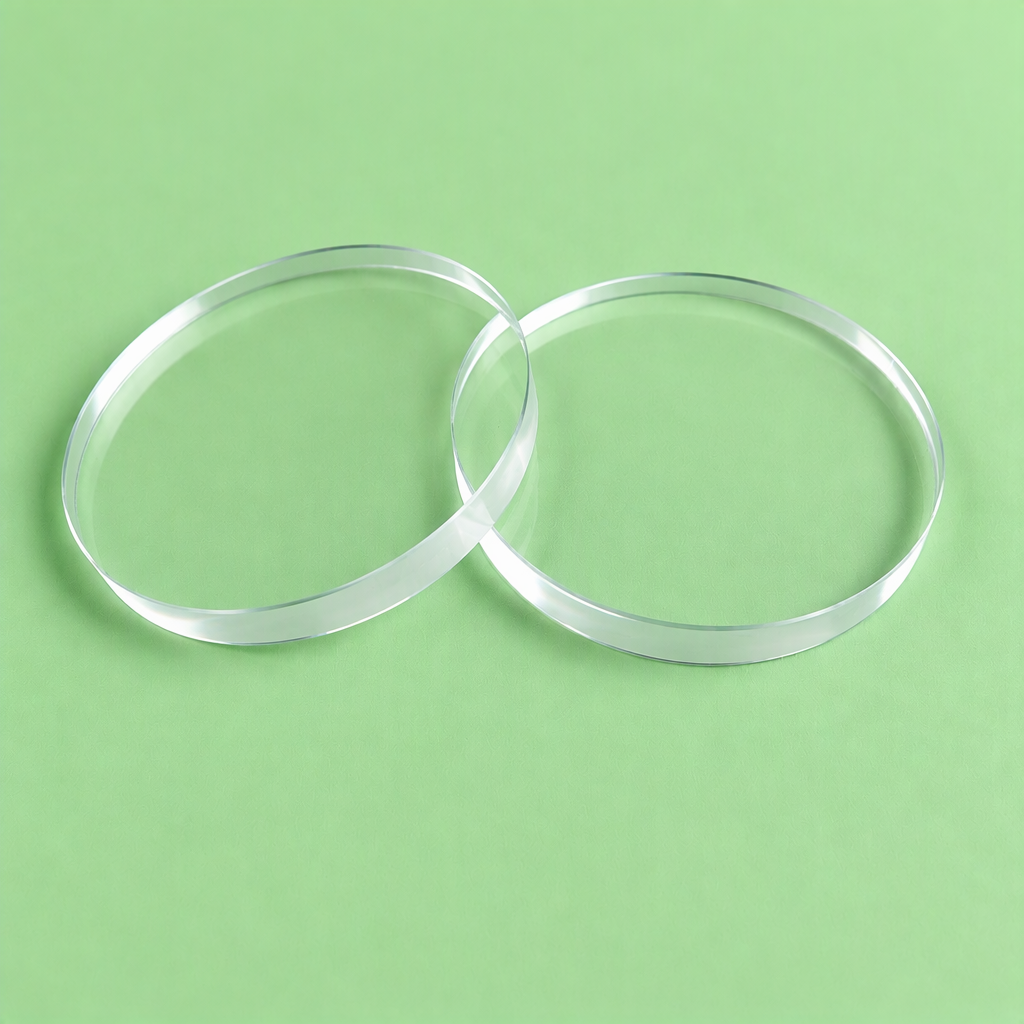
High Strengthen Glass Tempered Glass Custom Size Tempered Clear Glass Panel for Industrial
A custom-size tempered glass panel for industrial equipment and appliance structures. Flat-polished edges, safety corners, holes and notches are produced before tempering. Typical uses include machine viewing windows, control covers and protection panels where dimensional repeatability and safety-glass behaviour matter.
View product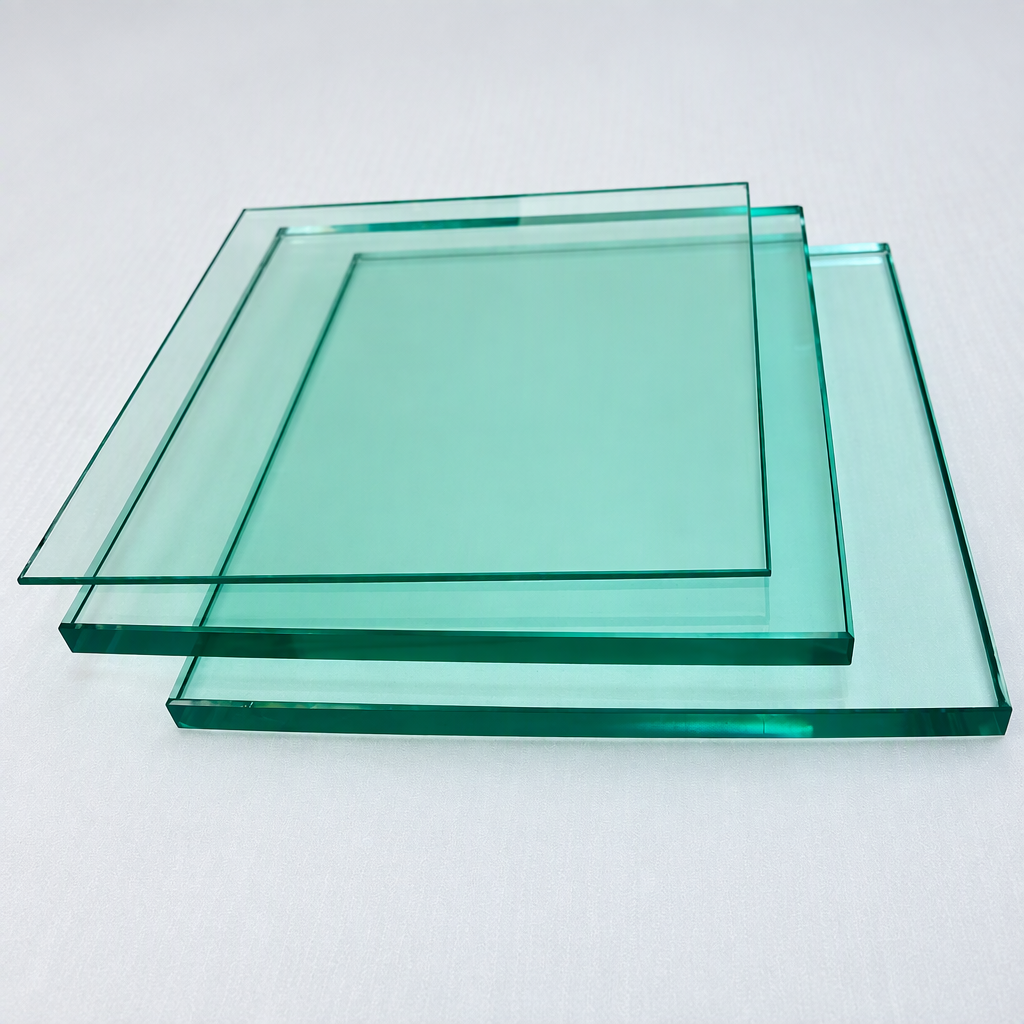
Tempered Glass Panel Safety Glass Flat Structural Tempered Glass
A flat structural tempered safety glass panel for equipment and sub-assemblies. Because cutting, drilling and edging must be completed before strengthening, early design review is essential. This product is used where impact resistance, clean appearance and small blunt-fragment breakage are preferred over ordinary annealed glass.
View product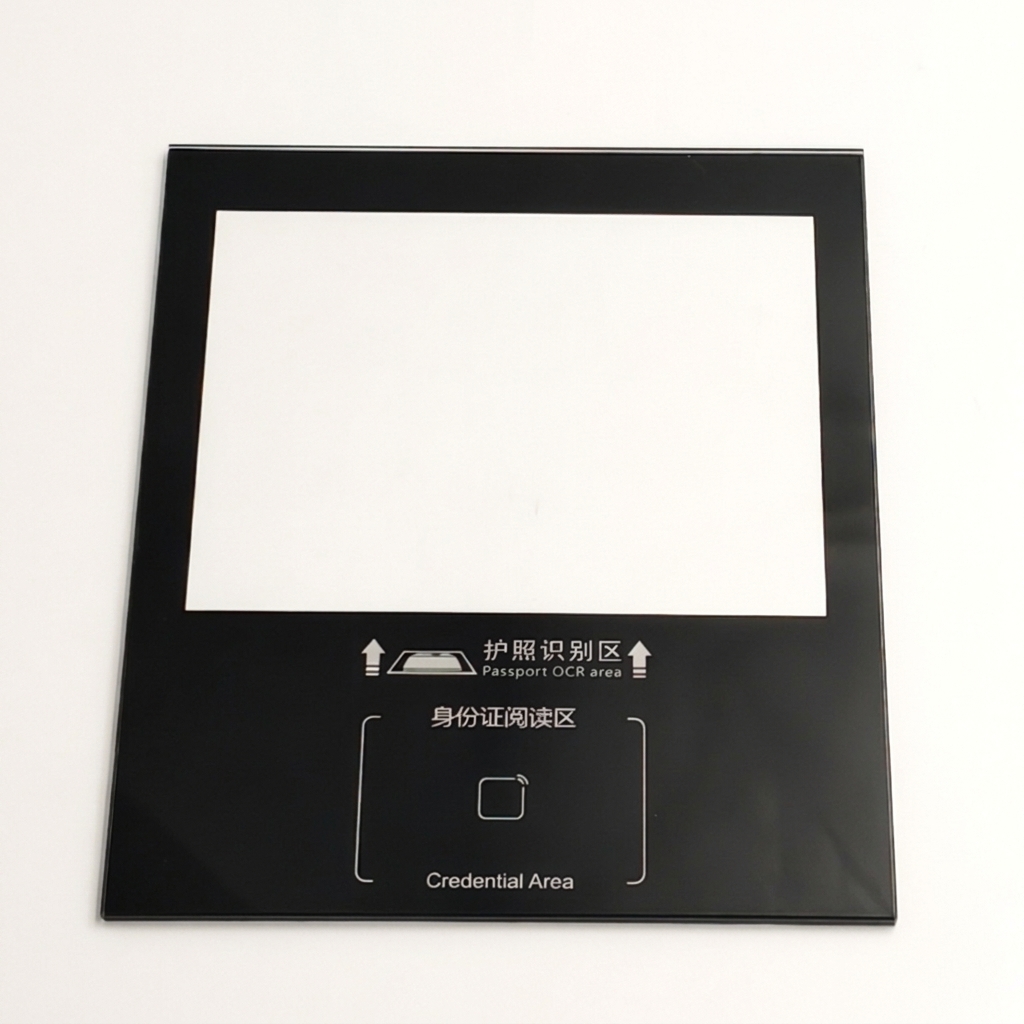
Custom Tempered Glass Protective Glass Panel Transparent Polished Display Cover Glass for Small Electronic Devices Cover
A protective front glass for small electronic devices, smart controllers and portable instruments. The glass can be clear, painted or silk-printed with selected windows for LEDs, sensors and displays. Strengthening and thickness are chosen according to impact requirements, enclosure tolerance and touch sensitivity.
View product
Tempered Glass Lazy Susan 50cm 60cm 70cm 90cm Lazy Susan Turntable Strengthened Glass
A strengthened glass turntable for dining tables, cabinets, retail displays and commercial fixtures. Available in multiple diameters with polished edges and optional printing. Export packaging is designed to protect edges and surfaces during ocean freight, warehouse handling and retail distribution.
View productWhat “Heat Proof Glass” Really Means in a B2B Specification
“Heat proof” is a useful sourcing phrase, but it is not a single material grade. In custom manufacturing, it usually refers to tempered glass selected for thermal shock, continuous heat exposure or high-temperature printing.
No glass should be described as universally heat proof. Performance depends on glass composition, thickness, edge quality, existing micro-flaws, mounting method, print ink, temperature differential and the duration of exposure. A panel that performs well in an oven door may not be suitable for a cooktop with uneven heating. For this reason, a reliable China heat proof glass supplier will not quote from a single temperature number. It will ask for the application, the maximum surface temperature, the heating cycle, the cold-side support, the cleaning method and the failure mode your product team wants to avoid.
At Qingdao Maupe Glass Co., Ltd., printed heat-resistant panels are reviewed as a complete process: substrate selection, CNC cutting, edge polishing, hole drilling, silk-screen printing, tempering or chemical strengthening, coating and final inspection. For appliance windows and control panels, high-temperature inks and controlled thermal tempering are especially important. For thin touch covers, chemical strengthening is often better because it improves strength without the roller-wave distortion that can affect optical bonding and display clarity.
| Criteria | Physical Tempered Glass | Chemically Strengthened Glass | Printed Heat-Resistant Appliance Glass |
|---|---|---|---|
| Typical thickness | Generally 2 mm and thicker | Usually 0.5–2 mm thin glass | Application-specific; often selected for appliance windows and control panels |
| Main strength benefit | High mechanical strength and safety-glass breakage behaviour | High surface compression with excellent flatness for thin parts | Combines tempering, high-temperature inks and controlled print registration |
| Thermal performance | Suitable for many heat-exposed panels when the design and mounting are correct | Often chosen for thin display covers rather than high heat loads | Designed around the actual heating cycle, ink system and support structure |
| Breakage pattern | Small blunt fragments, typical of safety glass | Larger pieces more similar to annealed glass | Depends on the base glass and strengthening method |
| Best-fit applications | Appliance doors, switch panels, display windows, industrial covers | Touch covers, small electronics, precise optical windows | Cooktops, oven windows, range hoods, high-temperature control panels |
| Processing rule | Cutting, drilling, edging and printing must be planned before strengthening; changes after tempering are not reversible. | ||
Where Heat-Resistant Glass Panels Create Product Value
Buyers rarely purchase glass as a standalone commodity. They purchase an interface surface that must survive heat, cleaning agents, touch cycles, UV exposure, packaging and installation.
Cooktop & Oven Windows
Printed tempered glass with heat-resistant inks, clean viewing windows and precise control icons. Edge quality, flatness and mounting compression are reviewed together because they influence thermal-shock resistance in real use.
Industrial HMI & Displays
Protective glass for equipment screens, kiosks and machine interfaces. AR reduces reflection, AG softens glare, and AF helps with fingerprints and cleaning. Thick tempered versions are chosen when impact or vandal resistance is required.
Smart-Home Switch Glass
Wall switch, socket and scene-panel glass with backlight-ready icons. Buyers focus on print opacity, scratch resistance, colour consistency and touch-zone alignment with the capacitive sensor behind the glass.
Access-Control Terminals
Card-reader windows, smart-lock covers and face-recognition terminals require clear sensor windows, printed masking layers and stable edges. Glass offers a premium front surface while protecting the reader module from daily contact.
How Heat-Proof and Functional Glass Is Evolving
Custom glass panels are moving from simple protection parts to integrated interface components. This changes the specification, sampling and quality-control requirements for OEM buyers.
Thin Glass with Chemical Strengthening
Product teams want slimmer enclosures, lighter devices and better optical bonding. Chemically strengthened 0.5–2 mm glass is increasingly used for touch covers and compact displays where flatness and optical clarity matter more than the blunt-fragment breakage of thick tempered glass.
High-Temperature and Dead-Front Printing
Printed graphics are becoming more complex: hidden windows, gradients, touch indicators, backlit icons and brand colours. High-temperature inks are selected for appliance panels that see heat, while low-temperature inks support decorative graphics and fine colour matching on other cover glass.
AR / AG / AF Coating by Application
Anti-reflective, anti-glare and anti-fingerprint coatings are no longer automatic upgrades. Medical displays may prioritise AR and easy cleaning, industrial HMIs may prioritise AG, and consumer interfaces may prioritise AF. Coating durability and test methods must be defined before mass production.
Touch Integration and Optical Bonding
Glass is increasingly supplied for direct optical bonding, where flatness, print registration, surface cleanliness and coating compatibility affect yield. Buyers now request dimensions, warpage, edge quality and print position in documentable tolerances rather than visual approval alone.
Eco-Friendly Inks and Compliance
RoHS-compliant inks, supplier assessment procedures and traceable material records are now part of procurement. Brands ask for ISO 9001 systems, RoHS documentation, CE certification where relevant and third-party inspection evidence before approving a factory.
Switchable and Smart Glass
PDLC smart film, privacy partitions and multifunctional control glass are creating new sourcing categories. Suppliers that can handle glass cutting, lamination, busbar integration, printing and visual inspection in one process chain become more valuable to OEM buyers.
The Future of Buying Heat-Proof Glass from China
Purchasing teams are shifting from lowest-piece-price buying toward total landed cost, supply resilience and engineering collaboration. The strongest suppliers behave like process partners, not catalogue sellers.
Dual Sourcing with a Capable Lead Supplier
Many brands keep a primary Chinese OEM for volume, sampling and process know-how, then use a regional finisher or secondary source for resilience. This makes documentation, tooling records and drawing control more important than ever.
Total Landed Cost, Not Piece Price
Breakage, packaging, inspection, freight, DDP charges, duties and rework can outweigh a small unit-price difference. Buyers are asking suppliers to optimize carton design, pallet layout and shipping terms from Qingdao port or airport.
Lower MOQ and Faster Sampling
Custom printed panels often start from 10–100 pieces depending on size, thickness and print colours. Large display cover glass may start from 10 pieces. Faster samples help brands validate fit, artwork and touch performance before committing to mass production.
Digital Quality Records and Transparency
Procurement teams want certificate numbers, inspection records, material declarations and photo reports. An ISO 9001 factory with RoHS and CE documentation, plus SGS onsite assessment, reduces risk when onboarding a new custom glass supplier.
How to Shortlist a China Heat Proof Glass Manufacturer
A supplier list is not a sourcing strategy. Use the four-step review below to separate capable glass factories from trading resellers and general-purpose glass cutters.
Define the Thermal and Mechanical Brief
State maximum surface temperature, heating cycle, cold-side support, cleaning chemicals, impact risk and expected annual volume. Do not rely only on the phrase “heat proof glass”; define the failure mode the part must avoid.
Send a Complete Drawing and Artwork Package
Provide a DWG, DXF or PDF drawing with outline, thickness, holes, edge finish, tolerance and flatness. Add AI or PDF artwork with colour references, layer order and coating requirements such as AR, AG or AF.
Validate the Strengthening and Printing Method
Confirm whether physical tempering or chemical strengthening is suitable, and whether high-temperature inks are needed. Ask how the supplier controls print registration, colour, warpage and edge quality after strengthening.
Approve Inspection, Packing and Logistics
Agree on incoming material inspection, finished-product inspection, sample retention and packaging tests. Confirm trade terms, payment methods and shipping route from Qingdao to your warehouse or assembly plant.
Why Qingdao Maupe Glass Co., Ltd. Is a Practical OEM Partner
Founded in 2012 in Qingdao, Shandong, Qingdao Maupe Glass Co., Ltd. is a glass deep-processing manufacturer and international supplier operating under an ISO 9001 quality management system. The factory focuses on turning flat glass into finished functional parts: cutting, CNC shaping, edge polishing, drilling, engraving, coating, silk-screen printing, physical tempering and chemical strengthening.
Our silk-screen printed glass uses RoHS-compliant, eco-friendly inks with high- and low-temperature printing processes, producing scratch- and wear-resistant prints for displays, electronic control equipment, instrument covers, household and kitchen appliances, furniture and decorative partitions. With eight production lines, a 3,000–5,000 m² factory floor area and an export share of 91–100% of output, the team supports OEM and ODM projects for buyers in more than 80 countries.
The factory is close to Qingdao seaport and airport, which simplifies export logistics and makes onsite audits easier for visiting buyers. The company has been onsite-assessed by SGS Group, holds ISO 9001, RoHS and CE documentation, and offers 10 years of OEM experience. For purchasing teams, this means a clear process chain, export packing experience and a supplier that can respond to engineering questions rather than simply quote a sheet price.




ISO 9001 Quality Management
Certificate No. 24025Q20015R1S · Scope: float glass and technical glass products · Valid to 02/2028.

RoHS Compliance
Certificate No. 25TYT12395 · Restricts hazardous substances for EU electrical and electronic equipment · Valid to 12/2030.

CE Marking
Certificate No. 23TYT082593S · Tempered glass · Supports market access across the European Economic Area · Valid to 08/2028.
Common Questions About Buying Heat-Proof Glass
These are the questions engineering, purchasing and compliance teams ask most often before approving a custom glass panel project.
Is “heat proof glass” 100% heat proof?
No. “Heat proof” is an application description rather than an absolute material property. Performance depends on glass type, thickness, edge condition, print ink, mounting, temperature differential and heating cycle. A responsible manufacturer will ask for the real operating conditions and recommend a validated glass construction instead of promising unlimited heat resistance.
What maximum temperature can tempered glass withstand?
There is no single safe temperature for every panel. Continuous exposure and thermal shock are different risks. For cooktops, ovens, range hoods and other heat-exposed appliances, the design should be reviewed with high-temperature inks, suitable thickness, edge protection and the actual support structure. Send the heating profile and mounting method for an engineering review.
Should I choose physical tempered glass or chemically strengthened glass?
Physical tempering typically suits glass around 2 mm and thicker, appliance doors, switch panels, display windows and industrial covers where safety-glass breakage is preferred. Chemical strengthening typically suits 0.5–2 mm thin glass, touch covers and parts needing excellent flatness and optical quality. Cutting, drilling and edging must be completed before strengthening in both cases.
What is the minimum order quantity for custom printed glass?
Most custom silk-screen printed panels start from 10 to 100 pieces depending on size, thickness and number of print colours. Large-format display cover glass can start from 10 pieces. Samples are available for fit, artwork and print-colour verification before mass production, which helps reduce tooling and rework risk.
Which inks are used for heat-resistant printed panels?
High-temperature inks are used where the glass surface must tolerate heat exposure, such as appliance windows and certain control panels. Low-temperature inks are used for decorative and functional graphics where heat load is lower. Ink selection also depends on colour target, opacity, scratch resistance, coating compatibility and the tempering process.
Which certifications and audit evidence are available?
Qingdao Maupe Glass Co., Ltd. operates an ISO 9001 quality management system and holds RoHS and CE certificates for its glass products. Certificate numbers include ISO 9001 24025Q20015R1S, RoHS 25TYT12395 and CE 23TYT082593S. The company has also been onsite-assessed by SGS Group as a third-party inspection company.
What files should I send for a custom glass quotation?
Send a 2D drawing in DWG, DXF or PDF with dimensions, thickness, edge finish, hole positions, tolerance and flatness requirements. Add print artwork in AI or PDF with colour references and layer order. State coating requirements such as AR, AG or AF, the intended application, expected annual volume and any packaging or certification requirements.
Which trade terms, payments and shipping routes are accepted?
Accepted delivery terms include FOB, CIF, EXW, FAS, FCA, CPT, DDP, DDU and express delivery. Accepted payments include T/T, L/C, PayPal, Western Union and cash, in USD, EUR or CNY. The factory is close to Qingdao seaport and airport, supporting efficient export logistics and easier onsite audits for visiting buyers.
Have a Heat-Resistant Glass Drawing Ready?
Share your drawing, print artwork, thickness, coating requirement and operating temperature with our engineering team. We will review manufacturability, recommend physical tempering or chemical strengthening, and outline the next step for sampling.
Contact Us Please include application, target volume, destination country and required certifications for a faster response · info@maupeglass.com