Top Trusted Chemically Strengthened Glass Exporter & Wholesaler
Custom ion-exchange strengthened glass, printed touch covers, appliance fronts, smart-switch panels and industrial display windows — engineered by Qingdao Maupe Glass Co., Ltd. for OEM buyers in 80+ countries.
Inquire Now8 Qualified Glass Products for OEM and Wholesale Programs
Start with the application, not the glass type. These eight products cover high-demand formats from printed touch windows and appliance fronts to smart privacy glass and anti-glare industrial protection. Each can be quoted to your drawing, print file, coating requirement and assembly method.
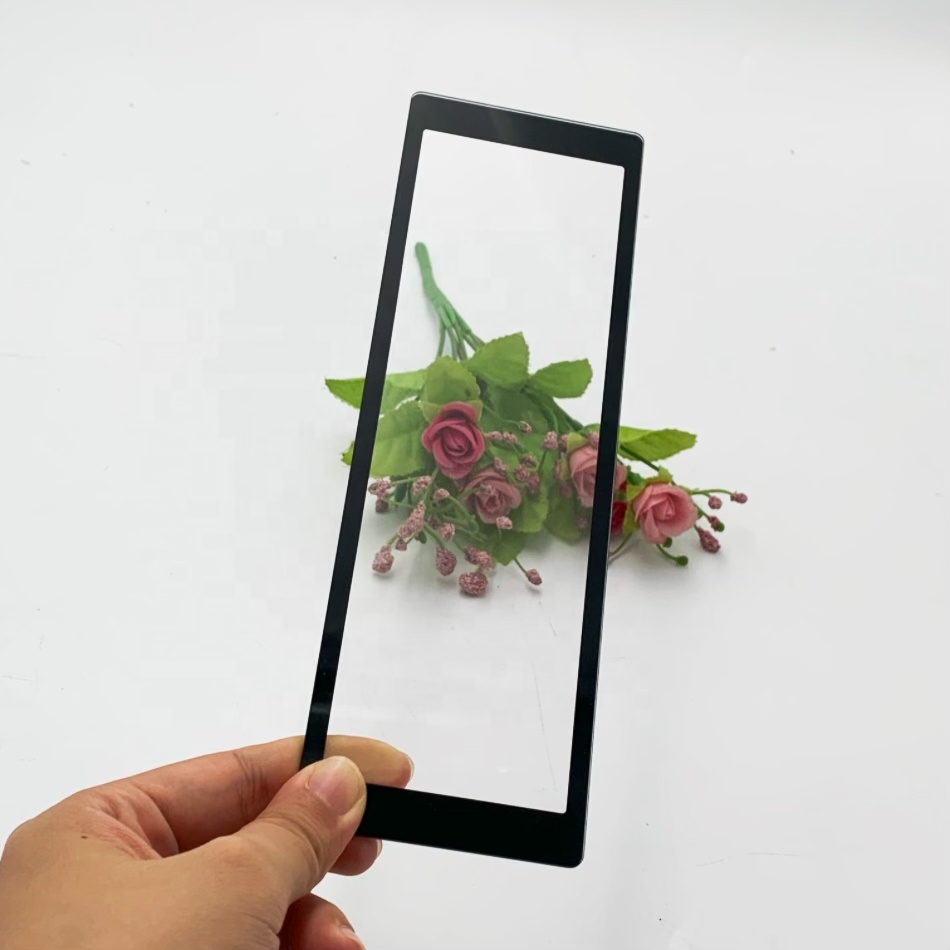
Custom Silk Screen Printed Tempered Glass Panel Touch Screen Display Cover Glass
A printed front glass for touch displays, control panels and appliance interfaces. Thin chemically strengthened formats support flatness and optical clarity; thicker tempered options suit impact-prone housings. Specify black borders, icons, sensor windows and AR/AF coating requirements.

Tempered Glass Panel With 3M Adhesive Tape Silk Screen Printing for Electrical Appliance Decoration Front Cover Glass
A decorated front cover with 3M adhesive tape for electrical appliances. Pre-applied adhesive simplifies assembly and hides sensors behind printed graphics. Review adhesive grade, surface energy, bubble control and outgassing with engineering before tooling.
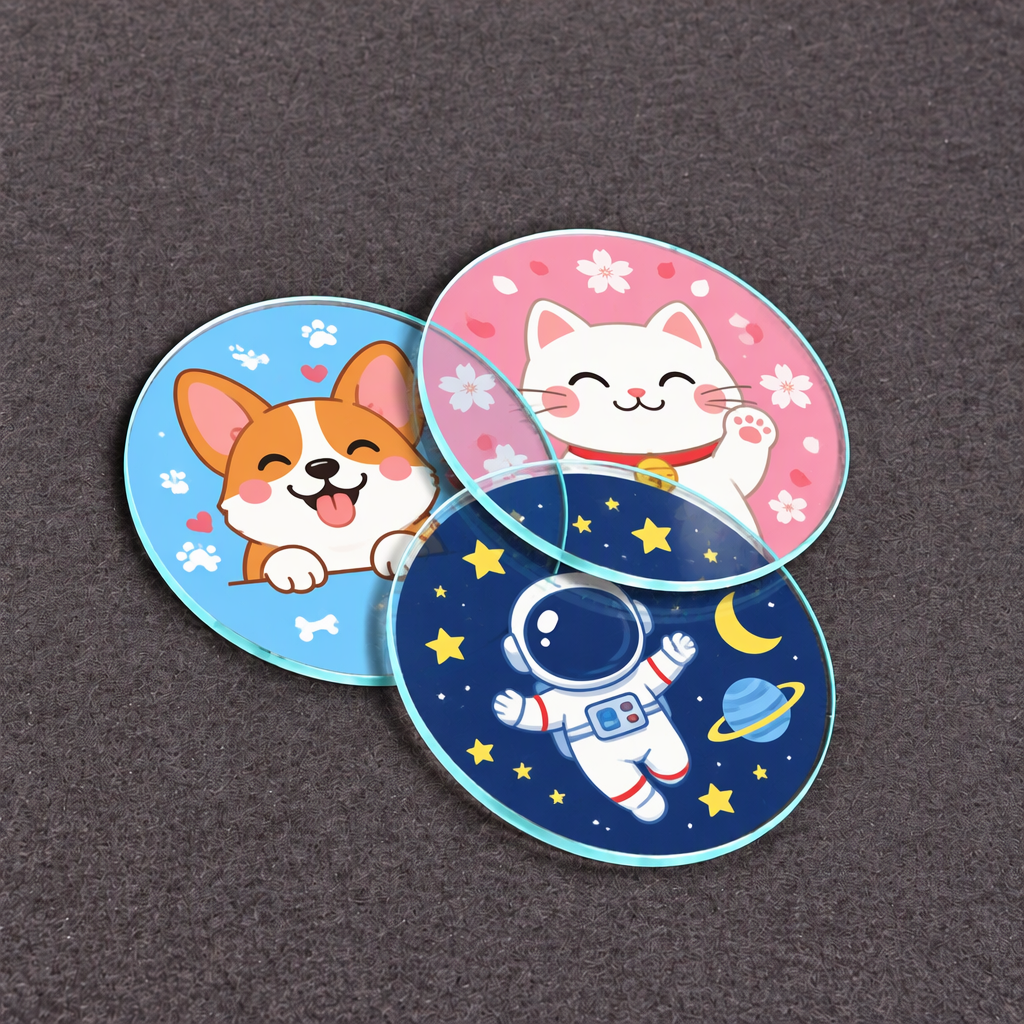
Eco-Friendly Custom Printed Glass Coasters Custom Design Tempered Glass Coaster
Eco-friendly printed glass coasters for retail, hospitality and promotional programs. Tempered glass, high-temperature ink and edge polishing combine visual quality with durability. Well suited to branded tabletop accessories with multi-color artwork.
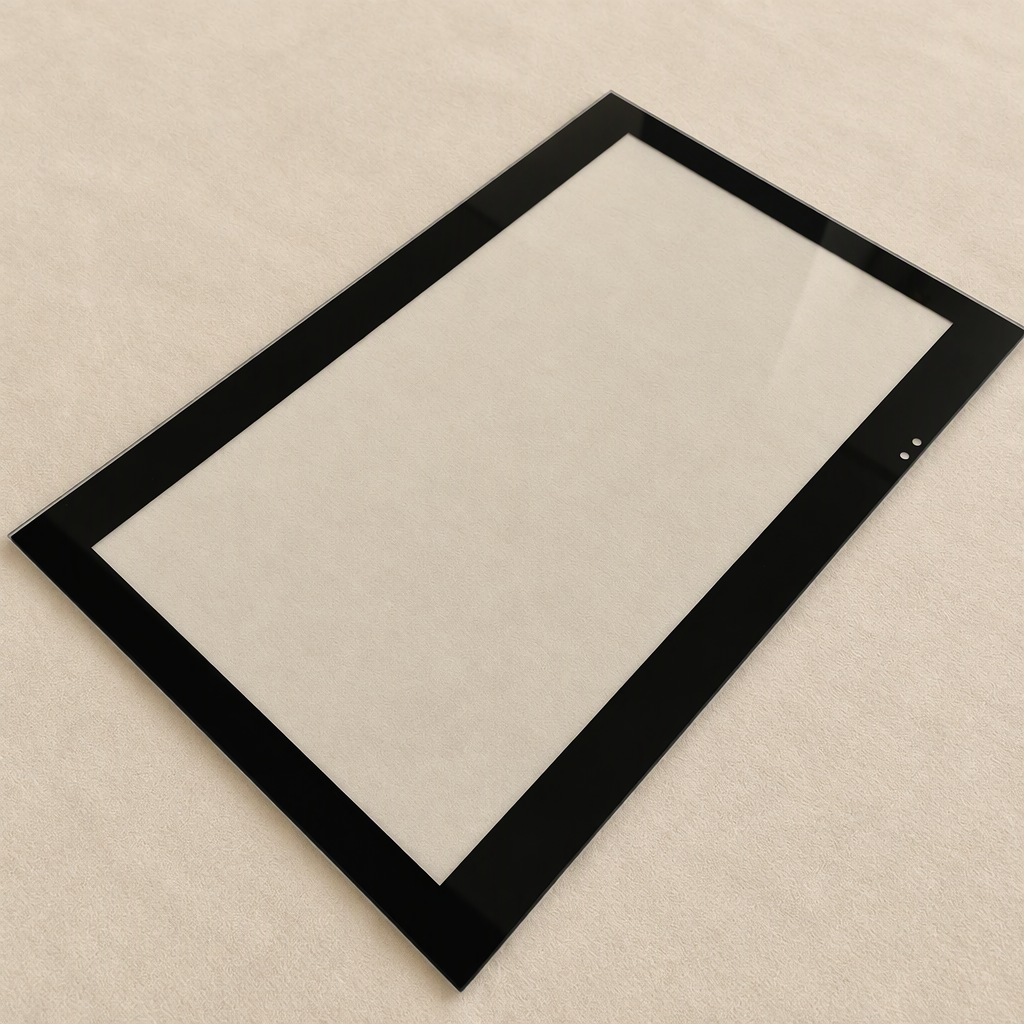
Tempered Glass Panel Silk Screen Printed Flat Display Screen Protector Glass for LCD TV Industrial Decoration
A flat display protector for LCD TVs and industrial decoration. Silk-screen printing can frame the viewing area while the clear window protects the screen. Options include anti-glare surface, custom outline and mounting-hole geometry.
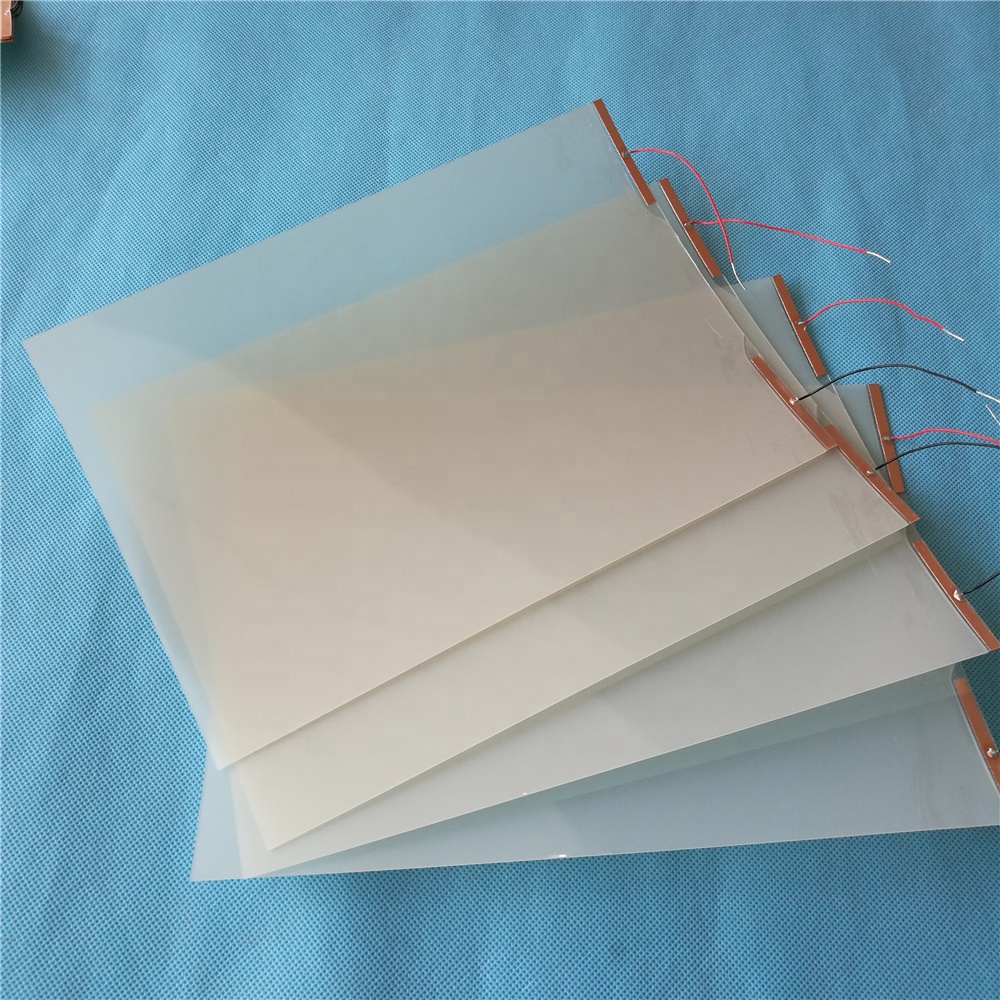
Factory Price Electrochromic Anti-UV PDLC Film Smart Switchable Privacy Glass Office Partition and Curtain Walls
Smart switchable privacy glass for office partitions and curtain walls. PDLC film provides on-demand privacy with anti-UV performance, while glass selection and lamination influence clarity, power supply and longevity. Best specified as a complete system.
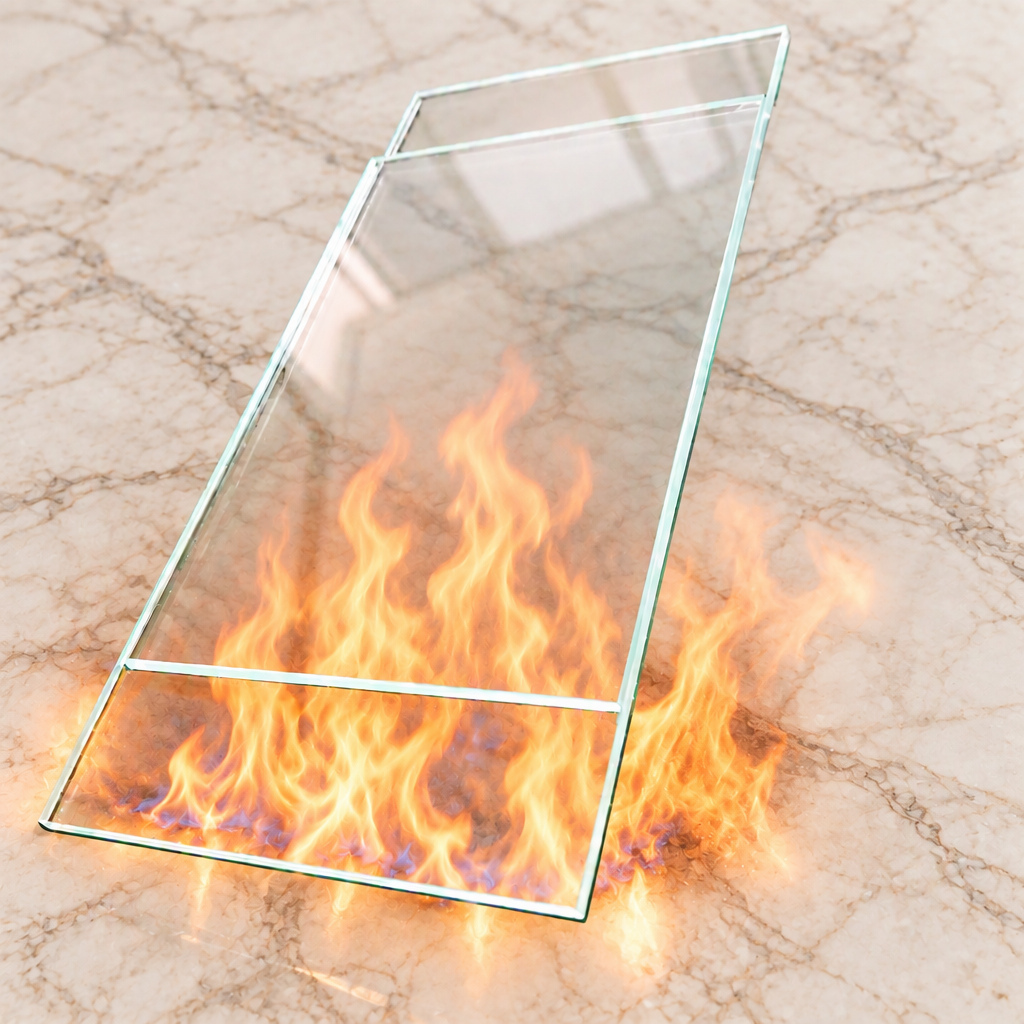
Tempered Glass Flat Solid Glass Panels Heat-resistant Tempered Glass for Various Application
Heat-resistant flat tempered glass panels for appliances, ovens, range hoods and industrial equipment. High-temperature inks and controlled tempering support thermal exposure. Confirm thermal cycling, edge finish and breakage-safety requirements.
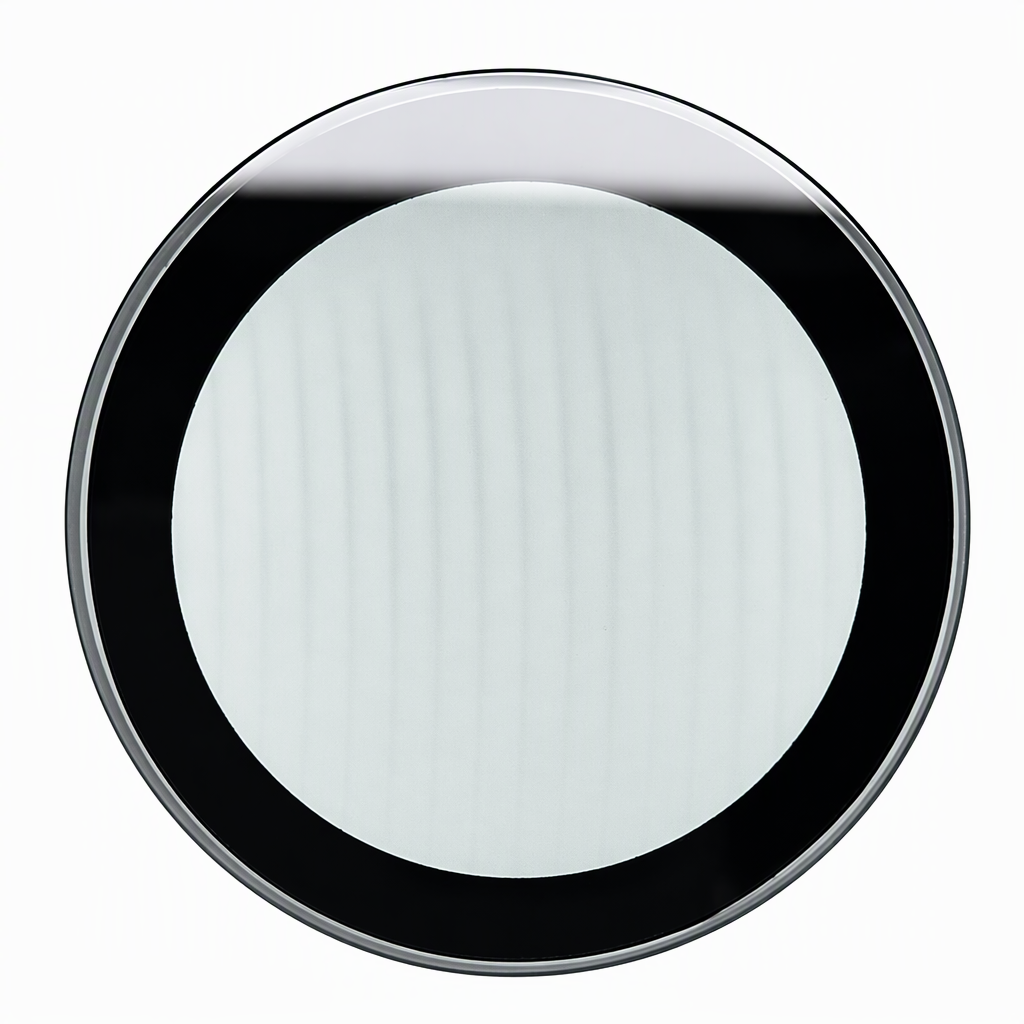
Custom 3-19mm Thickness Flat Tempered Glass Panel for Instrument Use Factory Price Round Shape Printed Tempered Glass
Custom 3–19 mm flat or round printed instrument glass. Suitable for gauges, control plates and instrument windows where hole positions, legibility and flatness matter. Provide a 2D drawing and artwork with color references for a manufacturability review.
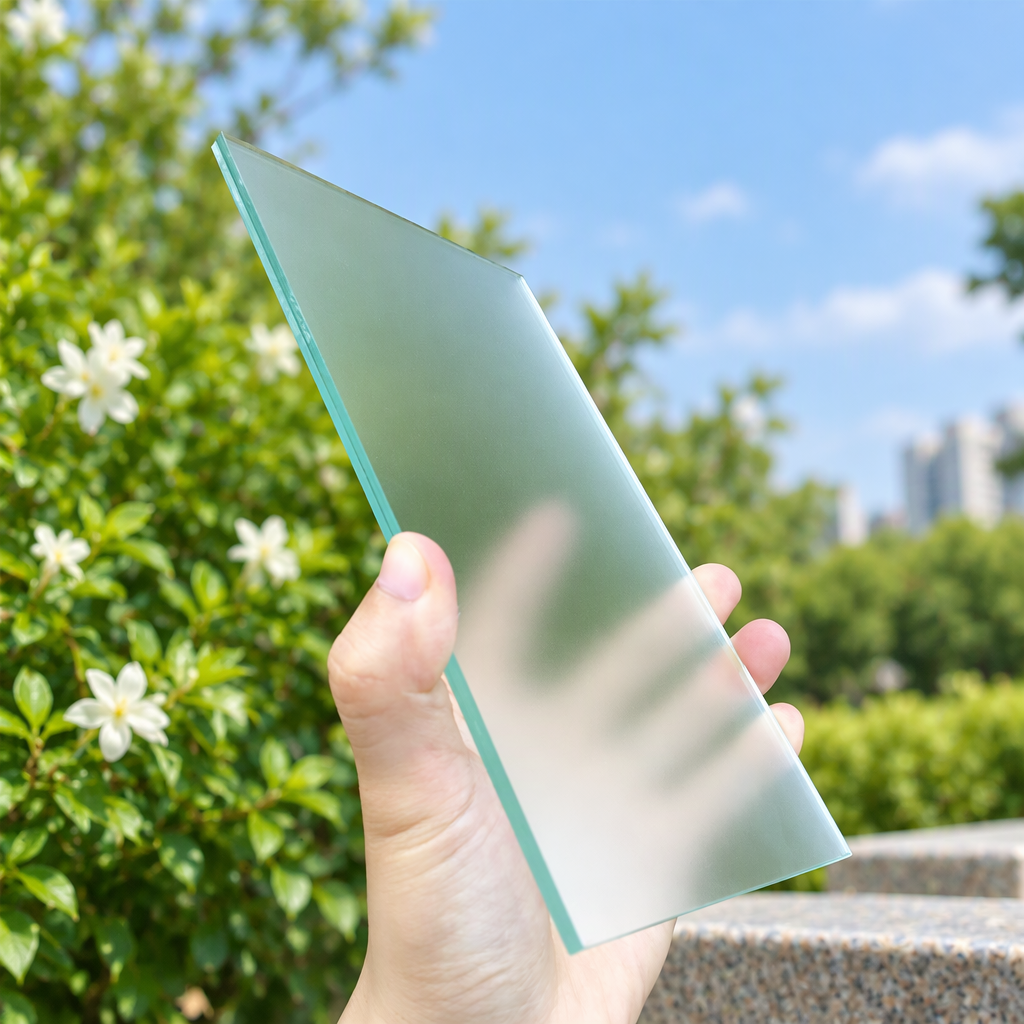
High Quality Industrial Solid Anti-glare Glass Screen Protector Matte Surface Monitor Screen Cover Glass
An anti-glare matte glass screen protector for monitors, HMIs and industrial consoles. The matte surface reduces reflections while preserving readability; edge treatment and coating durability should be matched to cleaning routines and field conditions.
Chemical Strengthening vs. Physical Tempering: What Purchasing Teams Need to Know
Chemically strengthened glass is an engineered component, not a commodity upgrade. The right choice depends on thickness, edge quality, optical requirements, breakage behavior, coating compatibility and the final assembly process.
Chemically strengthened glass is produced by immersing finished glass in a molten salt bath. Sodium ions near the surface are exchanged for larger potassium ions, placing the surface in compression. The resulting compressive layer resists crack propagation and allows thin glass to perform in touch covers and display windows where thermal tempering is either unsuitable or unnecessary.
However, chemical strengthening is not a generic add-on. Glass composition, pre-strengthening edge quality, bath age, immersion time, temperature and post-strengthening handling all influence the final result. Buyers should ask for a documented process window, sample breakage data and a clear inspection plan. All cutting, CNC, drilling, edge polishing and printing should be completed before strengthening, because post-strengthening machining can damage the compressive layer.
Physical tempering remains the right answer for many thicker products, such as appliance doors, switch panels and heat-exposed covers. The practical decision is therefore application-led: use chemical strengthening for thin, dimensionally stable, optically demanding parts; use physical tempering where safety breakage and impact resistance are primary.
| Design question | Chemically strengthened glass | Physically tempered glass | Practical sourcing note |
|---|---|---|---|
| Typical thickness | 0.5–2 mm thin glass | About 2 mm and thicker | Confirm the available thickness window before design freeze. |
| Strengthening mechanism | Ion exchange in a molten salt bath | Heat and rapid cooling | The process route affects flatness, edge condition and handling limits. |
| Edge and hole work | Completed before strengthening | Completed before tempering | No post-strengthening machining that would expose untreated glass. |
| Breakage pattern | Larger fragments, closer to annealed glass | Small blunt fragments | Both require a safety evaluation for the final product and market. |
| Flatness and optics | Excellent flatness; no roller wave | Very good; minor roller wave may occur | Critical for touch displays, optical windows and lamination. |
| Coating compatibility | AR, AG and AF coatings can be specified | AR, AG and AF coatings can be specified | Validate adhesion, durability and cleaning resistance for the end use. |
| Best-fit applications | Touch covers, thin display windows, sensors | Appliance doors, thick front panels, cooktops | Do not specify by habit; specify by mechanical and optical duty. |
| Documentation | Batch, bath and inspection records | Tempering records and certificate package | Include in supplier audits, PPAP-style files and change-control reviews. |
Six Purchasing Trends Buyers Should Price into 2026–2030 Contracts
Chemically strengthened glass is moving from a specialist line item into mainstream device design. The purchasing implications are broader than a unit-price comparison.
Thin-Glass Device Design
Slimmer interfaces and lighter assemblies are increasing demand for 0.5–1.1 mm chemically strengthened cover glass. Buyers should qualify flatness, edge quality and coating durability before chasing the thinnest possible sheet.
Dual-Source Qualification
Brand owners and distributors are reducing single-supplier risk by pre-qualifying a primary and secondary glass finisher. Consistent drawings, print masters and inspection criteria make a second source realistic.
Total Cost of Ownership
Piece price alone hides breakage, rework, incoming inspection, packaging and assembly losses. A low-risk quote should show process controls, packaging validation and a clear change-notification route.
AR, AG and AF Convergence
Displays increasingly require anti-reflective readability, anti-glare performance and anti-fingerprint cleanability in one cover. Coatings must be tested after printing, strengthening and lamination — not only on bare glass.
Low-Carbon and RoHS-Ready Inks
Eco-friendly, RoHS-compliant inks and controlled printing processes are becoming part of supplier qualification. High- and low-temperature inks should be matched to the application’s heat exposure and cleaning chemicals.
Traceability and Audit-Ready Files
Certificates, incoming-material records, first-article reports, print approvals and packing checks are now part of the commercial offer. Documentation quality is a leading indicator of repeatable production quality.
Where Chemically Strengthened Glass Products Are Heading
Product roadmaps are moving from glass as a passive cover to glass as an integrated interface: printed, coated, bonded and sensor-ready.
Printed Touch Windows
Black borders, icon layers, sensor windows and capacitive touch zones are printed directly on thin glass. Designers want a seamless front surface without separate overlays.
Anti-Glare Industrial HMI
Matte AG glass is increasingly specified for factory floors, medical equipment and outdoor consoles where reflections and cleaning reduce readability.
PDLC Smart Privacy Glass
Switchable privacy is expanding in office partitions, meeting rooms and residential interiors. Buyers need glass, film, power supply and control-system compatibility reviewed together.
Smart-Home Control Panels
Wall switches, sockets and scene controllers are becoming glass-design objects. Touch-key printing, backlight windows, color consistency and edge quality influence perceived brand value.
Large-Format Display Protection
LCD TVs, digital signage and industrial monitors need protective front glass that stays flat, resists impact and supports optical bonding or air-gap assembly.
High-Alumina and Ultra-Clear Optics
Higher-grade glass substrates are being evaluated for scratch resistance, optical clarity and chemical durability in instrument windows, medical displays and sensor covers.
Why Buyers Trust Qingdao Maupe Glass Co., Ltd.
Qingdao Maupe Glass Co., Ltd. is a glass deep-processing manufacturer and international supplier founded in 2012 in Qingdao, Shandong. We operate under an ISO 9001 quality management system and turn flat glass into finished functional parts.
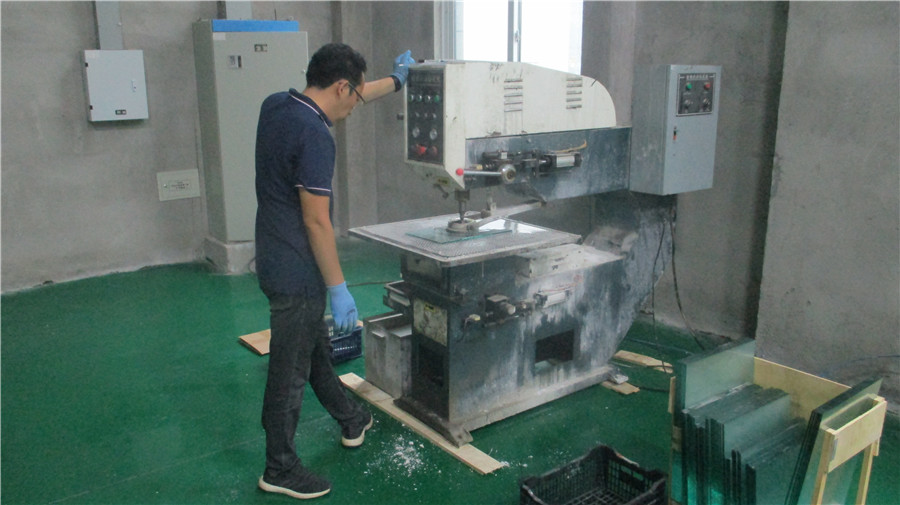
Our core work includes cutting, edge polishing, drilling, engraving, coating, silk-screen printing, physical tempering and chemical strengthening. The factory is located in Liandong U Valley, Jiaozhou, Qingdao, close to Qingdao seaport and airport, which simplifies export logistics and supports on-site audits for visiting buyers.
Export is central to our business: 80+ countries, 91–100% export share of output, 8 production lines and a 3,000–5,000 m² factory floor area. The company has been onsite-assessed by SGS Group as a third-party inspection company and has verified procurement contracts with Fortune 500 buyers. These are not decorative claims; they reduce supplier-qualification friction for brand owners, distributors and contract manufacturers.
Silk-screen printing uses RoHS-compliant eco-friendly inks and high- or low-temperature processes for scratch and wear resistance. Engineering supports drawing review, print proofing, coating selection and export packing. For wholesale programs, repeat orders can be aligned to the same print screens, tolerances and inspection criteria to protect your brand at scale.
ISO 9001 Management
A documented quality system supports incoming material control, production records and final inspection.
SGS Onsite Assessed
Third-party onsite assessment gives procurement teams an independent verification point.
Fortune 500 Supplier
Procurement contract verification with Fortune 500 buyers supports credibility in global supply chains.
OEM / ODM Support
Drawing review, print proofing, sampling and repeat-order consistency for customized glass projects.
In-House Process Chain
Cutting, CNC, printing, coating, tempering and chemical strengthening are coordinated in one workflow.
Eco-Friendly Printing
RoHS-compliant inks, high- and low-temperature print routes and scratch-resistant finished graphics.
Export-Ready Logistics
Protective packing and Qingdao port/airport access support FOB, CIF, DDP and other trade terms.
Application Engineering
Manufacturability feedback for glass type, thickness, edge finish, print layering and coating selection.
Capability Snapshot


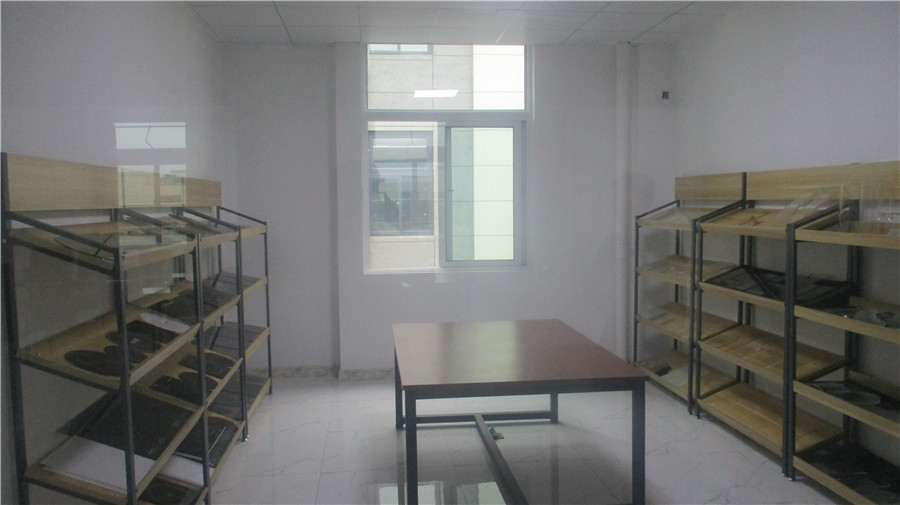
From Drawing to Export: Six Controlled Production Gates
A transparent workflow helps purchasing, engineering and quality teams know exactly what happens between drawing approval and shipment.
Drawing and DFM Review
Engineers check glass type, thickness, edge geometry, print layering, coating and strengthening method before quotation.
Material and Ink Planning
Glass sheets and RoHS-compliant inks are matched to the application, color target, surface treatment and cleaning exposure.
Cutting, CNC and Edge Work
Outlines, holes, notches and edges are machined before strengthening. Edge quality is inspected as a crack-control checkpoint.
Printing and Coating
Silk-screen printing, AR/AG/AF coating and 3M adhesive options are applied to the approved artwork and drawing.
Strengthening and Tempering
Chemical strengthening or physical tempering is selected by thickness, application and performance target, then recorded for traceability.
Inspection and Export
Final visual, dimensional, print and packing checks protect yield in transit and simplify incoming inspection.
Certified Quality You Can Verify
Certificate numbers are provided so compliance teams can check them directly with the issuing bodies.

ISO 9001 Quality Management
Certificate No. 24025Q20015R1S · Scope: float glass and technical glass products · Valid to 02/2028.

RoHS Compliance
Certificate No. 25TYT12395 · Restricts hazardous substances for EU electrical and electronic equipment · Valid to 12/2030.

CE Marking
Certificate No. 23TYT082593S · Tempered glass · Supports market access across the European Economic Area · Valid to 08/2028.
What to Send for an Accurate Chemical Strengthening Quote
Fast quotations come from complete technical packages. The following information helps our engineers identify the correct glass grade, strengthening route and inspection plan without unnecessary back-and-forth.
- 2D drawing in DWG, DXF or PDF with outline, hole positions, notches and tolerance.
- Glass thickness and type: clear, ultra-clear, high-alumina or another specified substrate.
- Print artwork in AI or PDF with color references, layer order, icon windows and black-border details.
- Surface treatment requirements: AR, AG, AF or none, including target cleaning chemicals.
- Working environment and annual volume, including heat, outdoor exposure, touch sensor and assembly method.
- Packaging, destination port, trade terms and required certification documents for supplier approval.
Sourcing Scorecard: Low Price vs. Low Risk
Use this scorecard when comparing glass suppliers for chemically strengthened or printed cover glass programs. The lowest piece price is rarely the lowest total cost.
Glass Solutions by Application
Chemically strengthened and physically tempered glass can be specified across consumer, commercial and industrial products. The common thread is controlled edge quality, repeatable printing and application-specific strengthening.
Appliance Front Panels
Printed control panels for ovens, cooktops, range hoods, refrigerators and small appliances with heat-resistant inks and edge polishing.
Smart Switch and Socket Covers
Glass covers for wall switches, sockets, scene panels and smart-home controllers with backlight-ready icons and touch zones.
Touch Display Windows
Protective covers for LCD TVs, monitors, kiosks, POS terminals and smart devices with optional AR, AG or AF coating.
Industrial HMI Covers
Anti-glare and chemically strengthened glass for factory equipment, control consoles, outdoor terminals and inspection systems.
Medical and Diagnostic Displays
Optically clear cover glass with anti-reflective and anti-fingerprint treatments for clinical screens and diagnostic equipment.
Access Control and Card Readers
Printed front glass for RFID, IC, QR and smart-lock readers, with clear reading windows and durable surface decoration.
Questions Buyers Ask Before Ordering
These are the procurement and engineering questions that most often influence supplier selection, sample approval and repeat-order planning.
What is the minimum order quantity for custom chemically strengthened or printed glass?
Should I choose chemically strengthened glass or physical tempered glass?
Which certifications and assessments does Qingdao Maupe Glass Co., Ltd. hold?
What files are needed to start a custom glass project?
Can you support printed graphics, AR/AG/AF coatings and 3M adhesive?
Which trade and payment terms are accepted?
How do you protect print color and edge quality across repeat orders?
How should buyers evaluate total cost of ownership?
Have a Drawing or Target Specification?
Send your glass type, thickness, print artwork, coating requirement and target volume. Our engineers will review manufacturability, strengthening route and inspection needs before quotation.
Email: info@maupeglass.com · Location: Liandong U Valley, Jiaozhou, Qingdao, Shandong, China