What Buyers Actually Mean by “Glass Disc”
A working definition, plus the five specification fields that decide whether a quotation is accurate or expensive to correct later.
In international trade a glass disc is rarely a single product. The term covers three very different families: functional optical windows, decorative bevelled rings, and printed cover glass for touch and sensing devices. Circular lighting diffusers, laser windows, sensor lenses, watch-crystal covers, smart-home button glass and round display bezels are all quoted under the same search phrase — which is precisely why unclear specifications cause most of the rework in this category.
A competent specification fixes five things: the base glass, the cold-working method, the strengthening state, the printed layer stack and the surface coating. Leave any one of them open and a supplier will default to the cheapest interpretation. That is not dishonesty; it is simply how open quotations work.
Production normally follows one of two routes. The standard route cuts a round blank from the parent sheet with a diamond wheel and finishes the diameter on a CNC or double-edging machine, producing a flat, pencil-polished or bevel edge. The alternative presses or bends a near-net shape, which suits very large or deep-dished parts but costs more in tooling and gives weaker thickness reproducibility. For discs between roughly 3 mm and 500 mm in diameter, cut-and-finish remains the industry default.
The real information gap for purchasing teams is not the cutting — it is what happens after cutting. Physical tempering multiplies the surface strength of annealed glass by roughly four to five times and turns breakage into small, blunt fragments. Chemical strengthening exchanges ions in a molten salt bath, delivering high edge strength and excellent flatness on thin wafers that a heat furnace would distort. Choosing the wrong one shows up at first-article inspection, not at quotation.
The five-line brief that shortens every RFQ
- Substrate: soda-lime, low-iron, high-alumina or borosilicate 3.3
- Geometry: diameter, thickness, hole and notch positions, edge profile
- Strength: none, physically tempered or chemically strengthened
- Print: artwork file, colour references, ink temperature class
- Optics: AR, AG, AF, or a combined coating stack
Send these five lines and the first reply is usually production-ready rather than a request for clarification.
Glass Disc and Precision Panel Products Shipped Worldwide
Representative parts from active production. Every item is customised by drawing — diameter, thickness, print layout and coating are fixed per project.
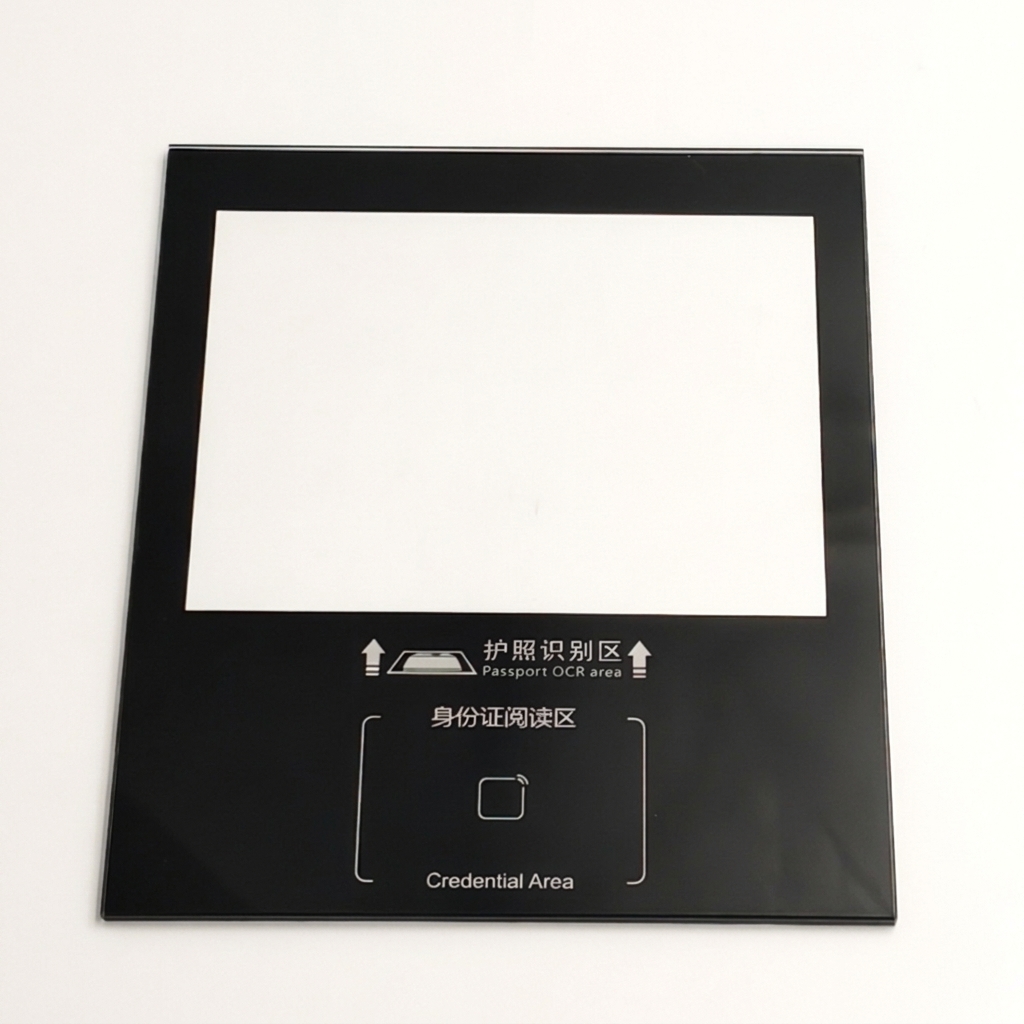
Custom Tempered Glass Protective Glass Panel Transparent Polished Display Cover Glass for Small Electronic Devices Cover
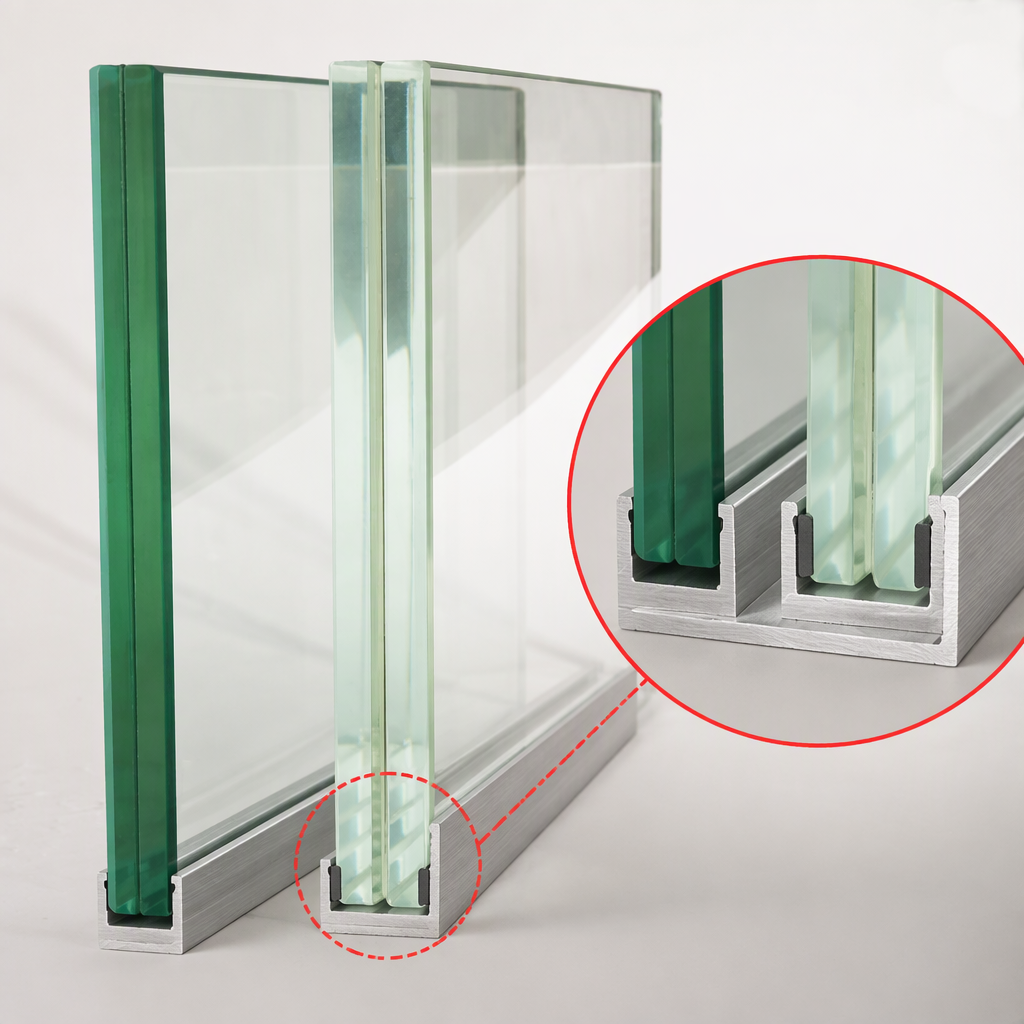
Tempered Glass Flat Solid Tempered Glass Panel Customized Thickness and Size
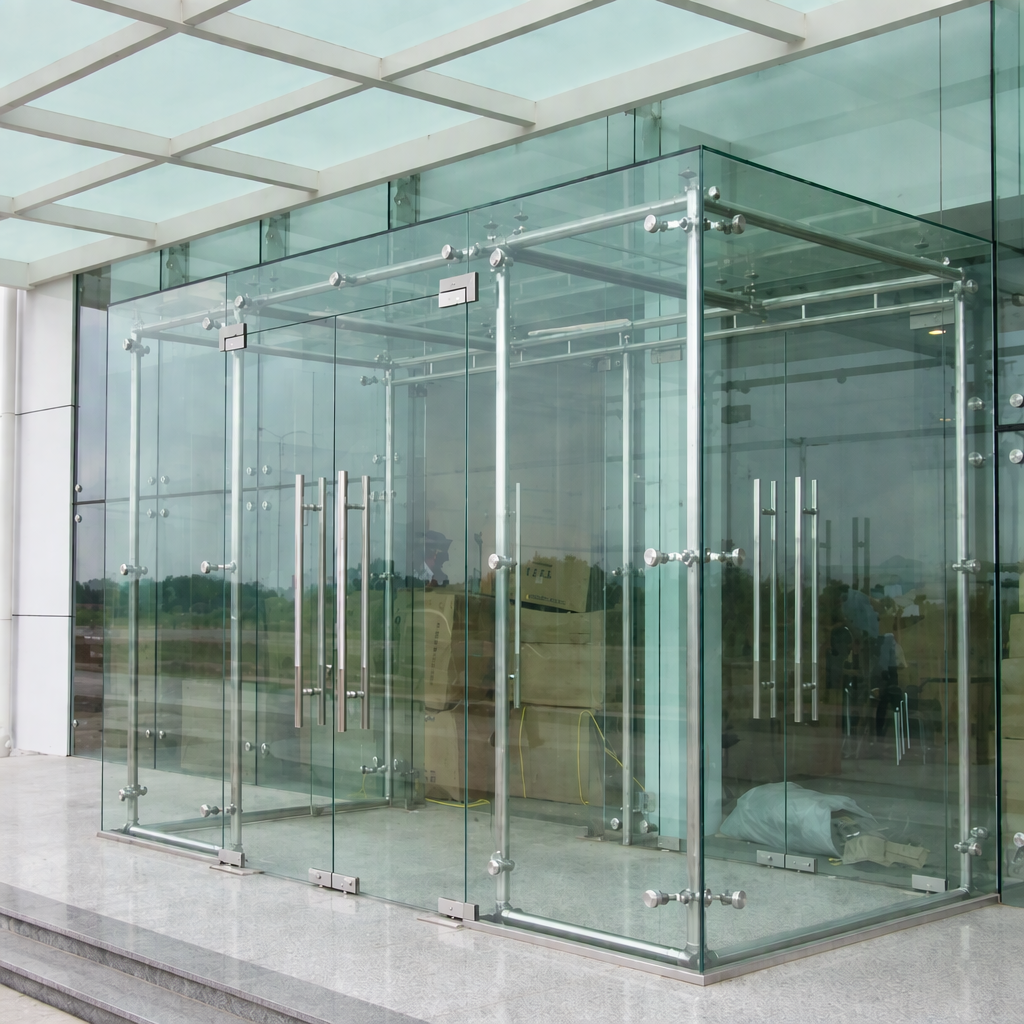
Tempered Glass Solar Window Glass High Transmittance Clear Flat Tempered Glass
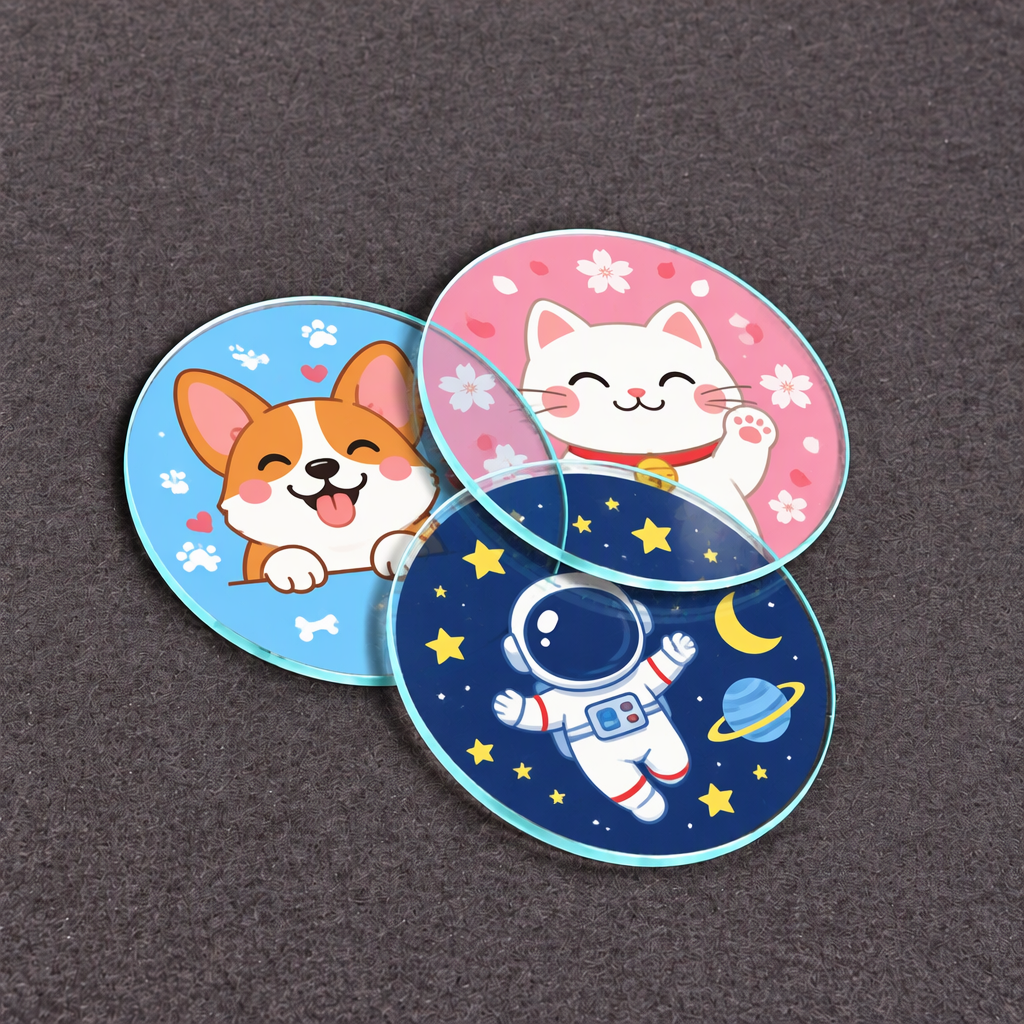
Eco-Friendly Custom Printed Glass Coasters Custom Design Tempered Glass Coaster

Glass Factory Customized High Quality Transparent Display Touch Screen Glass Silk Screen 9H Hardness Industrial Screen Protector
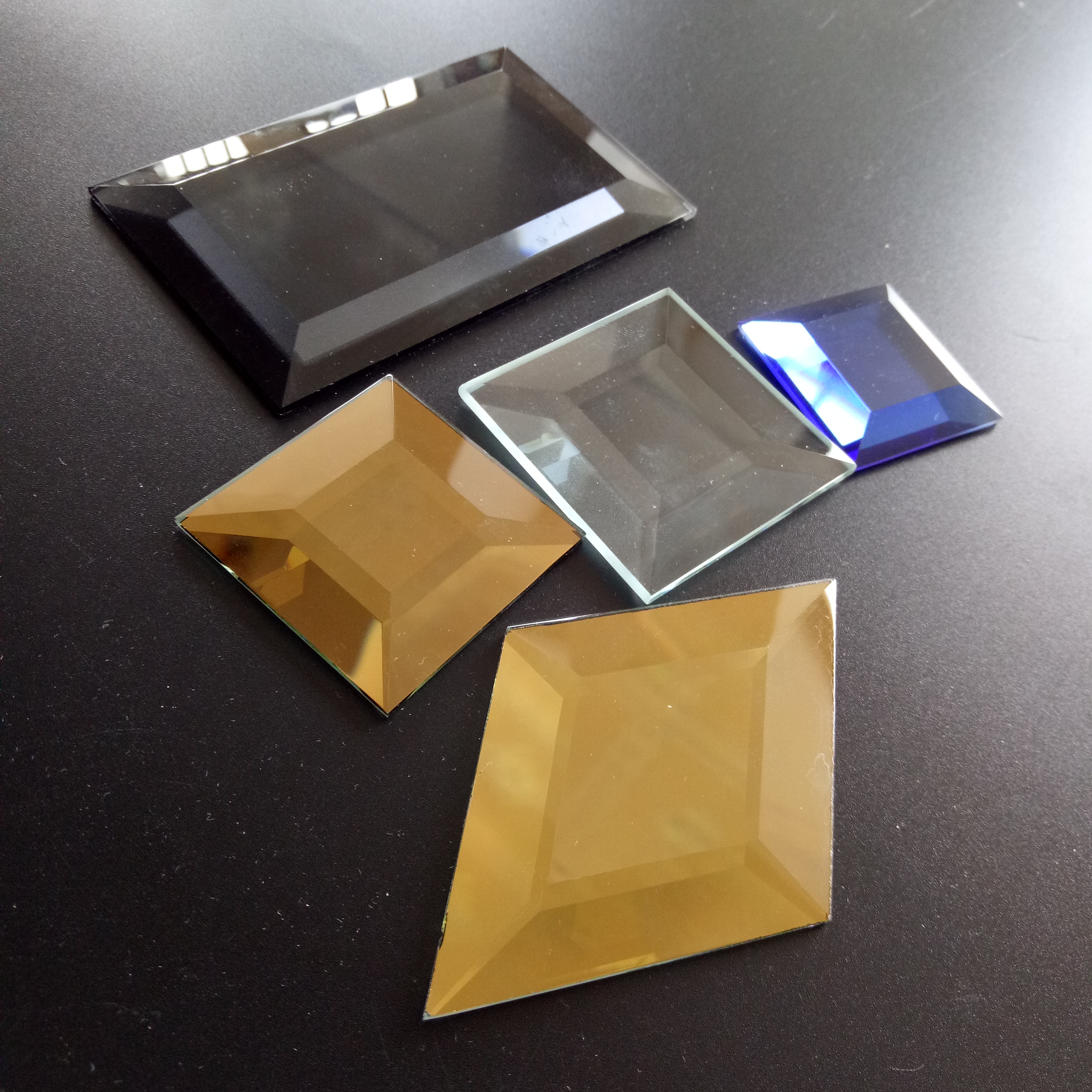
Bule Gold Faceted Beveled Glass for Wall Decoration clear Beveled Glass Pieces
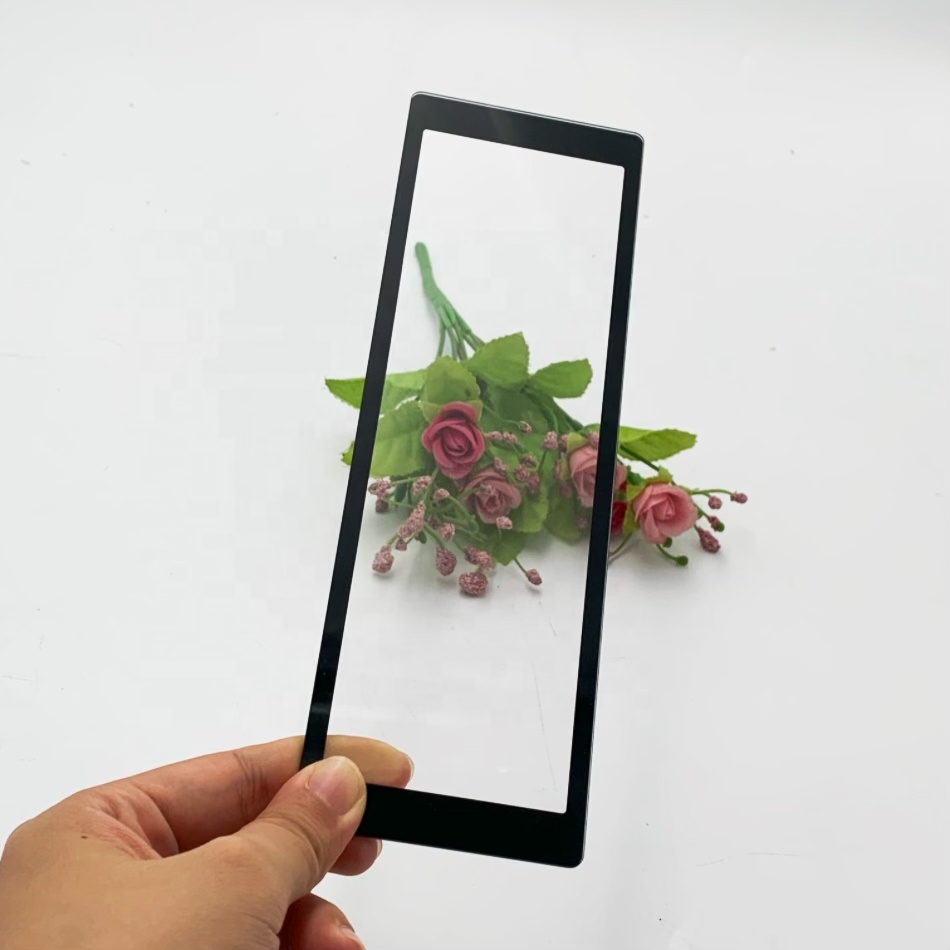
Custom Silk Screen Printed Tempered Glass Panel Touch Screen Display Cover Glass
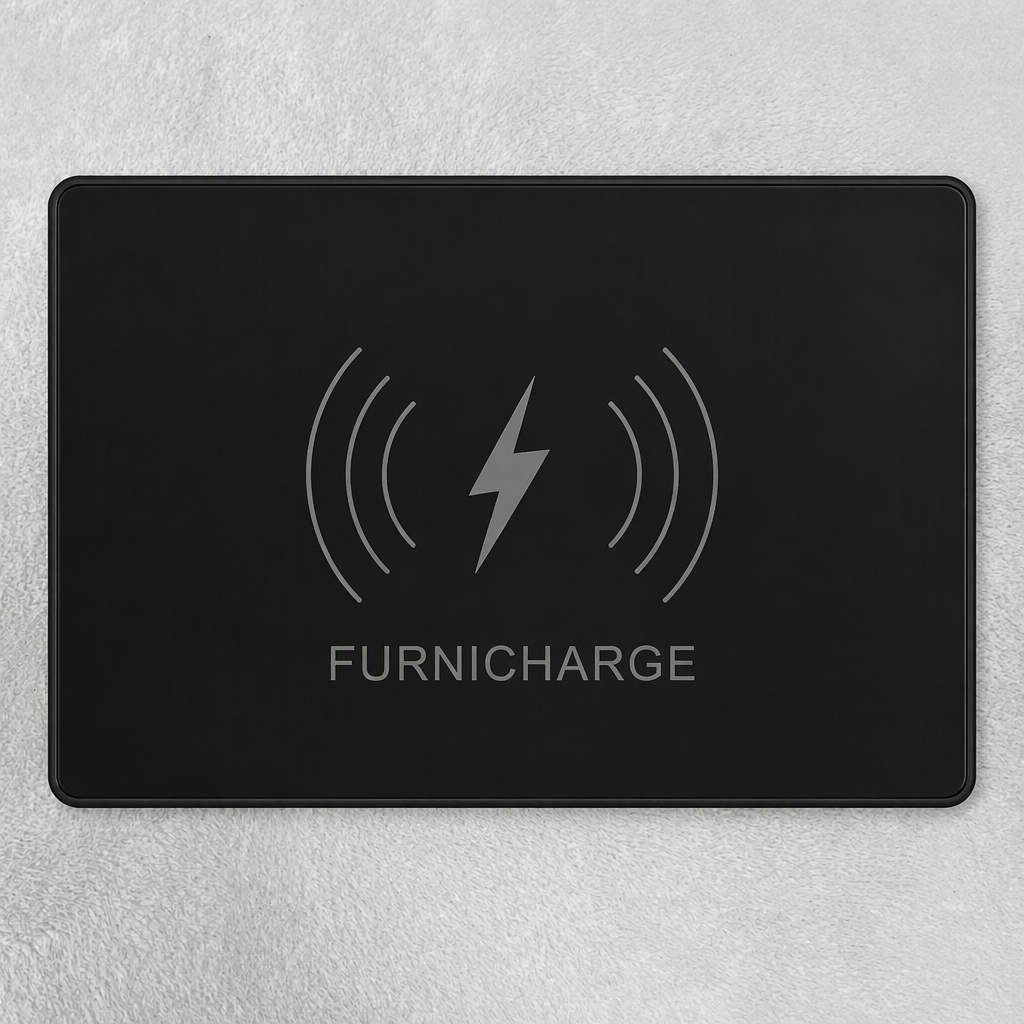
Smart Tempered Glass Bedside Table Panel for Tea Table Wireless Charging Front Cover Glass Touch Light Switch Glass
Which Substrate Belongs in Your Disc?
Substrate choice drives cost, optical performance and the strengthening route that is even possible. This matrix is the fastest way to narrow the field before requesting samples.
| Substrate | Typical thickness | Core advantage | Best-fit circular parts |
|---|---|---|---|
| Soda-lime float glass | 2 – 12 mm | Lowest unit cost, broad availability, easy tempering | Lamp covers, sight glasses, display bases, decorative rings |
| Low-iron (extra-clear) float | 0.5 – 6 mm | High light transmission, negligible green edge tint | Optical windows, round display bezels, sensor covers |
| High-alumina silicate | 0.4 – 3 mm | Superior scratch and impact resistance at low weight | Touch covers, wearable crystals, industrial protectors |
| Borosilicate 3.3 | 1 – 10 mm | High thermal shock resistance, low expansion | Heated viewing ports, laboratory and instrument windows |
| Physically tempered parts | ≥ 2 mm | 4–5× annealed strength, safe blunt fragmentation | Appliance doors, luminaire glass, round safety covers |
| Chemically strengthened wafers | 0.5 – 2 mm | Excellent flatness plus high edge strength | Electronic discs, touch panels, precision optical windows |
Where Glass Disc Technology Is Heading
Six shifts already visible in production drawings from appliance, consumer electronics and industrial instrumentation buyers.
Thinner, chemically strengthened discs
Cover wafers are migrating from 1.5 mm down to 0.7 mm and even 0.55 mm. Thermal tempering cannot hold flatness at those gauges, so ion-exchange strengthening is becoming the default for anything under 2 mm.
Stacked optical coatings
Buyers no longer order AR, AG or AF separately. Combined stacks — anti-reflective plus anti-fingerprint, or anti-glare plus anti-smudge — are specified in a single pass to reduce handling and cut scrap between coating runs.
Laser cutting and CNC finishing
Laser scribing shortens set-up for small round batches, while diamond CNC grinding keeps diameter tolerance and edge quality consistent. The combination lets suppliers quote ten-piece sample runs economically.
Printed capacitive touch graphics
Icons, backlight windows and sensor-masking zones are now printed directly onto the disc rather than added as a separate film. One fewer lamination step means one fewer failure mode in assembly.
Smart-glass integration
PDLC switchable film is being laminated between glass discs for privacy partitions, skylights and smart furniture tops. The disc becomes an active surface rather than a passive window.
Traceability at part level
Laser-etched batch codes and glass-through-via marking let a single disc be traced back to its parent sheet, tempering cycle and print run — increasingly requested by automotive and medical supply chains.
How Glass Disc Buying Is Changing
Purchasing behaviour across this category has shifted noticeably since 2022. These six patterns now separate resilient supply chains from fragile ones.
Drawing-driven digital RFQs
Buyers increasingly submit a DWG or step file with a tolerance block instead of a text description. Quotes come back faster and comparable, and specification disputes at goods-in almost disappear.
Dual sourcing as standard practice
Most buyers now qualify one regional supplier and one Asian manufacturer in parallel. The regional line handles urgent top-ups; the Asian partner covers volume, custom print and coating work.
Small batches, many variants
Order quantities are fragmenting. A single project may need six diameters and three print layouts at a few hundred pieces each, so set-up flexibility matters more than raw unit price.
Early design-for-manufacture reviews
Engineering teams now bring the glass supplier in before the housing is frozen. A 30-minute drawing review often removes a hole placement or an unrealistic corner radius that would have doubled tooling cost.
Compliance documentation up front
ISO 9001, RoHS and CE certificates are now requested during the first exchange rather than at shipment. Buyers verify the certificate numbers directly with the issuing body.
Lead time treated as a price
A four-week quote with a documented capacity plan now beats a three-week quote with none. Transparency about the production calendar has become part of the commercial offer.
From Drawing to Delivered Carton
What to prepare before you contact a supplier, and the five controlled stages that follow.
Prepare these six items first
- 2D drawing in DWG, DXF or PDF with outline, holes and tolerance
- Glass type, thickness and required edge profile
- Print artwork in AI or PDF plus Pantone or RAL references
- Coating requirement: AR, AG, AF or a combined stack
- Operating environment — heat, humidity, outdoor exposure, touch sensor
- Annual volume and expected call-off pattern
Incomplete packages are the single most common reason a first quotation comes back late. A drawing without a thickness often defaults to 4 mm — which may be three times heavier than the product needs.
Typical tolerances to design against
- Outside diameter: ±0.1 mm on CNC-finished discs
- Thickness: ±0.05 mm on strengthened wafers
- Hole position: ±0.1 mm, verified on first article
- Coating uniformity: confirmed against a sample under agreed lighting
- Print registration: confirmed against the approved screen proof
Always confirm the applicable tolerance band against your own drawing review — final values are project-specific.
Drawing review
Engineers check manufacturability, tolerance stack and strengthening route.
Sampling
Screens and physical samples are produced for fit, colour and touch verification.
Production
Cutting, edging, printing, tempering and coating run across eight lines.
Inspection
Incoming material and finished parts are checked before packing.
Export
Protective packing shipped from Qingdao port on FOB, CIF or DDP terms.
Qingdao Maupe Glass Co., Ltd.
Founded in 2012 in Qingdao, Shandong, and operating under an ISO 9001 quality management system as a glass deep-processing manufacturer and international supplier.
Certified and independently verified
ISO 9001 certificate No. 24025Q20015R1S, RoHS No. 25TYT12395 and CE No. 23TYT082593S. The company has also been onsite-assessed by SGS Group as a third-party inspection body, so compliance numbers can be checked before an order is placed.
Full process chain in one factory
Cutting, CNC shaping, edge polishing, drilling, engraving, silk-screen printing, physical tempering and chemical strengthening run across eight production lines on a 3,000–5,000 m² floor. Keeping the chain in-house keeps tolerance and colour consistency traceable.
OEM and ODM experience since 2012
More than a decade of building to customer drawings, with sample-first workflows and screen proofs approved before mass production. Private-label packaging and brand-matched print colours are standard requests we handle routinely.
Export depth across 80+ countries
Shipments go to North and South America, Western and Eastern Europe, Northern Europe, the Middle East, Oceania, Africa and Asia. Between 91% and 100% of output is exported, which means export documentation and packing standards are routine, not exceptional.
Logistics built around Qingdao
The factory sits close to Qingdao seaport and airport, keeping container consolidation simple. Accepted terms include FOB, CIF, EXW, FAS, FCA, CPT, DDP, DDU and express, settled by T/T, L/C, PayPal, Western Union or cash in USD, EUR or CNY.
Trusted by demanding procurement teams
Verified procurement relationships with Fortune 500 buyers, on-site material inspection procedures and finished-product inspection before packing — the checks that usually surface in a supplier audit questionnaire.
Where Circular and Printed Glass Parts Are Used
The same production line serves six very different end markets, each with its own tolerance and durability expectations.
Domestic appliances
Oven doors, cooktop panels, range-hood windows and microwave viewing frames printed with high-temperature ink that survives years of heat cycling.
Displays and HMIs
Protective front glass for LCD televisions, monitors and industrial human-machine interfaces, including large formats and anti-glare treated covers.
Touch control surfaces
Capacitive switch plates, smart-home wall panels, elevator buttons and bedside charging surfaces where the glass is both the cover and the interface.
Access control and security
Card reader windows, QR scanner covers, face-recognition terminals and smart lock keypads with printed masking that hides the sensor array.
Optical and instrumentation
Laser windows, sensor ports, laboratory sight glasses and medical display covers using AR, AG or AF coated low-iron and borosilicate substrates.
Furniture and architectural detail
Bevelled decorative glass rings, faceted wall elements and tabletop inserts where optical clarity and edge finish carry the design intent.
Common Questions From Glass Disc Buyers
The eight questions that come up most often during first-contact sourcing conversations.
What is the minimum order quantity for custom glass discs?
Most custom tempered or printed parts start from 10 to 100 pieces depending on diameter, thickness and the number of print colours. Large-format covers can begin at 10 pieces, while multi-colour printed discs with complex artwork typically settle around 100–300 pieces to amortise screen set-up. Samples are produced before mass production so fit, colour and touch response can be verified.
Should I specify physically tempered or chemically strengthened glass?
Physical tempering suits glass around 2 mm and thicker — appliance doors, switch panels, display windows, luminaire covers — and breaks into small blunt fragments, which is why it is the safety default. Chemical strengthening suits thin glass from 0.5 mm to 2 mm where flatness and optical quality matter, such as touch covers and sensor windows. Confirm the choice against the final drawing, because the two routes have different post-processing rules.
Can holes, notches and countersinks be added to a round disc?
Yes. Drilling, notching, countersinking and edge engraving are all available, but every hole and notch must be formed before the strengthening step. Cutting or drilling tempered glass after processing will destroy the temper, so the machining sequence is fixed at the drawing stage — which is exactly why the drawing review happens before sampling.
What files are needed to start a project?
Send a 2D drawing in DWG, DXF or PDF covering the outline, diameter, thickness, hole positions, edge finish and tolerance. Add print artwork in AI or PDF with colour references and the layer order, and state coating requirements such as AR, AG or AF alongside the intended application. A short note on the operating environment — heat, outdoor exposure, touch sensitivity — prevents the wrong substrate being quoted.
Which certifications does the supplier hold?
The company operates an ISO 9001 quality management system under certificate No. 24025Q20015R1S, holds RoHS certificate No. 25TYT12395 and CE certificate No. 23TYT082593S, and has been onsite-assessed by SGS Group as a third-party inspection company. Certificate numbers are quoted deliberately so a compliance team can verify them directly with the issuing bodies.
Which trade and payment terms are accepted?
Delivery terms include FOB, CIF, EXW, FAS, FCA, CPT, DDP, DDU and express delivery. Payment is accepted by T/T, L/C, PayPal, Western Union and cash, in USD, EUR or CNY. The factory's proximity to Qingdao seaport and airport keeps consolidation and inspection visits practical.
How is glass packed for international shipping?
Parts are separated with protective interleaving, edge-protected and packed into export-grade cartons with foam or honeycomb cushioning, then palletised where volume justifies it. For thin wafers and large-format covers the packing configuration is agreed at sampling, because the right internal support depends on the part's diameter-to-thickness ratio.
Is small-batch or multi-variant supply possible?
Yes, and it is increasingly normal. A single order frequently covers several diameters and print layouts at a few hundred pieces each. Because cutting, printing, tempering and coating all happen in-house across eight lines, switching between variants involves set-up rather than a separate supplier chain — which is what keeps smaller runs commercially viable.
Send Your Drawing — Get a Manufacturability Review, Not Just a Price
Share the diameter, thickness, substrate, print artwork and coating requirement. Our engineering team will confirm the strengthening route, flag any tolerance risk and return a quotation that reflects what the part actually needs.
Get a Quote