Dichroic Filter Exporters & Wholesaler for the Makati Market
A technical sourcing guide for Makati architects, lighting designers, fit-out contractors and technology buyers who need consistent dichroic colour, export-grade packing and responsive wholesale support.
Glass Products Recommended for Makati Dichroic & Display Assemblies
The eight products below are produced to drawing and can be integrated with dichroic filter layers, display stacks, control panels and decorative fit-out packages. Product URLs are preserved from the original series so that Makati buyers can compare specifications before requesting a wholesale quotation.
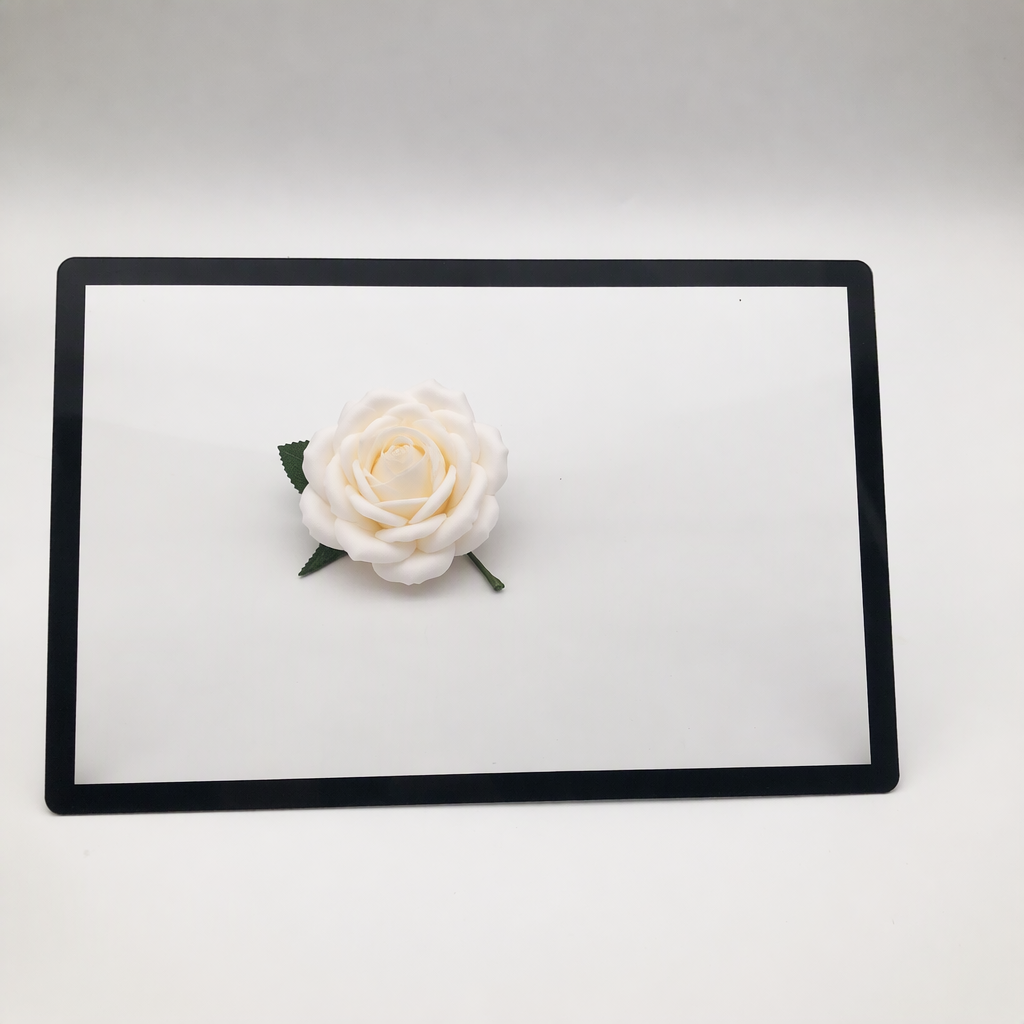
Ultra-Thin Silk Screen Printed Tempered Glass for Display Panels
Ideal as a printable cover layer in slim POS, appliance and display assemblies; crisp graphics can sit over or around a dichroic filter without hiding its colour shift.
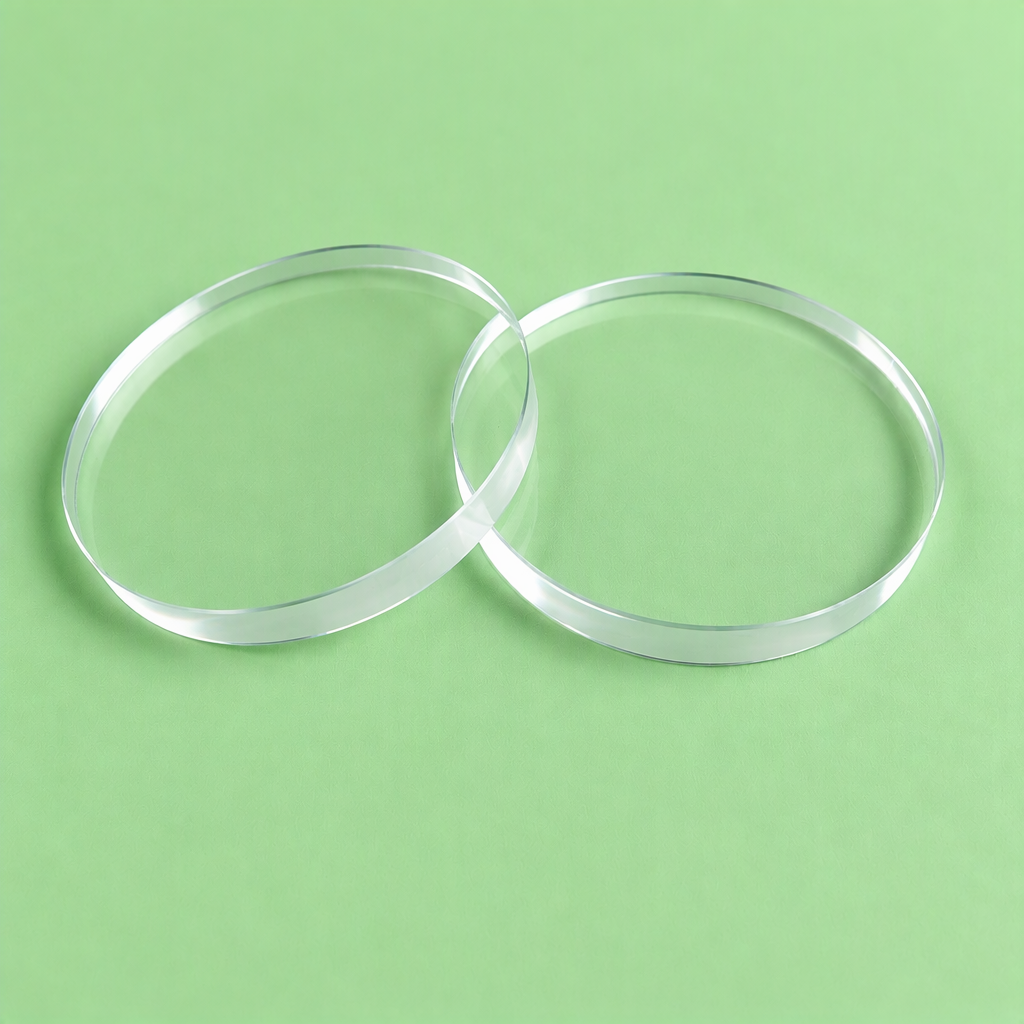
High Strengthen Glass Tempered Glass Custom Size Tempered Clear Glass Panel for Industrial
A robust substrate for Makati equipment enclosures, viewing windows and fit-out details where impact resistance, custom dimensions and safe breakage matter.
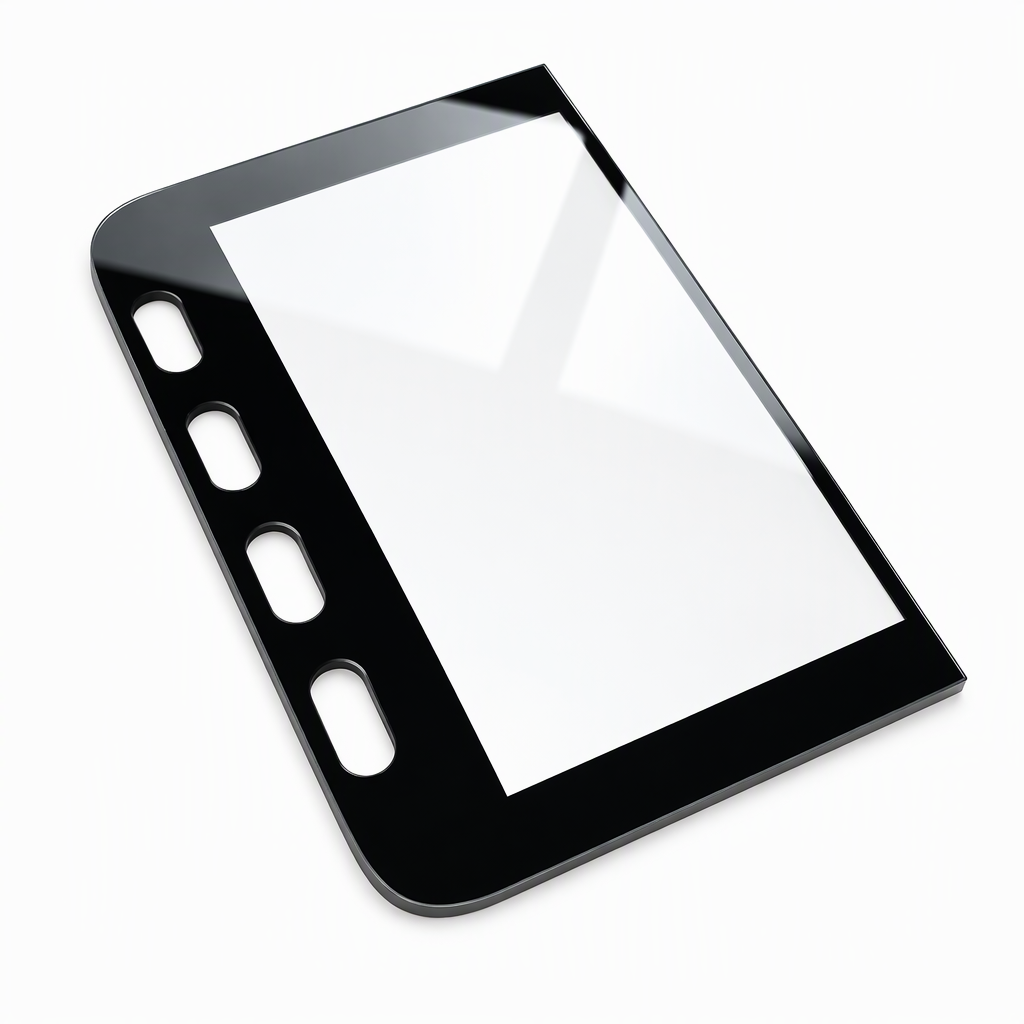
Glass Factory Customized High Quality Transparent Display Touch Screen Glass Silk Screen 9H Hardness Industrial Screen Protector
For touch interfaces in retail, lift lobbies and kiosks; a hard, clear front layer that can be combined with anti-glare or anti-reflective treatments.

Tempered Glass Panel With 3M Adhesive Tape Silk Screen Printing for Electrical Appliance Decoration Front Cover Glass
For appliance and decorative front covers; tape-ready assembly helps Makati fabricators reduce secondary bonding steps while keeping printed graphics clean.
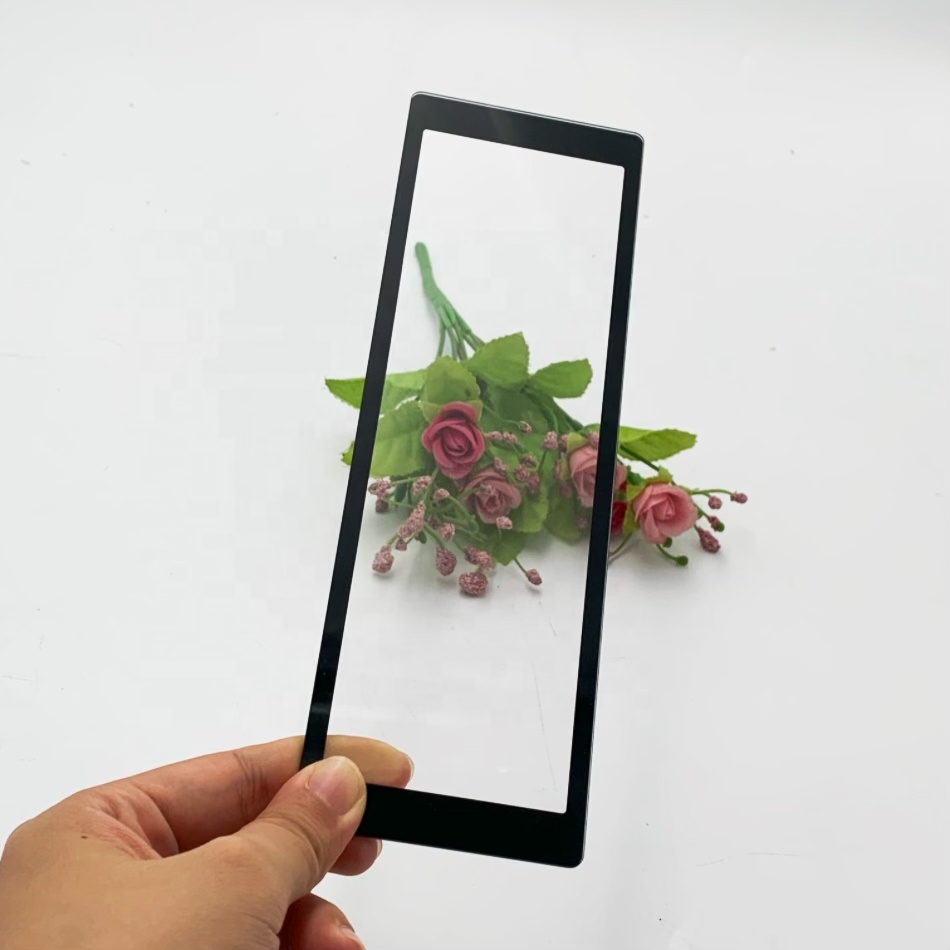
Custom Silk Screen Printed Tempered Glass Panel Touch Screen Display Cover Glass
Suitable for smart-home, appliance and commercial control interfaces with backlit icons, selective windows and durable printed borders.
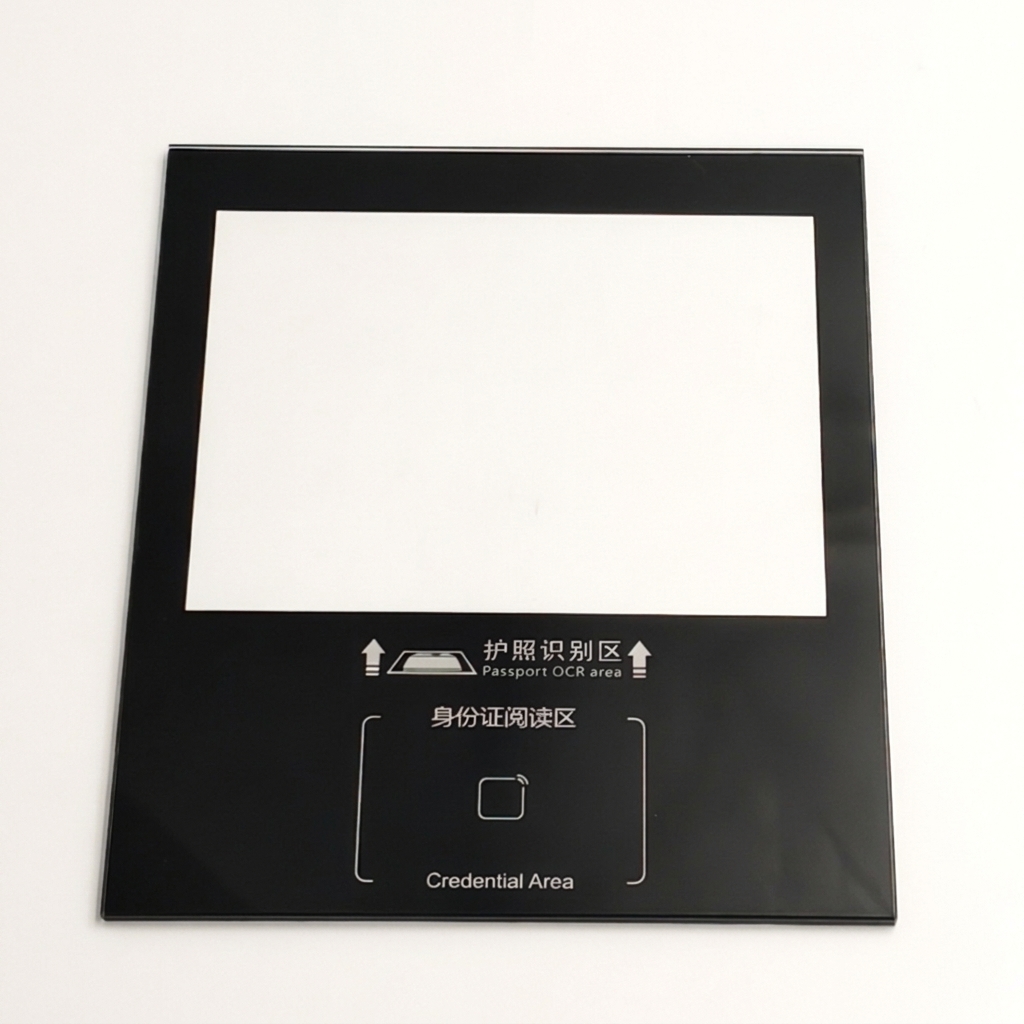
Custom Tempered Glass Protective Glass Panel Transparent Polished Display Cover Glass for Small Electronic Devices Cover
A polished display cover for compact devices, sensors and handheld equipment; can be specified for optical bonding compatibility.
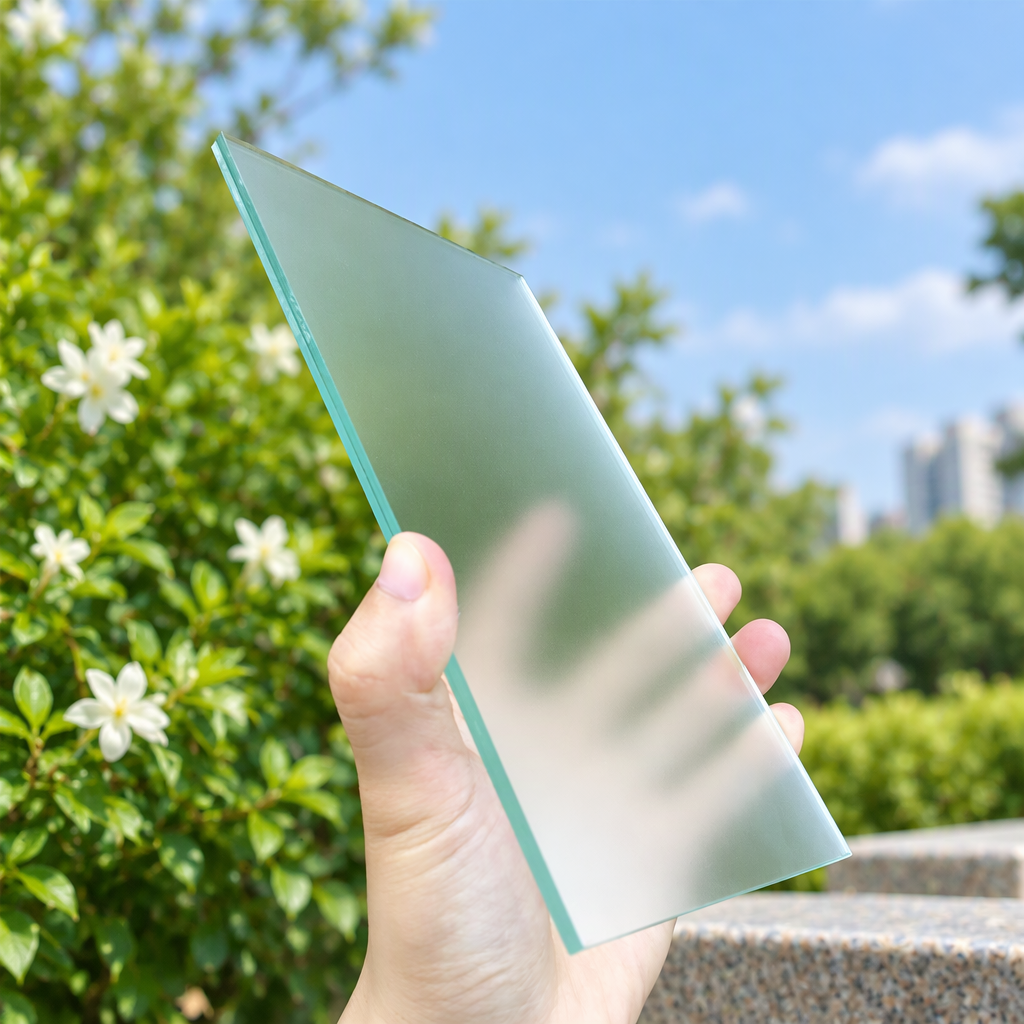
High Quality Industrial Solid Anti-glare Glass Screen Protector Matte Surface Monitor Screen Cover Glass
Answer Makati’s bright daylight and lobby glare with a matte surface that preserves legibility on monitors, HMIs and signage.
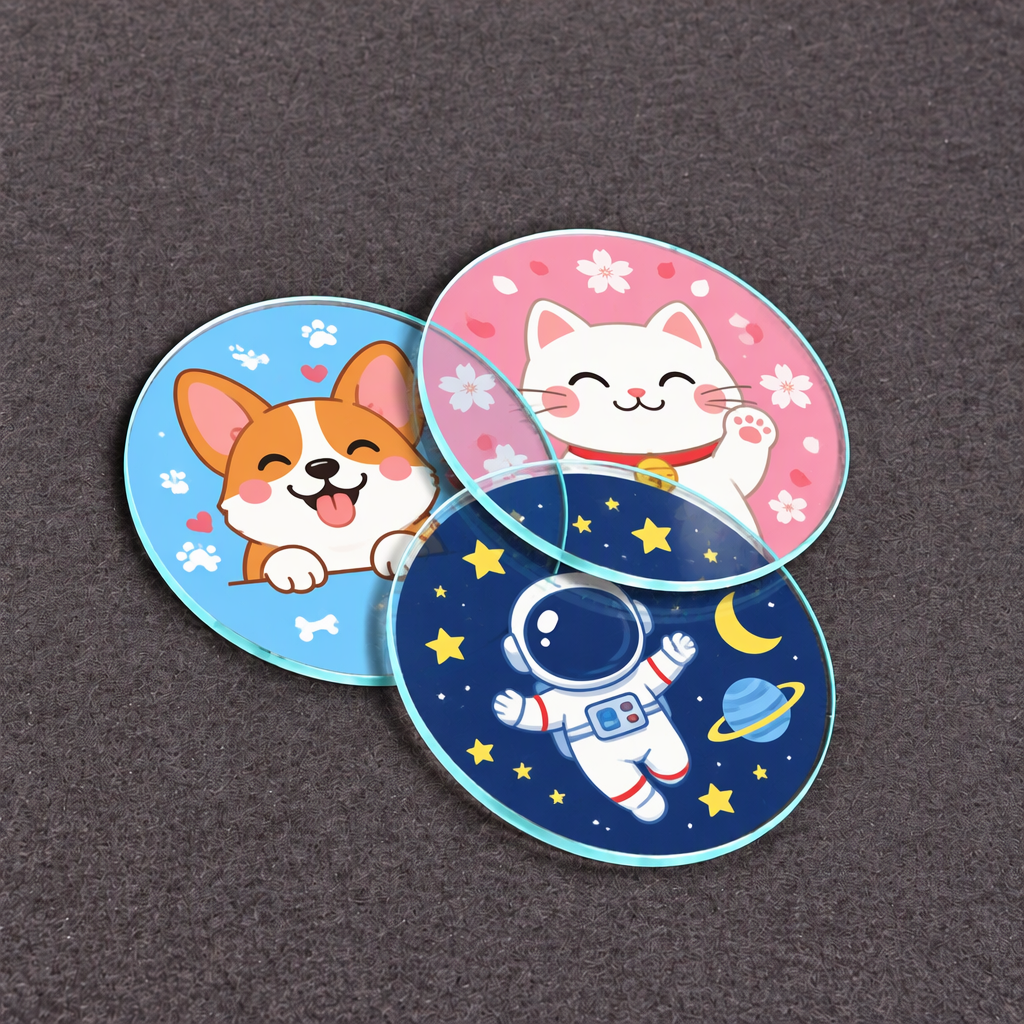
Eco-Friendly Custom Printed Glass Coasters Custom Design Tempered Glass Coaster
Decorative promotional and hospitality glass for hotel, café and retail projects; printed with RoHS-conscious inks and export packing.
What Makati Buyers Need to Know About Dichroic Filters
Dichroic filters are thin-film interference components, not pigment-coloured glass. They transmit selected wavelengths while reflecting others, creating saturated colour and a controlled colour shift as the viewing angle changes.
Makati’s commercial interiors are design-led and highly serviced: retail flagships around Ayala Avenue, hotel and restaurant upgrades in Legazpi Village and Salcedo, corporate lobbies, galleries and electronics showrooms. In these environments, dichroic filters are used less as a scientific curiosity and more as a specification-sensitive design material for display plinths, feature partitions, lighting fixtures, signage, camera windows and premium device covers.
The critical purchasing issue is not simply “blue” or “pink” glass. It is whether the delivered batch matches the approved sample under the project lighting, at the agreed angle of incidence, with the agreed substrate, coating durability and edge finish. Two filters that look identical under office lighting can diverge at 45°. That is why serious Makati RFQs should state the AOI, measurement geometry, spectral target and reorder retention sample.
For wholesale buyers, the strongest supplier is one that can connect optical coating control with practical glass finishing: cutting, CNC shaping, edge polishing, printing, strengthening, AR/AG/AF treatment, protective film and export packing. That is the supply model Maupe Glass applies to custom glass programmes, combining in-house deep processing with qualified optical coating partners for dichroic filter projects.
Indicative Makati Specification Priorities
Planning view drawn from typical custom-glass project conversations; it is not a statistical market survey.
Where Dichroic Glass and Custom Cover Glass Create Value Locally
Makati projects usually combine imported specification materials with local fabrication, fit-out and installation teams. The right product package must therefore be easy to specify, easy to inspect and easy to consolidate.
Retail Flagships on Ayala Avenue
Dichroic display plinths, POS covers, colour-shift window graphics and batch-matched decorative panels for premium brand environments.
Hotels and Restaurants in Legazpi and Salcedo
Decorative partitions, lighting filters, tabletop glass and fingerprint-resistant overlays that survive daily hospitality cleaning.
Corporate Lobbies and Lift Lobbies
Dichroic glass signage, touch control covers and access-control windows that balance brand identity with durability and safety.
Museums, Galleries and Brand Experiences
UV and IR management, reflection control and low-colour-shift mounting for artefacts, digital exhibits and experiential installations.
Electronics, Cameras and Sensing
Bandpass filters, camera windows, sensor covers and 9H protective glass for security, medical, industrial and consumer devices.
Architectural Daylight and Privacy
Sun-control filters, anti-glare cover glass, PDLC-compatible assemblies and laminated decorative glass for tropical daylight conditions.
Which Dichroic Filter Type Fits the Makati Project?
Use these four categories as an early-stage selector. Final samples should always be reviewed under the actual project lighting and installation angle.
Shortpass Heat-Control Filters
For IR and heat rejection in lighting, display and equipment windows.
- Substrate: B270 or borosilicate
- Specify cut-on wavelength and blocking range
- Confirm AOI and transmission target
Longpass UV-Block Filters
For conservation, gallery display and colour-sensitive materials.
- Block UV below the agreed range
- High visible transmission
- Low fluorescence and stable colour
Bandpass Filters for Cameras and Sensors
For machine vision, security, medical devices and optical sensing.
- Centre wavelength and FWHM
- Out-of-band blocking
- Substrate flatness and coating durability
Decorative Colour-Shift Mirrors
For feature partitions, display plinths, lighting and branded interiors.
- Reflection and transmission colour
- Angle-shift effect
- Edge finish and protective film
Makati Market Signals for 2025–2026 Procurement Planning
Makati buyers are not simply looking for the lowest unit price. They are managing design approval, installation risk, import timing and after-sales confidence across multi-party projects.
Design-Led Retail and Hospitality Fit-Outs
Colour-shift glass is increasingly used as an experience layer in flagship stores, hotel bars and branded reception areas.
Tropical Daylight and Glare Control
Makati’s strong daylight makes anti-glare surfaces, IR management and angle-consistent coatings more important than catalogue colour alone.
Global Specification, Local Delivery
International design standards are being paired with local installation schedules, requiring export documentation and reliable packing.
Sustainability and Compliance Documentation
RoHS, CE and ISO 9001 evidence supports procurement teams who must answer client and corporate compliance questions.
Smaller Batches and Faster Sample Cycles
Custom panels often start from 10 to 100 pieces depending on size, print colours and coating route; physical samples reduce approval risk.
Consolidated Procurement for Fit-Out Packages
Combining filters, printed glass, touch covers and coaster gifts in one shipment can reduce handling, documentation and receiving effort.
How to Write a Makati-Ready Dichroic Filter RFQ
A good RFQ protects both design intent and installation schedule. Use the table below as a checklist before requesting wholesale pricing.
| Specify | Why It Matters | Suggested RFQ Language |
|---|---|---|
| Substrate and thickness | Affects flatness, weight, edge quality and assembly stiffness. | “B270 or borosilicate, 1.1–3.0 mm, thickness tolerance to be agreed.” |
| Spectral target | Defines function and colour rather than relying on a photo reference. | “State target transmission, reflection, centre wavelength and blocking range.” |
| AOI and measurement geometry | Dichroic colour is angle-dependent; unstated AOI creates disputes. | “Report at 0°, 30° and 45°; confirm spectrophotometer and measurement geometry.” |
| Size, edge and holes | Controls fit, safety and installation tolerance on site. | “CNC edge, ±0.2 mm size tolerance, chip limit and corner radius shown on drawing.” |
| Coating durability and packing | Protects optical appearance through tropical humidity and export handling. | “Tape adhesion test, humidity exposure agreement, low-tack film, desiccant, edge protectors and shock indicator.” |
Information Gain: Test and Approval Protocol
- Approve a physical sample under project lighting, not only a screen image.
- Record substrate batch, coating batch, AOI, spectral curve and edge condition.
- Confirm protective film type, adhesive compatibility and cleaning instructions.
- Retain a signed reference sample for reorder matching and incoming inspection.
Makati Import Planning Notes
For projects in Makati, discuss whether the shipment will move through the Port of Manila, require air freight via NAIA or be consolidated with local fit-out materials. Packaging should account for tropical humidity, multiple handling points and storage before installation.
Accepted trade terms can include FOB, CIF, EXW, FCA, CPT, DDP and DDU, with payment by T/T, L/C, PayPal, Western Union or other agreed methods. The factory’s location near Qingdao seaport and airport supports export logistics and buyer audits.
Why Maupe Glass Is a Practical Wholesale Partner for Makati Projects
Qingdao Maupe Glass Co., Ltd. has produced custom functional glass since 2012 from Qingdao, Shandong, serving OEM buyers in more than 80 countries. The factory operates an ISO 9001 quality management system, holds RoHS and CE documentation, and has been onsite assessed by SGS Group.
For Makati buyers, the advantage is not one machine or one certificate. It is the ability to keep cutting, CNC shaping, edge polishing, drilling, engraving, silk screen printing, physical tempering, chemical strengthening and AR/AG/AF coating under one controlled quality plan. This reduces the coordination risk between a printed cover glass supplier, a strengthening subcontractor, a coating house and an export packer.
Factory facts available for procurement review include a 3,000–5,000 m² production area, 8 production lines, export share of 91–100% and OEM/ODM experience with Fortune 500 procurement contracts. Certificate references include ISO 9001 No. 24025Q20015R1S, RoHS No. 25TYT12395 and CE No. 23TYT082593S. The company is also positioned close to Qingdao seaport and airport for export logistics and buyer audits.
For dichroic filter programmes, Maupe can coordinate qualified optical coating capacity with in-house glass finishing, printed borders, touch windows, adhesive tape options and protective packing. That makes the factory a practical wholesale supply point for Makati architects, importers, fabricators and brand procurement teams that need a clear path from sample approval to repeat order.



Precision Cutting and CNC Shaping
Clear, ultra-clear, tinted and high-alumina sheet processed to custom outlines, holes and notches.
Edge Polishing, Drilling and Engraving
Flat, pencil and bevelled edges, safety corners, countersunk holes and engraved details for cleaner assembly.
Silk Screen Printing
Eco-friendly high- and low-temperature inks, multi-colour layouts, logos, icons and touch zones.
Physical and Chemical Strengthening
Thermal tempering for thicker safety glass and ion-exchange strengthening for thin cover glass.
AR / AG / AF Coating Coordination
Anti-reflective, anti-glare and anti-fingerprint treatments for readable, durable display surfaces.
Export Packing and Traceability
Protective film, desiccant, edge protection, shock indicators and batch retention for reorder confidence.
Questions Makati Buyers Ask Before Ordering
These answers reflect common procurement questions from architects, importers, fabricators and brand owners preparing custom glass projects for Metro Manila.
Can you supply wholesale dichroic filters to Makati in small batches?
How are dichroic filters and custom glass shipped to Makati?
What is the risk of buying dichroic glass without specifying AOI?
Which certificates support Makati procurement review?
Can you match a colour palette or brand guideline?
What files should Makati architects send to start an RFQ?
Send a Drawing, Spectral Target or Project Photo
Share your Makati project requirements and our team will review manufacturability, coating route, finishing options, sample plan and export packing before quotation.