OEM/ODM Glass Bending Supplier & Suppliers Serving the San Diego Market
Custom curved, tempered, printed and coated glass for San Diego OEMs, architects, medical device teams, electronics manufacturers and coastal commercial projects.
Inquire NowEight Glass Products Frequently Specified Into San Diego OEM/ODM Programs
Bent-glass projects rarely depend on a single sheet of glass. A finished assembly may combine a curved outer profile with a printed display cover, an anti-glare window, a switchable privacy film, a solar glass pane or a tempered furniture component. The eight products below are practical building blocks for San Diego engineering, procurement and architectural teams. Product URLs are preserved so your team can compare specifications, thickness options, printing methods and MOQ before requesting a quotation.
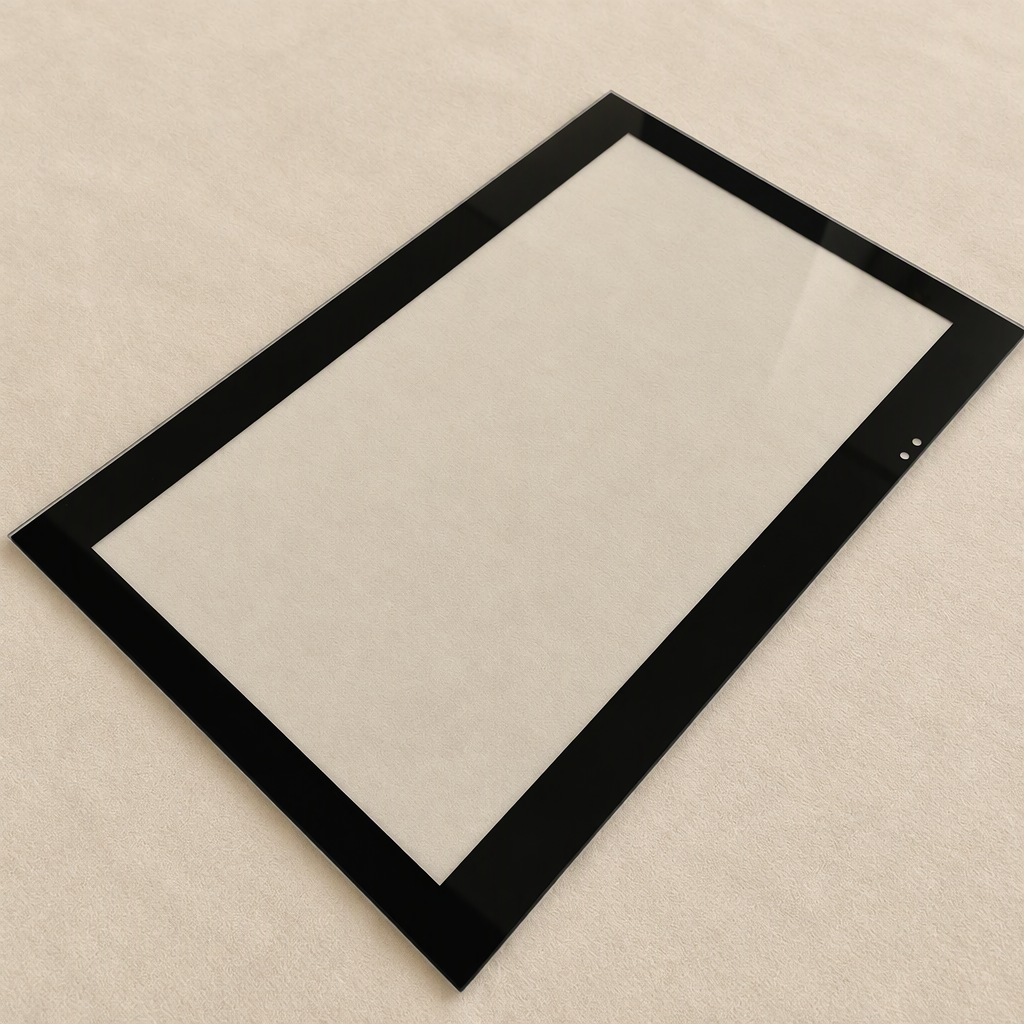 Display / Industrial
Tempered Glass Panel Silk Screen Printed Flat Display Screen Protector Glass for LCD TV Industrial Decoration
A flat printed cover platform for TVs, HMIs, kiosks and equipment windows. Suitable when the project needs crisp graphics, hidden sensor zones and a tempered safety glass surface. View product →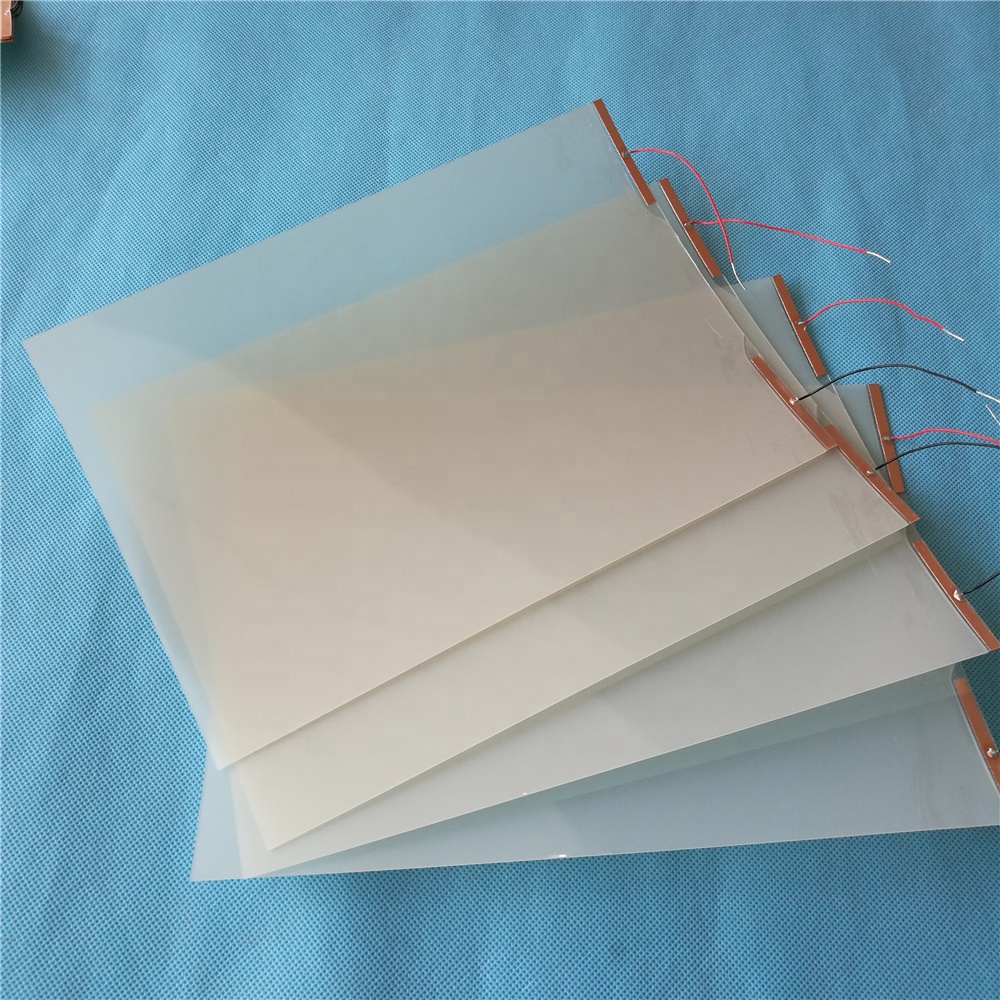 Privacy / Smart Glass
Factory Price Electrochromic Anti-UV PDLC Film Smart Switchable Privacy Glass Office Partition and Curtain Walls
A privacy-on-demand solution for clinics, conference rooms, hospitality interiors and residential remodels where daylight, UV control and visual privacy must coexist. View product →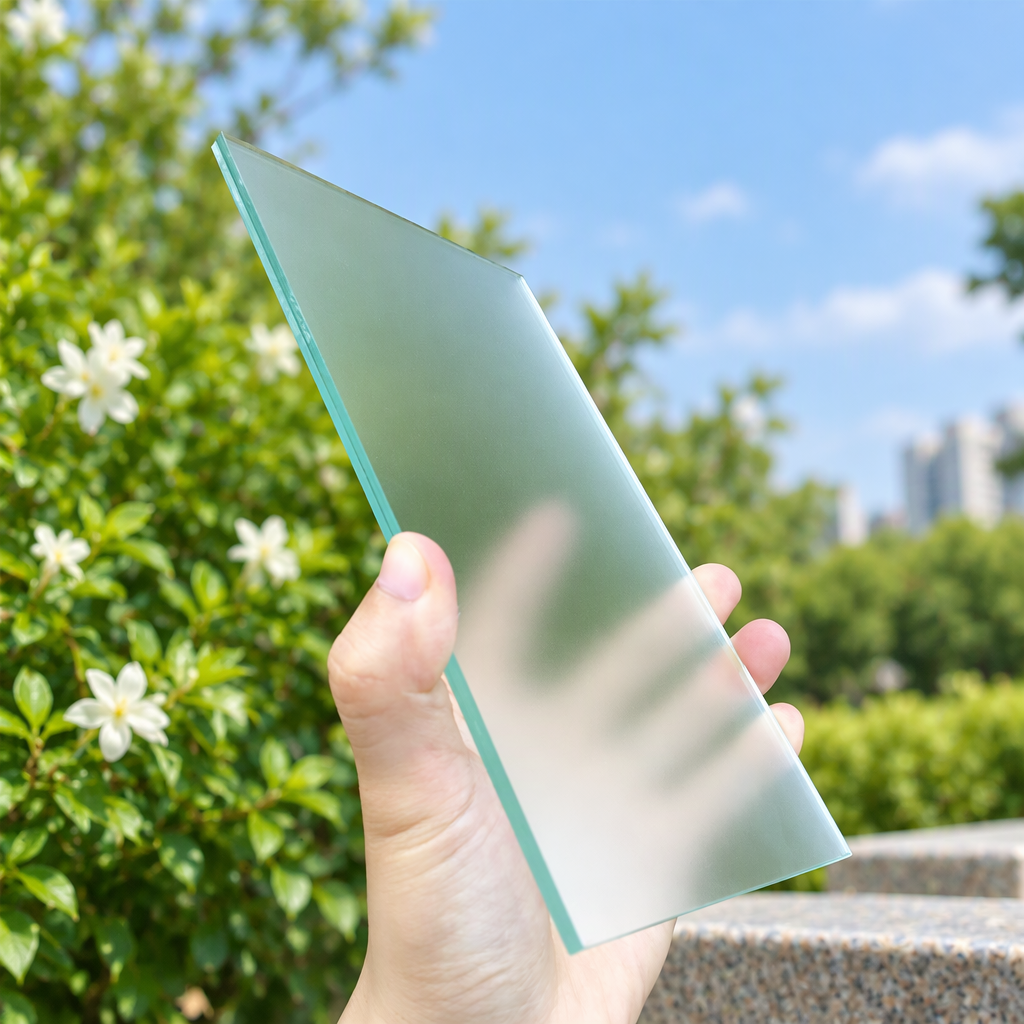 AG Optical Glass
High Quality Industrial Solid Anti-glare Glass Screen Protector Matte Surface Monitor Screen Cover Glass
Anti-glare cover glass for bright laboratories, control rooms, outdoor kiosks and coastal facilities where reflections reduce readability and operator comfort. View product →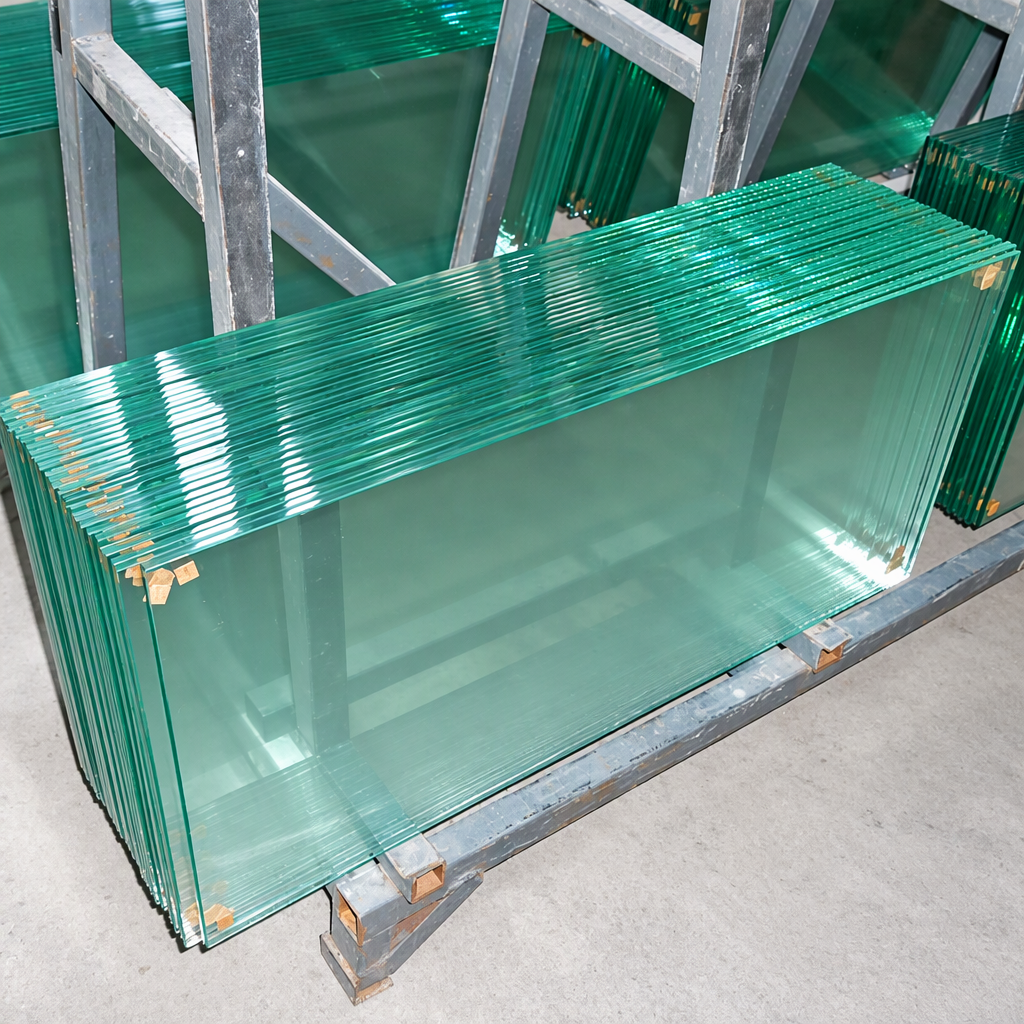 Tempered Float Glass
Customized Thickness and Size Clear Tempered Float Glass Panels
A flexible base material for architectural inserts, appliance windows, furniture, display enclosures and prototype fixtures requiring custom cut-to-size tempered glass. View product → Hospitality / Furniture
Tempered Glass Lazy Susan 50cm 60cm 70cm 90cm Lazy Susan Turntable Strengthened Glass
Strengthened glass turntables for restaurants, clubhouses, showrooms, vacation rentals and residential dining spaces where durable circular glass is required. View product →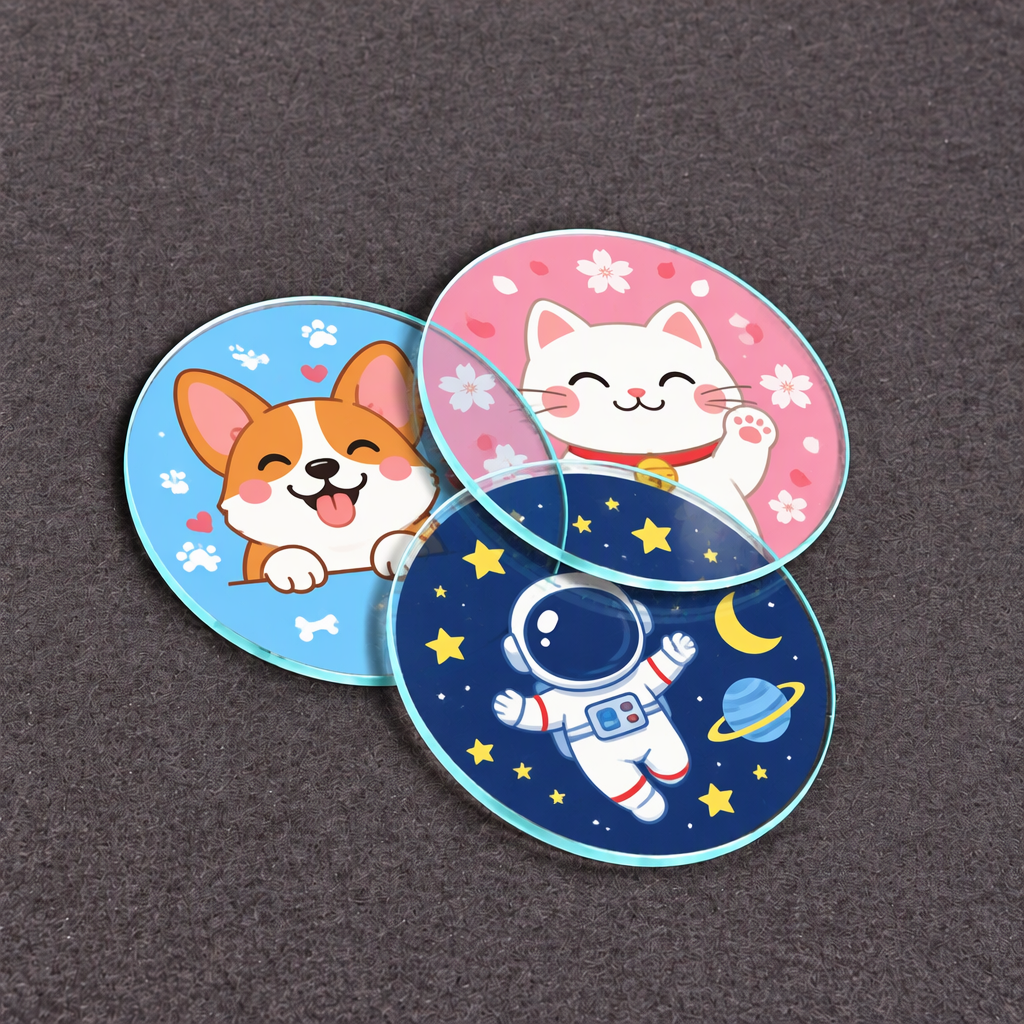 Custom Print / Decor
Eco-Friendly Custom Printed Glass Coasters Custom Design Tempered Glass Coaster
Small-format printed tempered glass for hospitality brands, tasting rooms, corporate gifts, showrooms and OEM tabletop accessory programs. View product →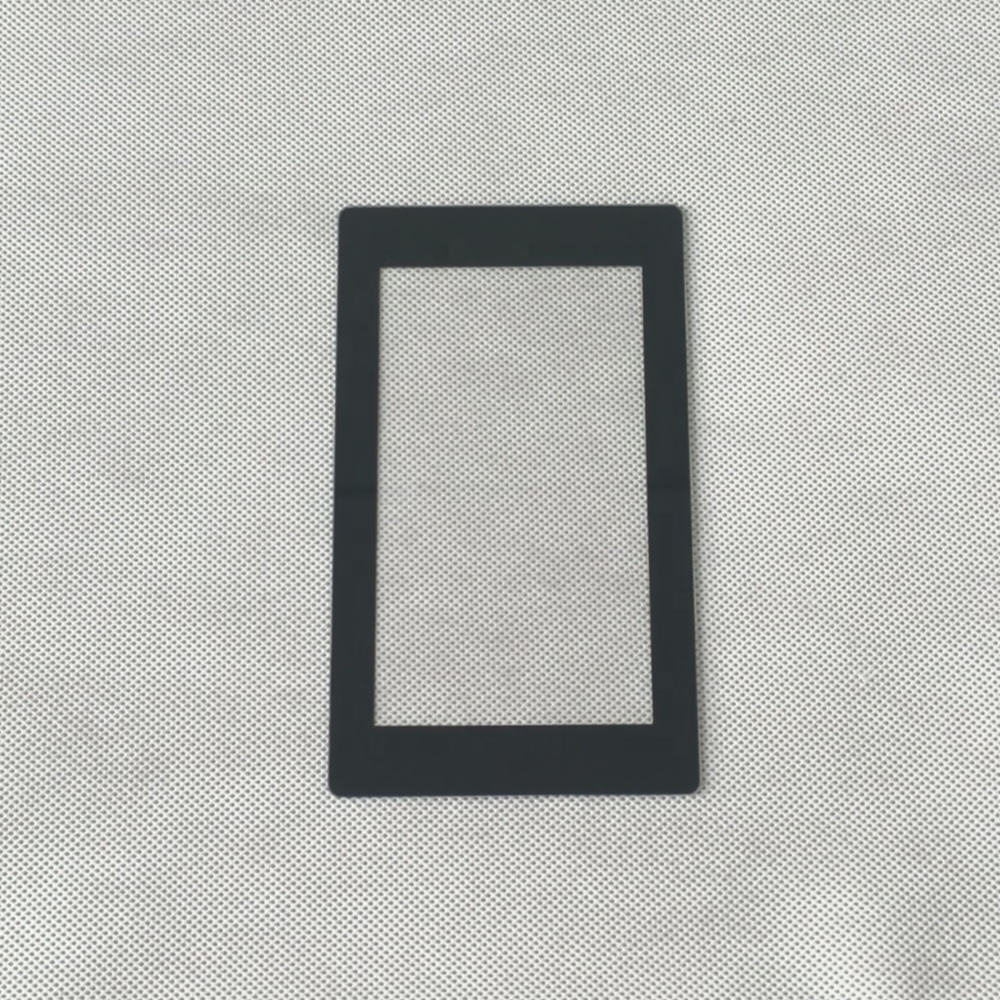 Self-Adhesive Cover
Silk Screen Printed Tempered Glass Panel Self Adhesive Display Cover Glass Flat Electronic Product Glass Screen Protector
A self-adhesive printed cover for electronics, appliance interfaces and smart devices. Useful for assembly teams seeking simplified bonding and cleaner serviceability. View product →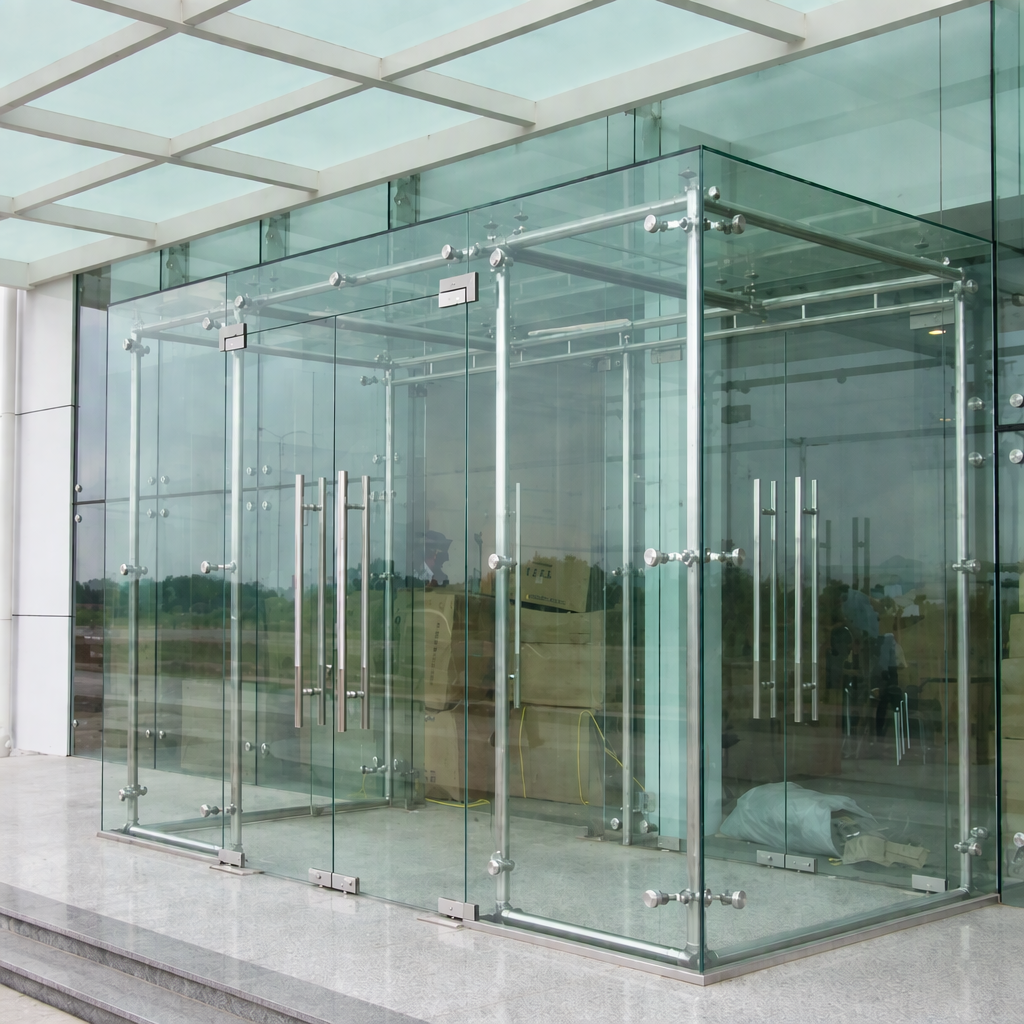 Solar / Energy
Tempered Glass Solar Window Glass High Transmittance Clear Flat Tempered Glass
High-transmittance tempered glass for solar windows, energy-related equipment and architectural daylighting concepts where optical clarity affects performance. View product →Where Bent and Functional Glass Creates Real Value in San Diego
San Diego is not one market. It is a life-science cluster, a naval and marine city, a hospitality destination, a coastal residential region and a deep technology corridor. Each environment changes what “good glass” means, especially when the part must be curved, printed, coated, tempered or integrated with an electronic interface.
Life Sciences and Medical Equipment
San Diego life-science companies often need cleanable display windows, diagnostic instrument covers and touch interfaces that resist repeated cleaning. For these programs, specify AR/AG/AF coatings, consistent print opacity, controlled edge quality and documentation for dimensional inspection. A curved cover may improve ergonomics or protect a sensor stack, but it must be reviewed together with optical clarity and assembly tolerance.
Marine, Naval and Coastal Architecture
Salt-laden air, UV exposure, wind-driven rain and seismic design requirements shape coastal projects from Coronado to Oceanside. Bent glass for canopies, balustrades, yacht glazing, marine displays and coastal homes should be evaluated for edge finish, ink adhesion, coating durability and compatible hardware. A supplier serving San Diego should understand that salt-fog performance is often as important as visual appearance.
Commercial Interiors and Hospitality
Hotels, restaurants, tasting rooms, clinics and creative offices use glass to balance openness and privacy. PDLC switchable glass supports conference rooms and treatment areas, while printed tempered glass supports branded partitions, signage, tabletop accessories and display walls. Curved glass reception counters, balustrades and feature panels can elevate a space when the supplier plans tooling, radii and print compensation early.
Technology, Electronics and HMI
San Diego’s electronics, communication, defense-adjacent and smart-device teams need cover glass for touch controls, card readers, switch panels, wireless chargers and face-recognition terminals. Anti-glare glass improves readability in bright labs and outdoor enclosures. Silk-screen printing hides circuitry and defines icons. For bent or curved housings, the cover glass must be designed together with the sensor, gasket and housing stack-up.
Solar, EV and Energy Infrastructure
High-transmittance solar tempered glass supports solar window concepts, charging canopies and equipment glazing. In coastal San Diego installations, the specification should include edge treatment, cleaning method, UV exposure and frame compatibility. Where curved aesthetics are required, the team should compare flat tempered inserts, cold-bent laminated glass and hot-bent glass before locking the design.
Architectural and OEM Furniture
Clear tempered float glass, lazy Susan turntables, printed coasters and decorative panels serve hospitality, multi-family housing, showrooms and furniture OEMs. These parts are often lower-complexity than curved façade glass, but they still require controlled cutting, edge polishing and packaging. Short-run customization is a practical advantage for designers testing new products in the San Diego market.
San Diego Glass Sourcing Trends That Should Shape Your Specification
Procurement decisions in San Diego are increasingly driven by energy code performance, coastal durability, privacy flexibility, product personalization and faster prototype cycles. These trends do not simply change the glass color or thickness; they change the process route, inspection plan and supplier shortlist.
Title 24, Daylighting and Glare Control
California energy and building requirements continue to push projects toward daylighting, solar control and visual comfort. In practical terms, more buyers ask for anti-reflective and anti-glare surfaces, high-transmittance solar glass and optical coatings that support readable displays without washing out a room.
Coastal Durability and UV Stability
UV exposure and salt air make print adhesion, edge sealing and coating durability central. Buyers increasingly request material data, salt-spray results where applicable and packaging that prevents edge chipping during ocean freight and local handling.
Privacy on Demand
PDLC smart glass is moving from novelty to standard specification in clinics, offices, hotels and residential remodels. The purchasing question is no longer only “Does it switch?” but “How does it integrate with framing, power, maintenance and warranty?”
Prototype-to-Production Flexibility
San Diego hardware startups and design studios often need a small validation batch before committing to tooling. Suppliers that support low-MOQ flat printed cover glass, samples and phased production can reduce the risk of over-ordering before product-market fit.
Specifying Bent Glass Without Creating Hidden Cost
Bent glass is not only a geometry decision. It is an optical, mechanical and finishing decision. A radius that looks elegant on a rendering can create tooling cost, optical distortion, print misalignment or tempering risk if it is not reviewed against thickness, coating and assembly method.
For San Diego OEM and architectural programs, the first supplier conversation should separate three routes: hot-bent tempered glass, cold-bent laminated glass and flat tempered glass used inside a curved bezel or sub-assembly. Hot bending forms glass at elevated temperature and is typically followed by a tempering or strengthening route when safety glass is required. Cold bending relies on mechanical force and lamination; it can be appropriate for gentle curves but requires engineering review for residual stress and long-term performance. Flat tempered glass is often the most cost-effective choice when the visual curve can be created by the housing, gasket or printed border rather than the glass itself.
| Decision Area | Hot-Bent Tempered Glass | Cold-Bent Laminated Glass | Flat Tempered Insert |
|---|---|---|---|
| Best geometry | Complex 3D curves, deep draws and shaped covers | Gentle curvature and design continuity | Flat display, control and decorative windows |
| Typical strength route | Tempering or strengthening after forming | Laminated construction with engineering validation | Physical or chemical strengthening before assembly |
| Optical risk | Distortion near curves, print stretch and reflection changes | Low distortion if curvature and laminate are controlled | Lowest geometry risk; coating quality is the main variable |
| Tooling and MOQ | Higher tooling and usually higher MOQ | Moderate tooling; depends on curvature and laminating setup | Lowest tooling; practical for 10–100 piece validation runs |
| San Diego fit | Marine glazing, curved canopies, appliance covers, specialty OEM housings | Architectural feature glass, gentle interior curves, laminated safety designs | Medical displays, HMI covers, printed control panels, smart-home interfaces |
Design review checklist before an OEM/ODM quotation
- 2D or 3D drawing with bend radius, chord height, tangent lines and critical fit points.
- Glass thickness, substrate type, color, edge finish and hole or notch positions.
- Print artwork with color references, opacity targets, icon tolerances and front/back print layer order.
- Coating requirements such as AR, AG, AF or PDLC integration and the intended viewing environment.
- Whether drilling, cutting or edge grinding must occur before bending and strengthening.
- Assembly method: adhesive, gasket, frame, self-adhesive backing or mechanical retention.
- Validation requirements: dimensional report, appearance limit sample, salt-spray test, thermal cycling or impact test.
- Annual forecast, prototype quantity, target landed cost and required delivery date to the San Diego ZIP code.
One of the most expensive mistakes is treating print artwork as a cosmetic file rather than a manufacturing input. On bent glass, printed graphics may need distortion compensation because the artwork is applied before forming or because the viewing angle changes across the curve. Similarly, AR, AG and AF coatings must be matched to the final surface and cleaning chemistry. A supplier with process depth will flag these issues during quotation, not after production.
A Glass Supplier San Diego Procurement Teams Can Verify
Qingdao Maupe Glass Co., Ltd. is an ISO 9001 certified glass deep-processing manufacturer established in 2012. The company operates 8 production lines in a 3,000–5,000 m² factory, exports to more than 80 countries and derives 91–100% of output from export orders. Its work is concentrated on turning flat glass into finished functional parts through cutting, CNC shaping, edge polishing, drilling, engraving, silk-screen printing, physical tempering, chemical strengthening and AR/AG/AF coating.
For San Diego buyers, the practical value is not simply a factory list. It is a documented process chain. Maupe’s silk-screen printed glass uses RoHS-compliant, eco-friendly inks and high- or low-temperature printing processes for displays, electronic control equipment, instrument covers, household appliances, kitchen appliances, furniture and decorative partitions. The factory is close to Qingdao seaport and airport, which supports export logistics, buyer audits and sample shipment. The company has been onsite-assessed by SGS Group and has served Fortune 500 procurement contracts, giving California buyers third-party verification points to discuss during supplier qualification.

ISO 9001 Quality Management
Certificate No. 24025Q20015R1S. Scope covers float glass and technical glass products; a structured system for incoming material, production and final inspection.

RoHS Compliance
Certificate No. 25TYT12395. Supports EU electrical and electronic equipment requirements and helps procurement teams document restricted-substance controls.

CE Marking
Certificate No. 23TYT082593S. Tempered glass certification supports European Economic Area market access and can be included in supplier documentation packs.

SGS Onsite Assessment
Third-party onsite assessment and export experience across North America, Europe, Oceania, the Middle East, Africa and Asia. Useful for California buyer audits and vendor onboarding.
From a San Diego Drawing to a Factory Release in Four Controlled Steps
International sourcing works best when engineering, purchasing and quality teams can see the same checkpoints. The workflow below is simple, but each checkpoint protects the project from late changes, tooling mistakes and shipment surprises.
Application and Drawing Review
Share the intended environment, glass thickness, curve geometry, print artwork, coating requirement and assembly method. The engineering team checks manufacturability, tolerance stack-up and whether a flat insert can replace a costly bent part.
Material and Process Validation
Confirm substrate, ink system, strengthening route and coating. For San Diego projects, this stage should also address coastal exposure, cleaning chemicals, UV risk and any documentation needed by the buyer’s quality team.
Production and Inspection
Cutting, CNC shaping, edging, printing, tempering or chemical strengthening, coating and final inspection are controlled against the approved drawing and appearance standard. First article inspection and dimensional reports can be prepared where required.
Export Packing and Delivery
Finished glass is packed for ocean or air freight with edge protection, foam separation, desiccant and export-grade crating. Common terms include FOB, CIF and DDP, with routing from Qingdao to Los Angeles/Long Beach or San Diego project logistics partners.
San Diego Buyer FAQ for OEM/ODM Glass Bending and Supply
These are the questions purchasing teams, engineers and architects in San Diego ask most often when comparing a custom glass bending supplier and establishing a repeatable supply chain.
What lead time should a San Diego buyer expect for custom bent or printed glass?
+
Can you support low-MOQ prototypes for San Diego startups and design teams?
+
Should a San Diego project choose hot-bent tempered glass or cold-bent laminated glass?
+
What documents can be provided for supplier qualification?
+
Can printed graphics and AR/AG/AF coatings be combined on bent glass?
+
How should coastal salt and UV exposure affect the specification?
+
How is glass packed for ocean freight to California?
+
What is the fastest way to request an accurate quotation?
+
Send Your Bent-Glass or Printed Cover Drawing for a San Diego Project Review
Share your drawing, target environment and annual volume. Our team will review the glass substrate, strengthening route, print or coating requirements and export packing path before you commit to tooling.